
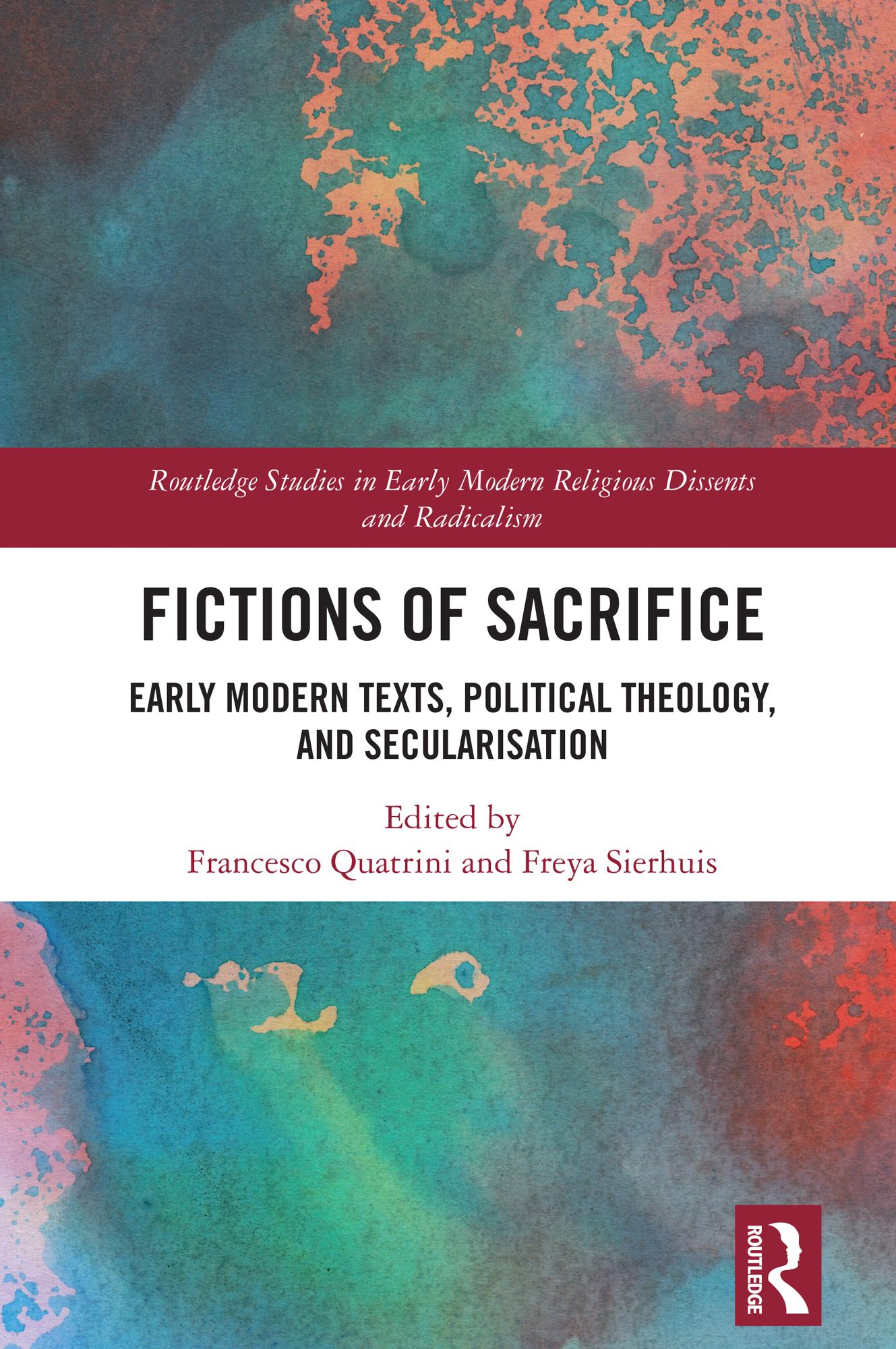
This interdisciplinary edited collection reconsiders how sacrificial ideas – encompassing guilt, justice, punishment, atonement, and community formation – shaped debates over sovereignty, legal authority, religious identity, and the cultural imagination in early modern political theology.
Major works in Reformation and early modern historiography still tend to overlook how deeply intertwined religion, politics, and literary culture were in this period, often framing secular modernity as the product of a steady cultural break from religion. These essays juxtapose early modern understandings of sacrifice and sovereignty with modern debates, revealing how foundational the category of sacrifice was to both religious and political discourse. From conflicts between Catholics and Protestants to the contested meanings of martyrdom, from legal and inquisitorial texts to travel narratives, poetry, and drama, this volume traces how sacrificial language structured early modern visions of collective life. Engaging a wide range of confessions and traditions – magisterial, dissenting, and non-Christian alike – it offers a fresh perspective on the formation of early modern communities and reopens the question of how religion and literature contributed to the making of modernity, challenging familiar stories of secularisation.
This book will be of interest to intellectual historians and literary scholars, particularly those studying the interrelations between early modern religion and politics.
Pay easily by card, Klarna, Apple Pay or Google Pay. Not happy? You always have a 14-day money-back guarantee. Read more in our terms. If you have any questions, email us at hello@memmo.org.
Memmo makes studying easier – wherever you are in the world. We bring your course books and smart study tools together in one place: summaries, quizzes, podcasts and flashcards. Plus Ted, your study buddy who answers anything you wonder. Over 50,000 students already study here – built to help you learn faster and stress less.