
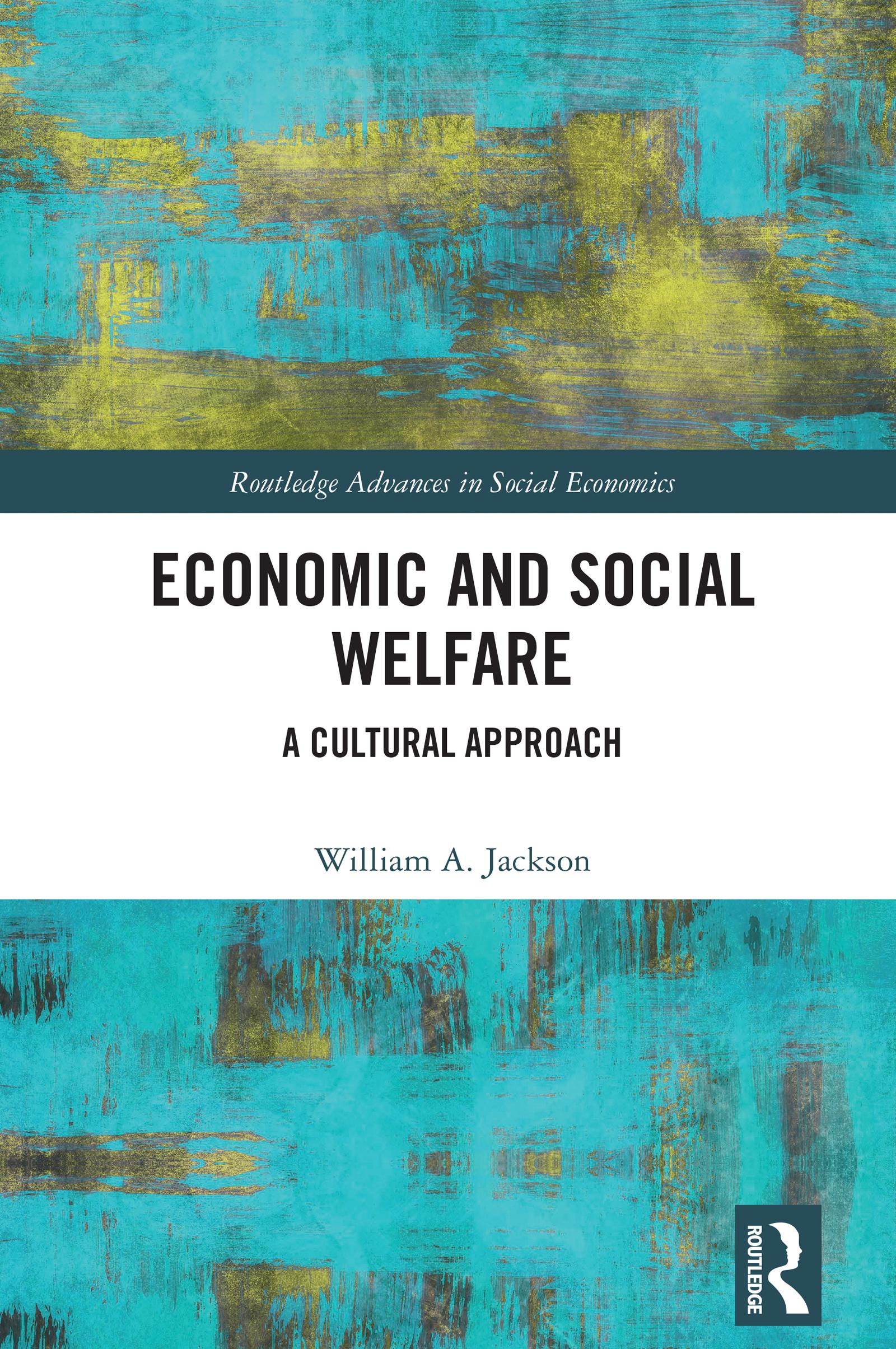
Arguing for a broader understanding of welfare, with culture as a unifying theme, this book demonstrates the explanatory power of an interdisciplinary approach to economic and social welfare.
This approach highlights the narrowness of orthodox economics which, founded on individualistic and utilitarian modelling, has settled for a narrow, simplified picture of welfare that omits many relevant factors, such as production, work, community, identity, lifestyle, preference formation, belief systems, material consumption and the environment.
The book begins by considering definitions of welfare and advocating culture as the core concept needed to capture a whole way of life. It examines economic welfare, on dimensions such as work, income, happiness and the environment, alongside social welfare, on dimensions such as capability, community, identity and freedom. These various dimensions, usually discussed separately, can be interrelated within a larger cultural vision. Prospects for promoting welfare through cultural evolution or public welfare policies are evaluated. Unlike most studies of welfare, the book adopts an interdisciplinary perspective that pulls together numerous strands of literature from heterodox economics, other social sciences and the humanities.
It offers an extensive, non-technical survey of how welfare has been portrayed in the academic literature and how the diverse views can fit within a cultural approach. It will be of great interest to economists, social scientists and policy-makers.
Pay easily by card, Klarna, Apple Pay or Google Pay. Not happy? You always have a 14-day money-back guarantee. Read more in our terms. If you have any questions, email us at hello@memmo.org.
Memmo makes studying easier – wherever you are in the world. We bring your course books and smart study tools together in one place: summaries, quizzes, podcasts and flashcards. Plus Ted, your study buddy who answers anything you wonder. Over 50,000 students already study here – built to help you learn faster and stress less.