
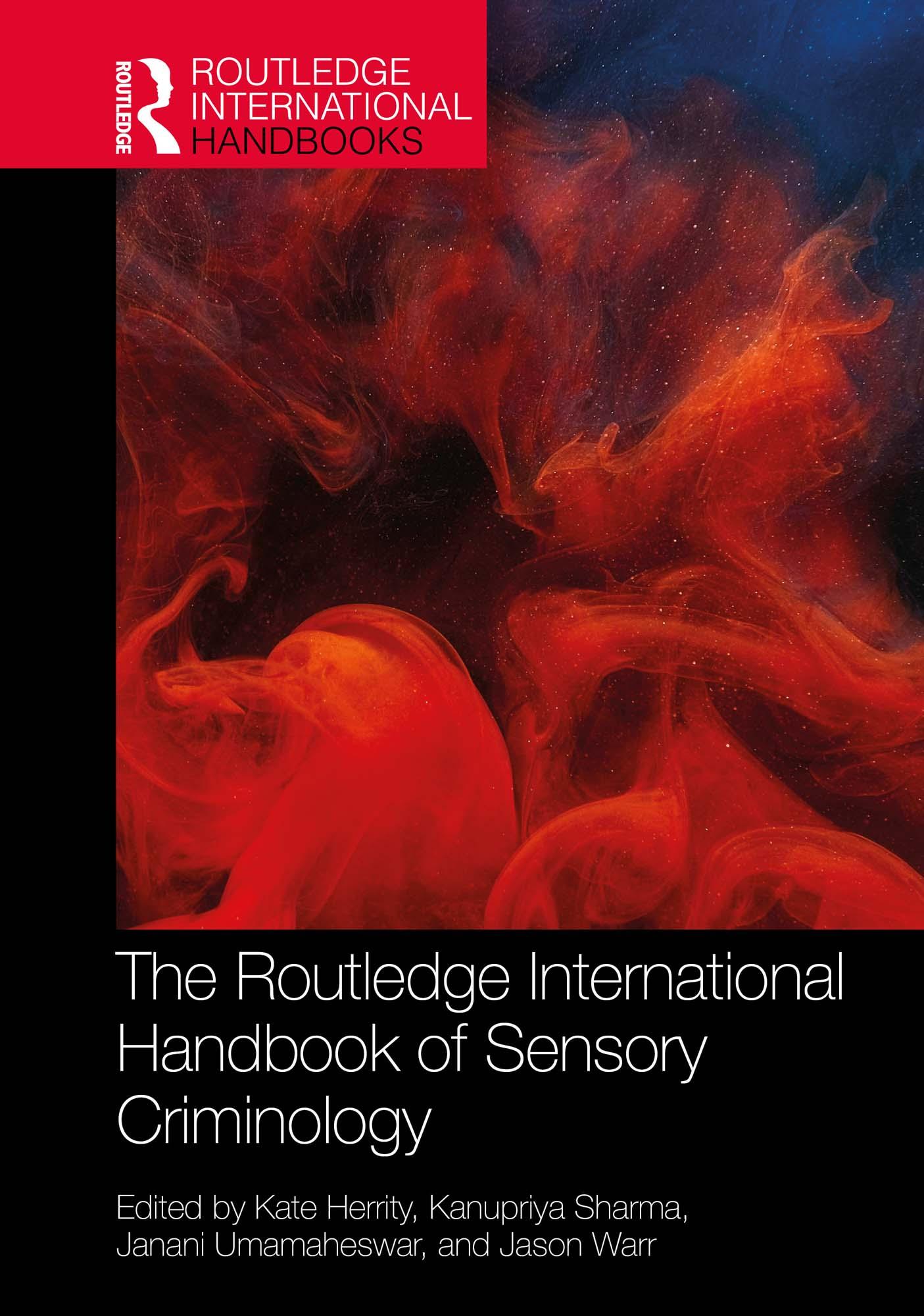
The Routledge International Handbook of Sensory Criminology reimagines what criminology can become when we take the senses seriously. Centring the sensory as fundamental to the experience of harm, justice, and resistance, this groundbreaking volume brings together 29 chapters from scholars across disciplines, career stages, and geographies. Together, they explore how power is heard, felt, inhaled, touched, and moved through, from courtrooms and prisons to museums, marine ecologies, colonial archives, transitional spaces, high‑crime zones, and urban streets.
The Handbook opens up new pathways for criminological inquiry, offering rich, situated analysis of how the sensory shapes and is shaped by structures of criminalisation, exclusion, and survival. Contributors engage themes including punishment, victimhood, environmental harm, archival memory, decolonial justice, and innovative methodologies. Rather than offering a prescriptive vision, the volume offers a provocation: to expand the criminological imagination and embrace new ways of knowing, sensing, and intervening.
This Handbook is an essential reading for students, scholars, and early career researchers in criminology, sociology, law, anthropology, geography, gender studies, politics, and cultural studies, as well as those interested in decolonial approaches, sensory methods, and interdisciplinary justice research.
Pay easily by card, Klarna, Apple Pay or Google Pay. Not happy? You always have a 14-day money-back guarantee. Read more in our terms. If you have any questions, email us at hello@memmo.org.
Memmo makes studying easier – wherever you are in the world. We bring your course books and smart study tools together in one place: summaries, quizzes, podcasts and flashcards. Plus Ted, your study buddy who answers anything you wonder. Over 50,000 students already study here – built to help you learn faster and stress less.