
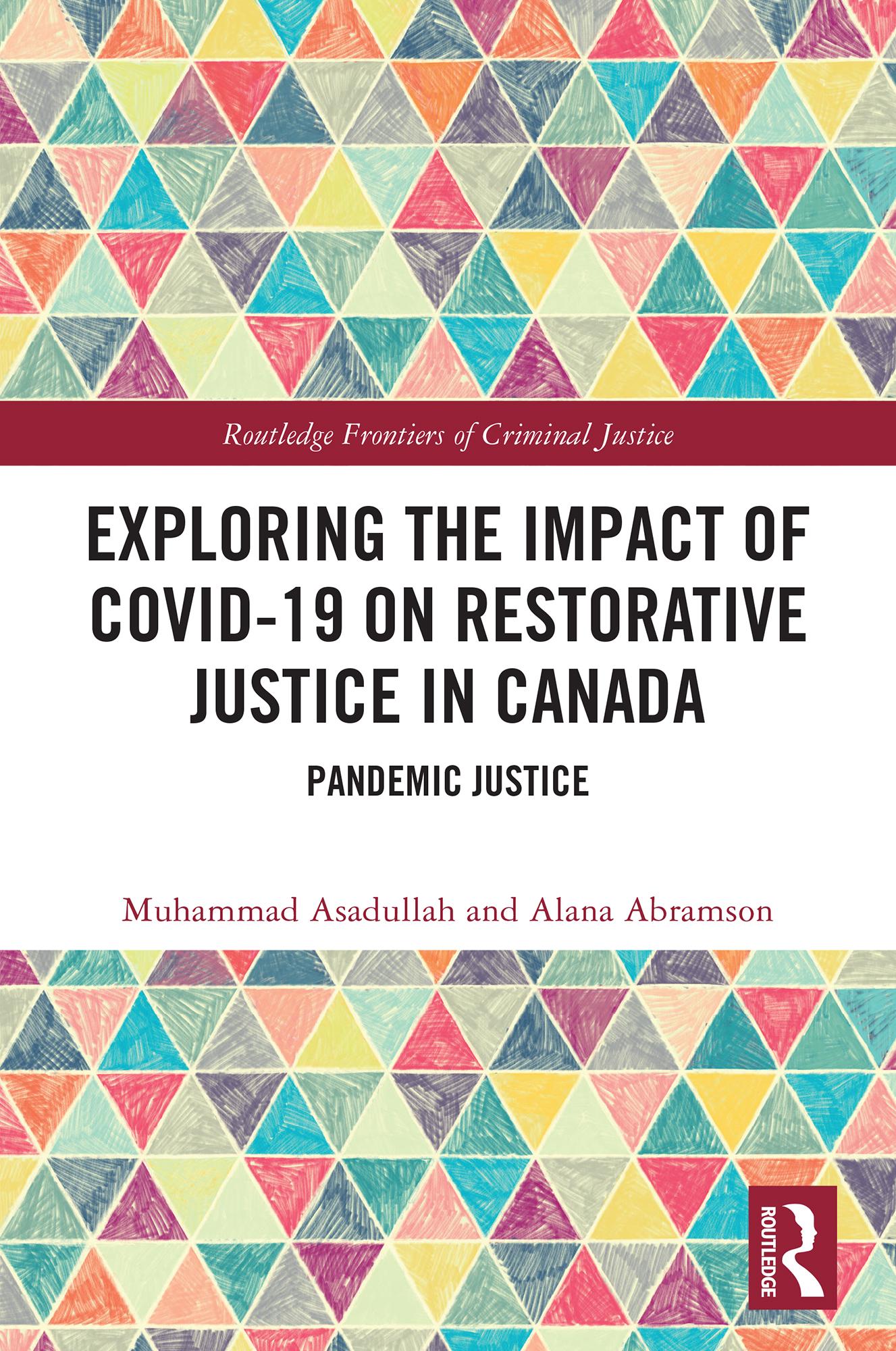
This book examines the impact of COVID-19 on restorative justice programs in several provinces of Canada and the emerging practices that have resulted. The COVID pandemic seems to have influenced Canadians’ perceptions of public safety, with reported changes in the frequency and types of crimes committed, as well as changes in how justice institutions and restorative justice programs operate.
This book explores some of the innovative virtual and blended restorative justice practices that emerged as a result of the pandemic, documenting the impact of COVID-19 on restorative justice from the lenses of resilience and creativity.
This book will be of interest to a wide variety of readers, including government agencies and justice stakeholders who are interested in being responsive to community justice needs; justice practitioners seeking to understand policy implications and formulate policy recommendations; researchers within community-based organizations; and graduate and undergraduate course developers within disciplines such as sociology, criminology, justice studies, law and society, and Indigenous studies; and anyone concerned with emerging restorative justice practices and decolonization efforts in Canada.
Pay easily by card, Klarna, Apple Pay or Google Pay. Not happy? You always have a 14-day money-back guarantee. Read more in our terms. If you have any questions, email us at hello@memmo.org.
Memmo makes studying easier – wherever you are in the world. We bring your course books and smart study tools together in one place: summaries, quizzes, podcasts and flashcards. Plus Ted, your study buddy who answers anything you wonder. Over 50,000 students already study here – built to help you learn faster and stress less.