
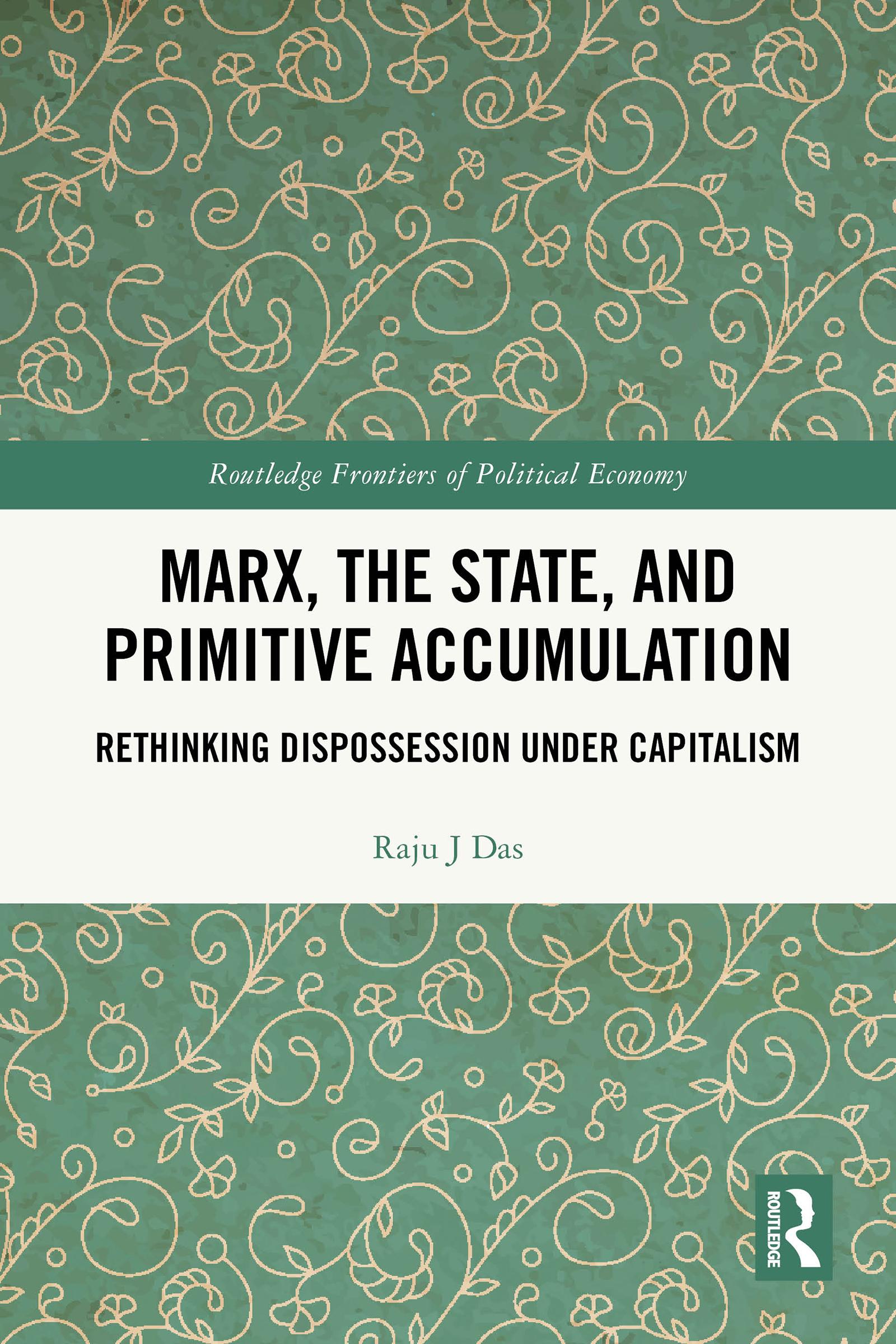
Critically engaging with contributions from both the Global North and the Global South, this book offers a systematic rethinking of Marx’s concept of primitive accumulation and its relevance to contemporary capitalism. The book argues that recent attempts to reinterpret dispossession often suffer from conceptual overstretch and a neglect of production and class relations.
The book’s focus is the concept of expanded primitive accumulation: an ongoing, state-mediated process of extra-economic coercion under capitalism that separates producers from privately owned, communal, and state-owned means of production and subsistence. This concept is situated within a broader framework that distinguishes and relates primitive accumulation, labor exploitation, normal capitalist exchange relations, and class differentiation within the totality of capitalist social relations. The analysis foregrounds the capitalist state as both enforcer and manager of dispossession and shows that such processes are shaped by class struggle and require ideological legitimation.
Combining theoretical reconstruction with empirical analysis, including a case study from Odisha, India, the book develops the political implications of dispossession, emphasizing the need for working-class leadership in struggles against capitalism. It will be of interest to scholars and students across the social sciences, as well as to readers concerned with Marxist political and economic thought, capitalism, dispossession, and the state.
Pay easily by card, Klarna, Apple Pay or Google Pay. Not happy? You always have a 14-day money-back guarantee. Read more in our terms. If you have any questions, email us at hello@memmo.org.
Memmo makes studying easier – wherever you are in the world. We bring your course books and smart study tools together in one place: summaries, quizzes, podcasts and flashcards. Plus Ted, your study buddy who answers anything you wonder. Over 50,000 students already study here – built to help you learn faster and stress less.