
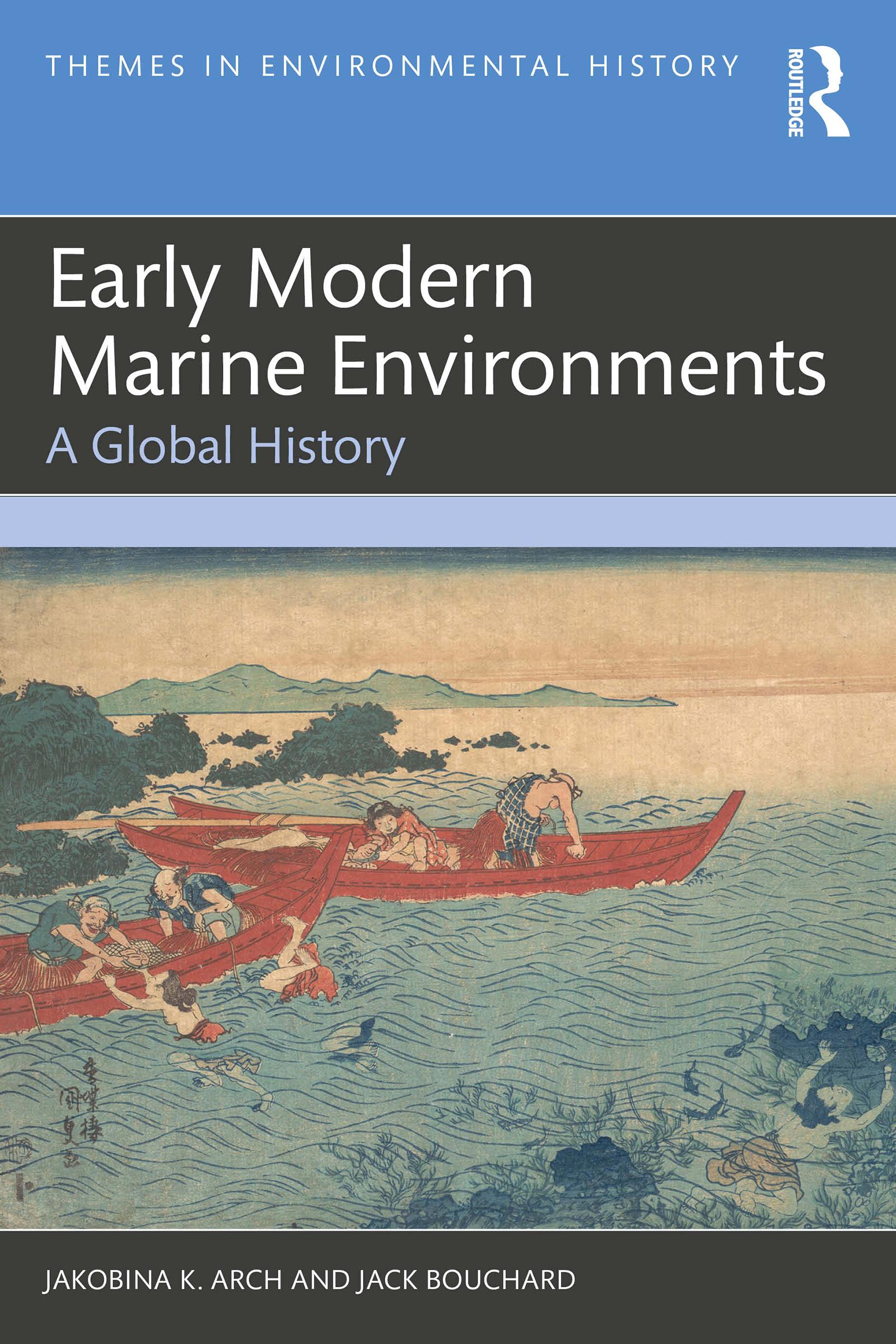
Across the early modern world (late 1400s to mid-1900s), oceans provided the key connection between far-flung communities in an age of empire and colonial expansion, while also serving as an increasingly important source of resources, from salted fish to whale oil to luxurious pearls.
This story has rarely been told from the perspective of the marine environment itself. This book brings together the newest research to explore an era of newfound importance for the global ocean, focusing on the changing human relationships with maritime environments as cultures around the world found new ways to use and manipulate different aspects of this environment. The book focuses on key themes in early modern maritime history: harvesting marine life, movement through and on water, changing coastal environments, sea–land connections, and the metaphysics of the ocean in an age of change. While making a case for the importance of early modern marine environmental history throughout all the oceans of the world, this book also provides a foundation for more work on the topic.
This book is for undergraduate and graduate students beginning work on premodern environmental, maritime, ocean and global history, as well as literary scholars or ocean scientists interested in ocean history.
Pay easily by card, Klarna, Apple Pay or Google Pay. Not happy? You always have a 14-day money-back guarantee. Read more in our terms. If you have any questions, email us at hello@memmo.org.
Memmo makes studying easier – wherever you are in the world. We bring your course books and smart study tools together in one place: summaries, quizzes, podcasts and flashcards. Plus Ted, your study buddy who answers anything you wonder. Over 50,000 students already study here – built to help you learn faster and stress less.