
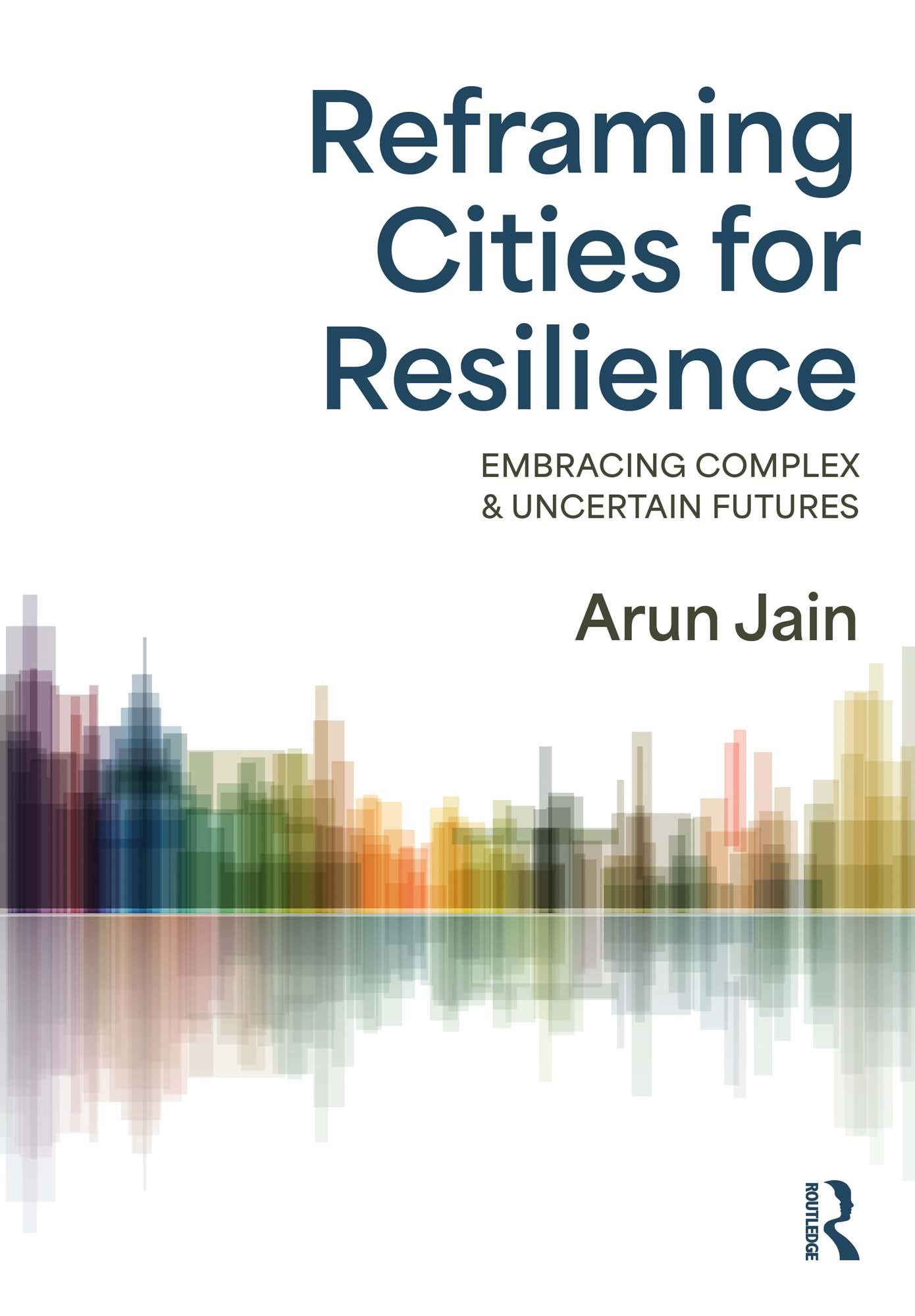
We live in times of profuse change, where hyperconnectivity and fast-shifting influences are radically changing how we live, consume, work, and play. By challenging the traditional realms in which urban design and planning operate, this book asserts that not only must we do better, but that we can.
Arun argues that the first step toward adaptive and resilient futures is making a fuller spectrum of the complexity of cities comprehensible to all. Drawing upon diverse disciplines like cultural anthropology, evolutionary biology, economic theory, behavioral sciences, systems thinking, and technology, he provides fresh foundations for addressing decades of physical and social underinvestment and neglect across a range of urban challenges. They include transportation, housing affordability, healthcare, the elderly, education, and aspects of economic underinvestment. The need for adaptive governance is also discussed.
Arun’s narrative underscores how we must better embrace uncertainty to make our cities vibrant, comfortable, healthy, and inclusive while also being resilient and adaptive. He posits we do not need to predict the future to do this.
This book is essential for urban designers, planners, landscape architects, and postgraduate students in these fields. It is also a good primer for anyone wanting to understand the complex dynamics of cities.
Pay easily by card, Klarna, Apple Pay or Google Pay. Not happy? You always have a 14-day money-back guarantee. Read more in our terms. If you have any questions, email us at hello@memmo.org.
Memmo makes studying easier – wherever you are in the world. We bring your course books and smart study tools together in one place: summaries, quizzes, podcasts and flashcards. Plus Ted, your study buddy who answers anything you wonder. Over 75,000 students already study here – built to help you learn faster and stress less.