
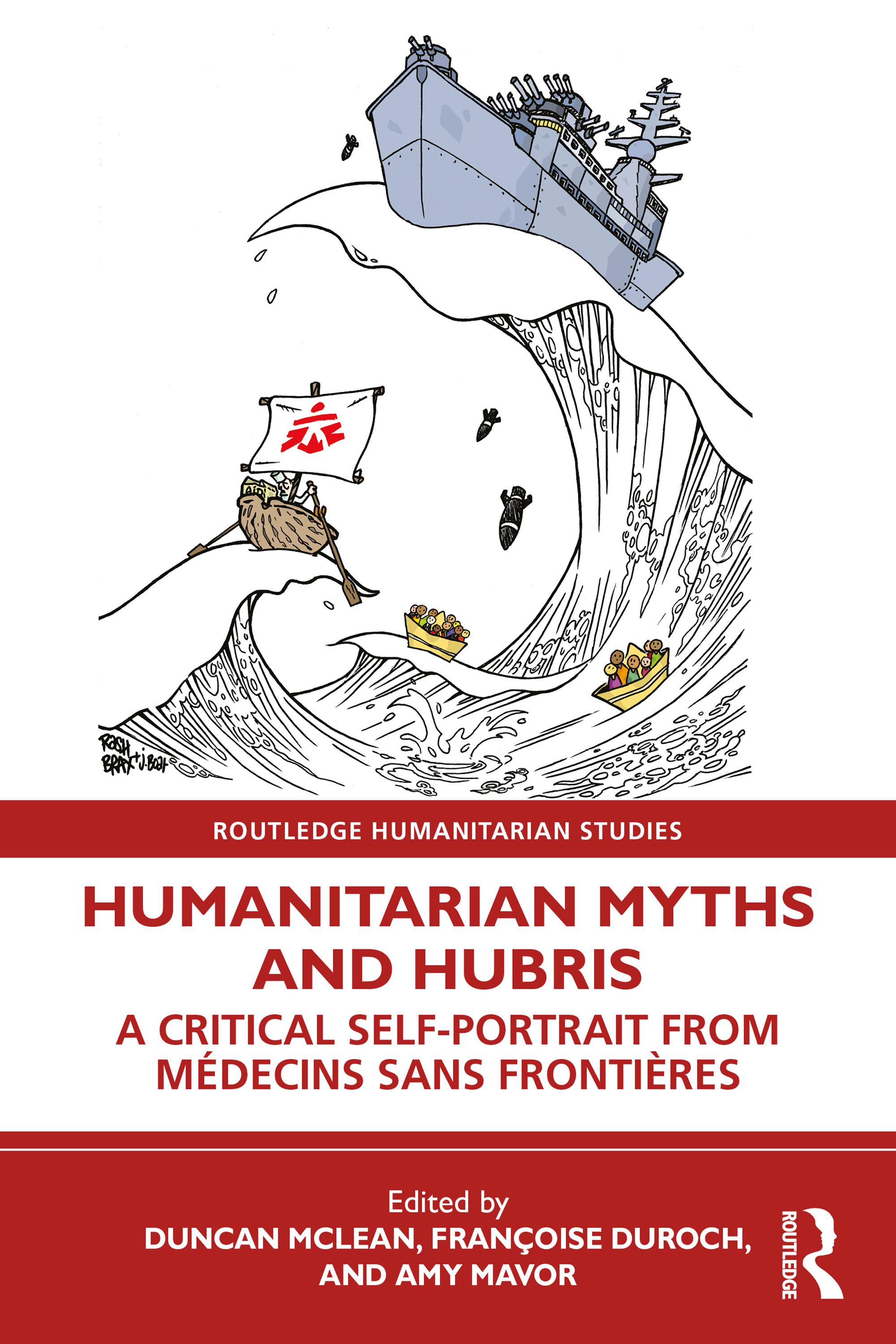
This collective work offers a critical analysis of contemporary humanitarian action, through the prism of Médecins Sans Frontières/Doctors Without Borders (MSF).
Initially created to provide healthcare to the most vulnerable populations in crisis-stricken countries, MSF has grown from just a few dozen members in 1971 to a movement of over 67,000 people with an annual budget of over 2 billion euros. But in today’s rapidly evolving global landscape, many of the founding principles and myths surrounding its creation are questioned or undermined. The post-COVID era has been marked by a reinforcement or acceleration of pre-existing trends that continue to challenge the work of humanitarian organisations: restrictive, or indeed hostile, state policies; the presence of non-state actors in counter-terrorism contexts; questionable adherence to international humanitarian law. MSF must also address several key issues, such as combating discrimination, defining its position with regard to protest movements in countries of intervention, confronting challenges related to climate change and global health security, and safeguarding patients’ personal data.
Drawing on the viewpoints of practitioners, analysts, and academics, this book will be an essential read for anyone engaged in or curious about humanitarian action.
Pay easily by card, Klarna, Apple Pay or Google Pay. Not happy? You always have a 14-day money-back guarantee. Read more in our terms. If you have any questions, email us at hello@memmo.org.
Memmo makes studying easier – wherever you are in the world. We bring your course books and smart study tools together in one place: summaries, quizzes, podcasts and flashcards. Plus Ted, your study buddy who answers anything you wonder. Over 50,000 students already study here – built to help you learn faster and stress less.