
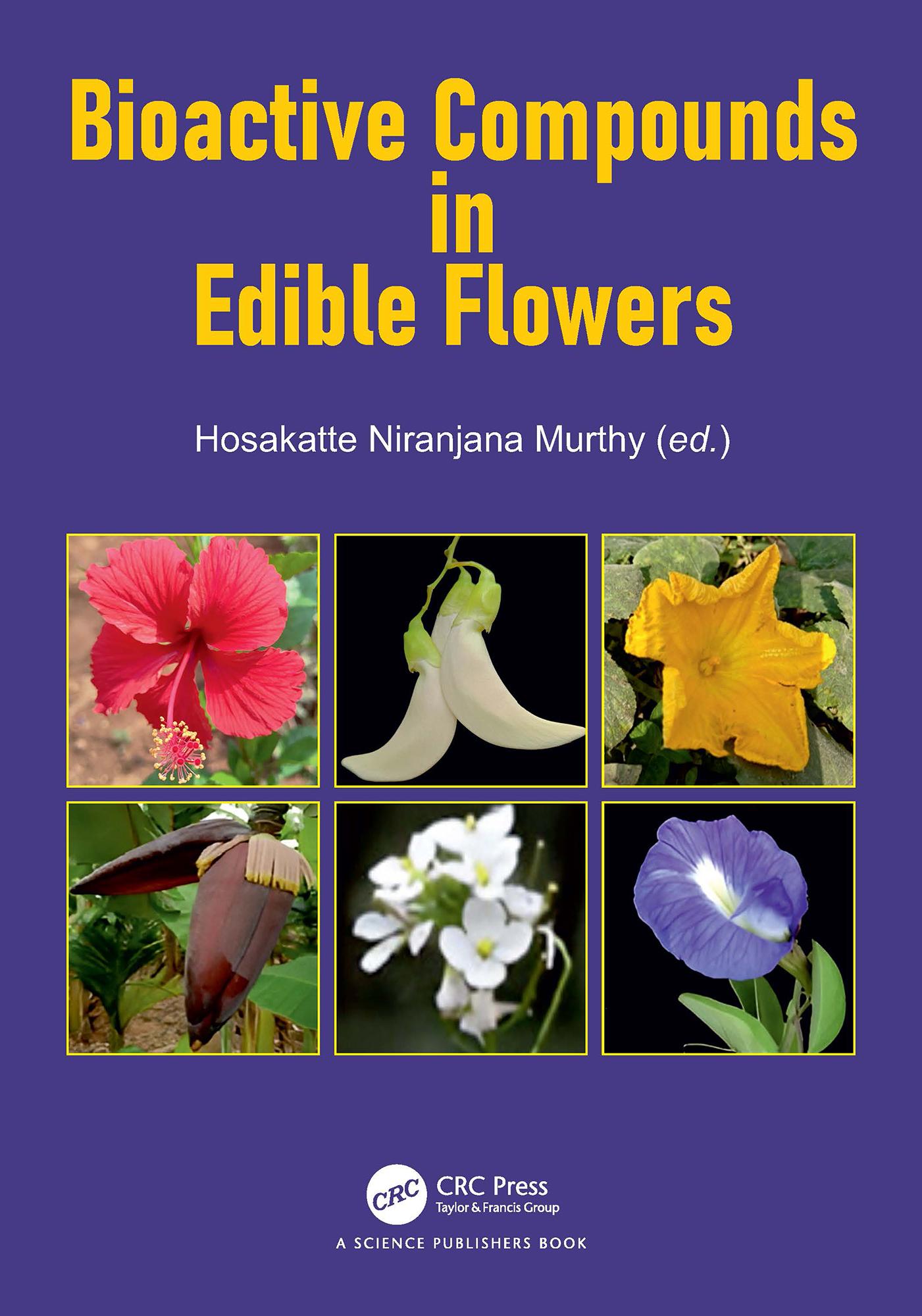
Many societies have found various utilities of edible flowers. They give a more ornamental look, enhances the taste, and also enhances its nutritional value. Numerous studies conducted recently have shown that edible flowers are also rich in nutrients such as carbohydrates, proteins, fats, fibre, vitamins, minerals. These flowers also contain a variety of phytochemicals, including phenolics, flavonoids, carotenoids, terpenoids, alkaloids, and other compounds that have been shown to increase biological activities, such as antioxidant, antimicrobial and antidiabetic, anticancer, cardioprotective, hepatoprotective, and neuroprotective qualities. Edible flowers have now found their way into a number of industries, including as cosmeceuticals, functional foods, and nutraceuticals.
The book provides information on the nutritional value, phytochemical makeup, and bioactivity of both wild and cultivated flowers. It also describes edible flowers in depth to make them better-known to consumers and the food business. Each chapter discusses the possible toxicological effects of floral components.
Pay easily by card, Klarna, Apple Pay or Google Pay. Not happy? You always have a 14-day money-back guarantee. Read more in our terms. If you have any questions, email us at hello@memmo.org.
Memmo makes studying easier – wherever you are in the world. We bring your course books and smart study tools together in one place: summaries, quizzes, podcasts and flashcards. Plus Ted, your study buddy who answers anything you wonder. Over 50,000 students already study here – built to help you learn faster and stress less.