
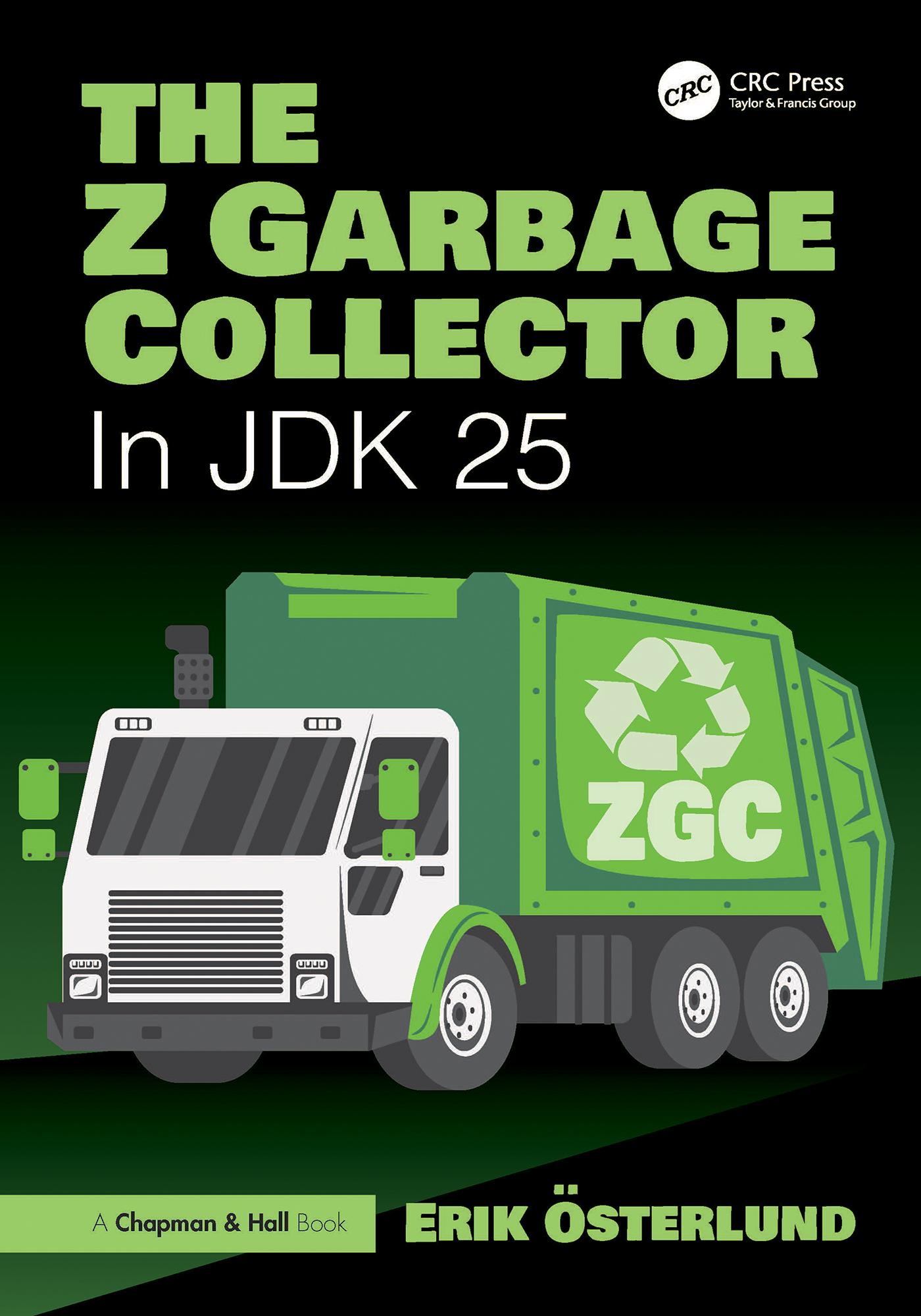
This book explains how the Z Garbage Collector was designed, why it was designed this way, the common pitfalls to avoid when using ZGC in JDK 25 and how to get useful information from the garbage collector.
Java is one of the most widely used programming languages in the world. It is a memory-safe language that completely relies on a good garbage collection (GC) algorithm to work well. The Z Garbage Collector of OpenJDK is arguably the most sophisticated production GC algorithm for any managed language runtime. The book goes into detail and covers core algorithm concepts of ZGC: coloured pointers, GC barriers, concurrent marking, concurrent relocation, concurrent stack scanning, concurrent root scanning, concurrent class unloading, concurrent generational collection, as well as showing how all of this works. It explains how the JVM evolved certain features to be able to accommodate ZGC, and covers the importance of each of the various GC heuristics and how they function.
With a unique angle right between academia and industry, this book is useful for computer science students and Java developers alike.
Pay easily by card, Klarna, Apple Pay or Google Pay. Not happy? You always have a 14-day money-back guarantee. Read more in our terms. If you have any questions, email us at hello@memmo.org.
Memmo makes studying easier – wherever you are in the world. We bring your course books and smart study tools together in one place: summaries, quizzes, podcasts and flashcards. Plus Ted, your study buddy who answers anything you wonder. Over 75,000 students already study here – built to help you learn faster and stress less.