
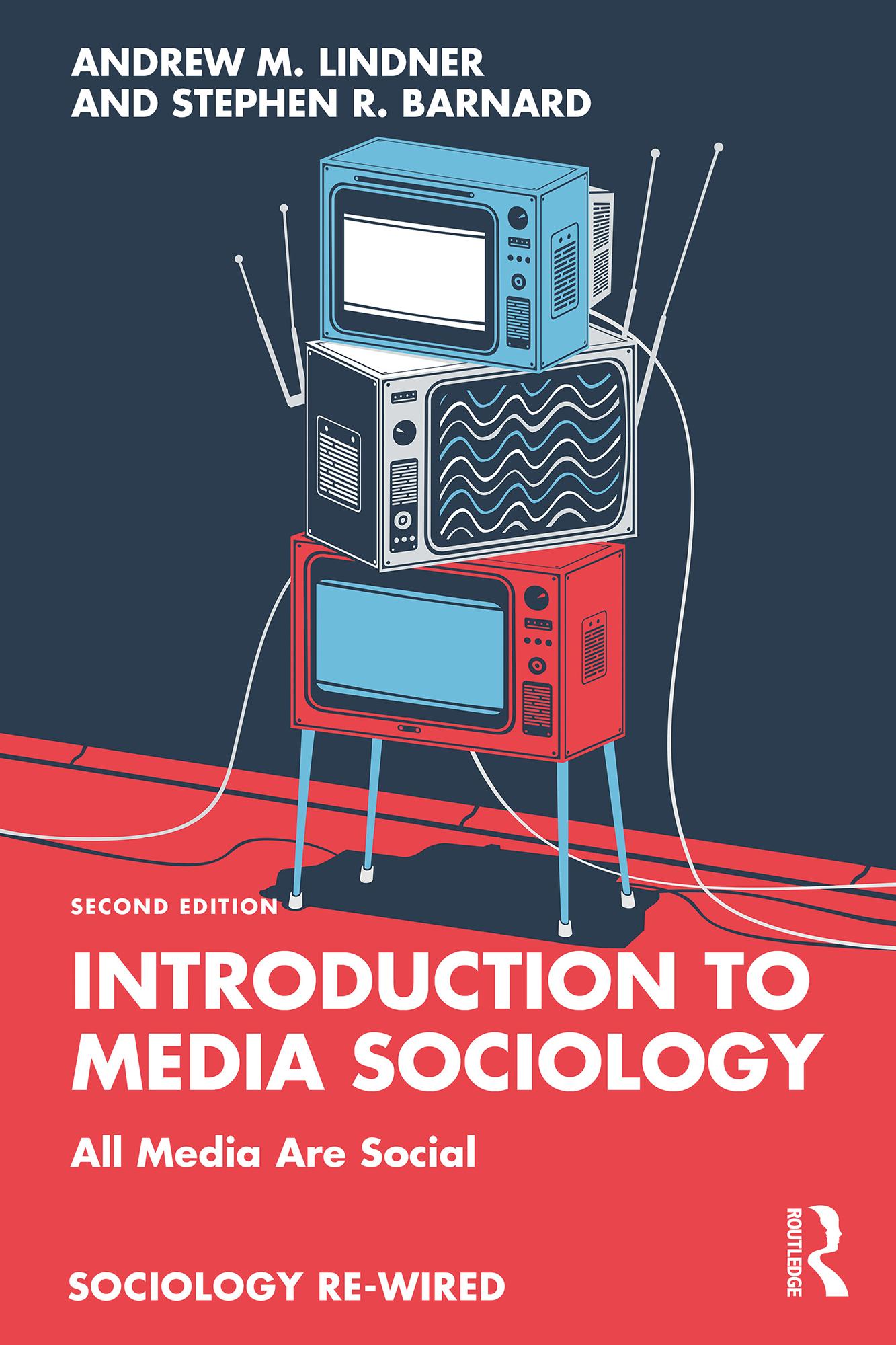
From streaming platforms to smartphone apps to good old-fashioned newspapers, media are nearly omnipresent in contemporary life and act as a powerful social institution. In this new edition of Introduction to Media Sociology, Lindner and Barnard encourage readers to think critically about topics such as the power of big media companies; state–media relations; politics and journalism; representations of race, class, gender, and sexuality in media; and what social media may or may not be doing to our brains. Each chapter explores pressing questions about media by synthesizing insights from classic and contemporary social scientific research, both quantitative and qualitative, with examples drawn from new and traditional media from across the globe. The second edition reflects the evolving power of Big Tech firms, the proliferation of misinformation, and voices from outside the mainstream. It also features a new chapter on generative artificial intelligence that addresses its potential to disrupt the creation, distribution, and reception of media, including by supercharging scams, deepfakes, and hate speech, or by reshaping social relationships. With strong emphases on theory and methods, Lindner and Barnard once again provide students and general readers alike with the tools to better understand the ever-changing media landscape.
Pay easily by card, Klarna, Apple Pay or Google Pay. Not happy? You always have a 14-day money-back guarantee. Read more in our terms. If you have any questions, email us at hello@memmo.org.
Memmo makes studying easier – wherever you are in the world. We bring your course books and smart study tools together in one place: summaries, quizzes, podcasts and flashcards. Plus Ted, your study buddy who answers anything you wonder. Over 50,000 students already study here – built to help you learn faster and stress less.