
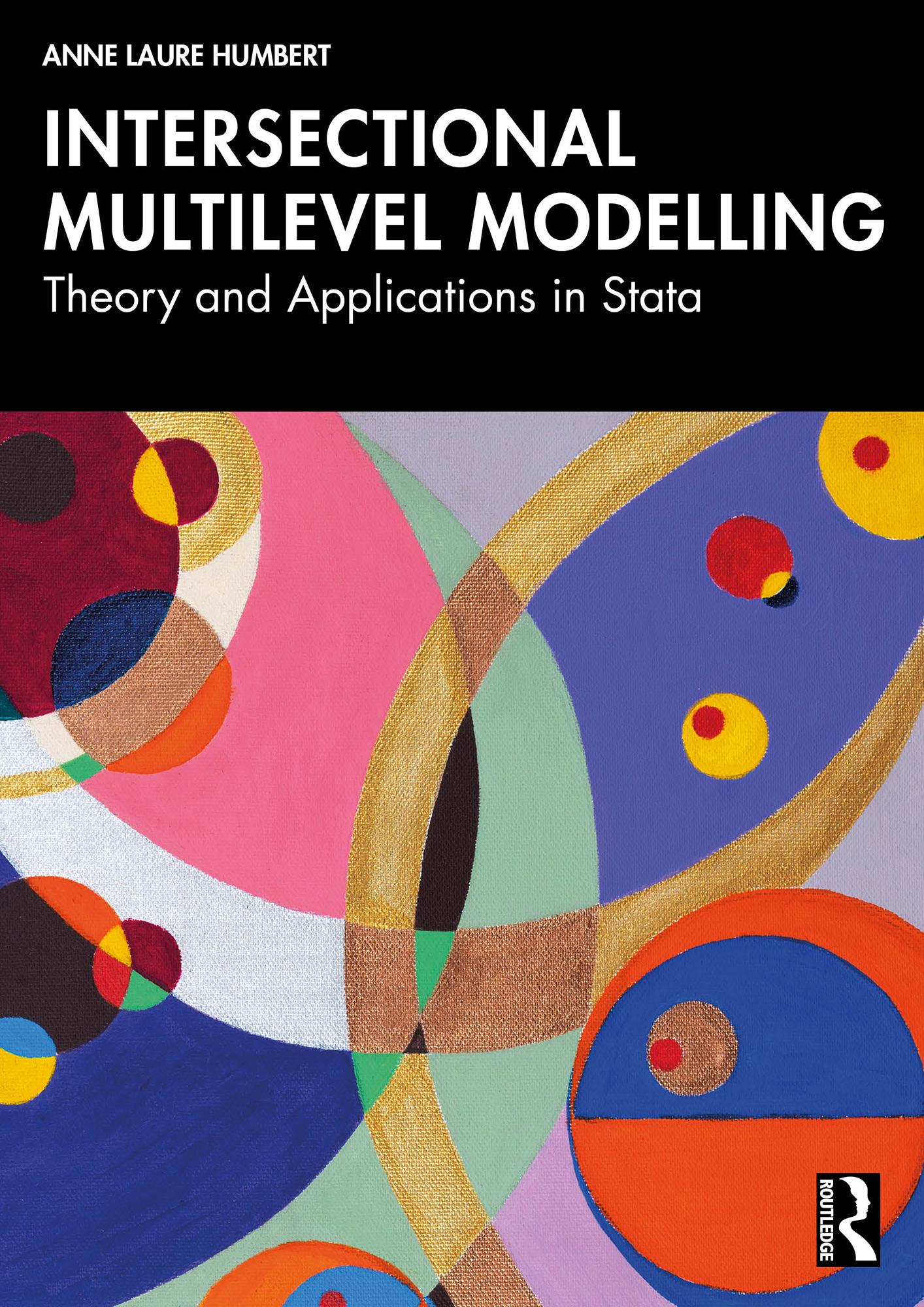
Bridging feminist theory and cutting-edge statistics, this book introduces multilevel analysis of individual heterogeneity and discriminatory accuracy (MAIHDA) and expands it into a contextual intersectional multilevel framework, revealing how power operates through intersecting identities and environments to generate systemic inequalities and how quantitative tools can expose, understand and ultimately challenge them.
It first clarifies why traditional interaction terms fail to fully capture intersectionality’s transformative aim: they overlook the simultaneous, context-specific ways that gender, race, class, sexual orientation and other dimensions of inequalities configure privilege and oppression. Using intersectional multilevel models, the author shows how it is possible to estimate both individual heterogeneity and group-level effects, then extends the approach to incorporate context. Worked examples in Stata guide readers through linear, binary and ordinal outcomes. A brief overview of Bayesian estimation and random slopes models is also provided. The book is accompanied by open datasets and reproducible code. Throughout, an ethical reflexive thread stresses category fluidity, disclosure risks and accountability to intersectionality’s transformative agenda, demonstrating the method’s power to reveal and, hopefully, contribute to dismantling structural inequalities.
Designed for social scientists, policy analysts or management scholars seeking rigorous yet reflexive quantitative approaches, the book suits postgraduate students, academic researchers and practitioners working on inequalities. Those already fluent in multilevel modelling will deepen their knowledge; beginners will gain a clear, step-by-step entry into intersectional multilevel modelling in practice.
Pay easily by card, Klarna, Apple Pay or Google Pay. Not happy? You always have a 14-day money-back guarantee. Read more in our terms. If you have any questions, email us at hello@memmo.org.
Memmo makes studying easier – wherever you are in the world. We bring your course books and smart study tools together in one place: summaries, quizzes, podcasts and flashcards. Plus Ted, your study buddy who answers anything you wonder. Over 50,000 students already study here – built to help you learn faster and stress less.