
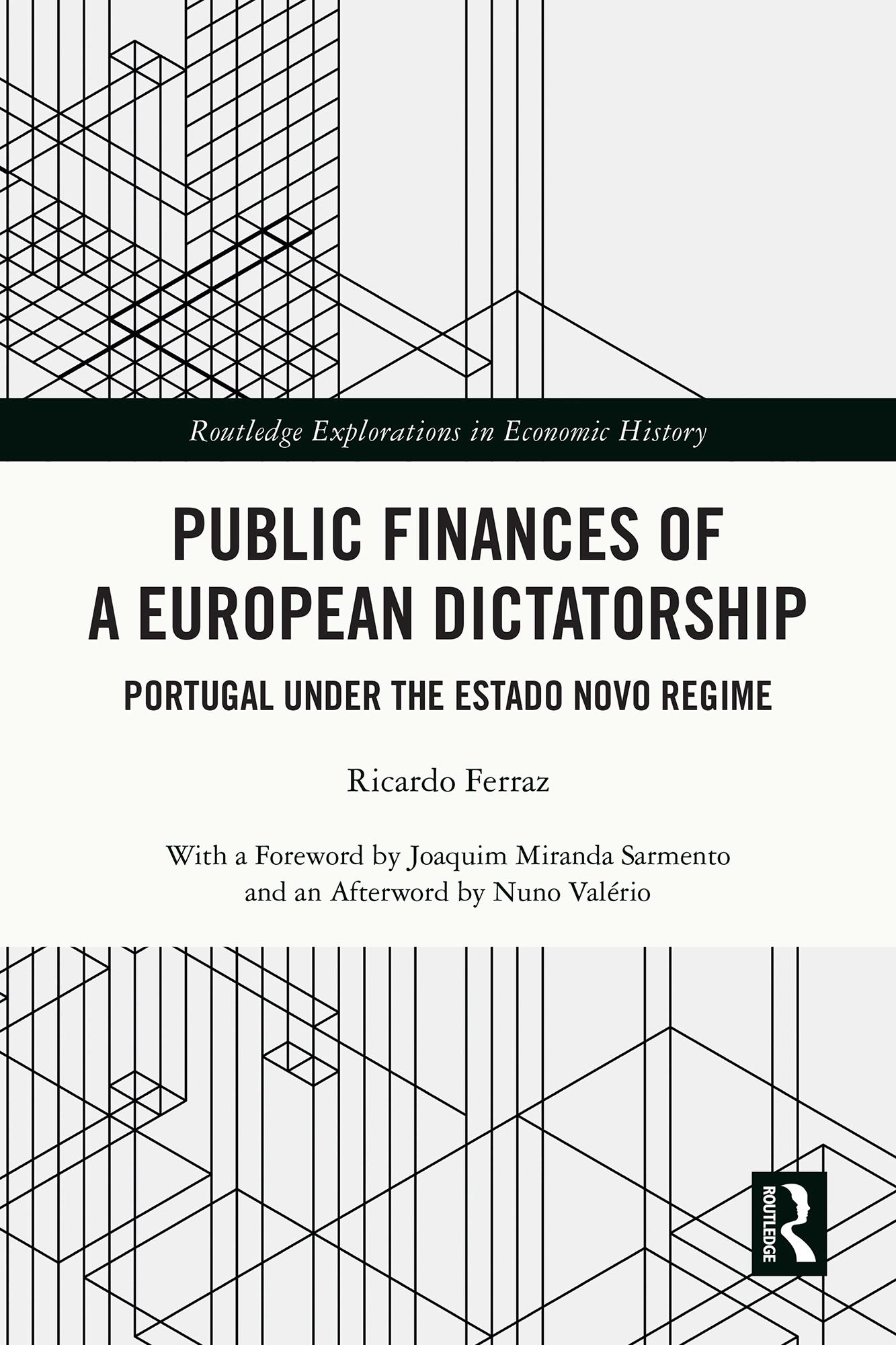
Contributing to the renewed interest in economic history in the role played by peripheral or smaller countries, this book provides a detailed analysis of Portuguese public finances during the Estado Novo regime (1933–1974) – a period marked by dictatorship, industrialization, internationalization, and war. In this book, relevant international comparisons for key macroeconomic indicators are drawn to contextualize the Portuguese case within global settings. Additionally, employing econometric techniques, the sustainability of public finances is assessed across a range of countries, enabling valuable insights for the Portuguese case within a comparative framework. Within Portugal, as the book shows, this period, largely under the dictatorship of Salazar, was characterized by the very first attempt to plan economically in the long term, with the Economic Reconstitution Law (1935–1950). Following the Second World War, and Portugal’s so-called collaborative neutrality, the Portuguese economy experienced a process of industrialization and internationalization, but this culminated in the Colonial War (1961–1974) with blood and tears. The book explores the sources of revenue and expenditure for the Portuguese State during these periods of transformation and crisis and the impact on budget balance and public debt. The book will be of interest to all readers in economic and financial history.
Pay easily by card, Klarna, Apple Pay or Google Pay. Not happy? You always have a 14-day money-back guarantee. Read more in our terms. If you have any questions, email us at hello@memmo.org.
Memmo makes studying easier – wherever you are in the world. We bring your course books and smart study tools together in one place: summaries, quizzes, podcasts and flashcards. Plus Ted, your study buddy who answers anything you wonder. Over 50,000 students already study here – built to help you learn faster and stress less.
You might also like
Buy the book0