
The Death and Life of Southern Soviet Cities discussed on New Books Network podcast with Ernest Lee
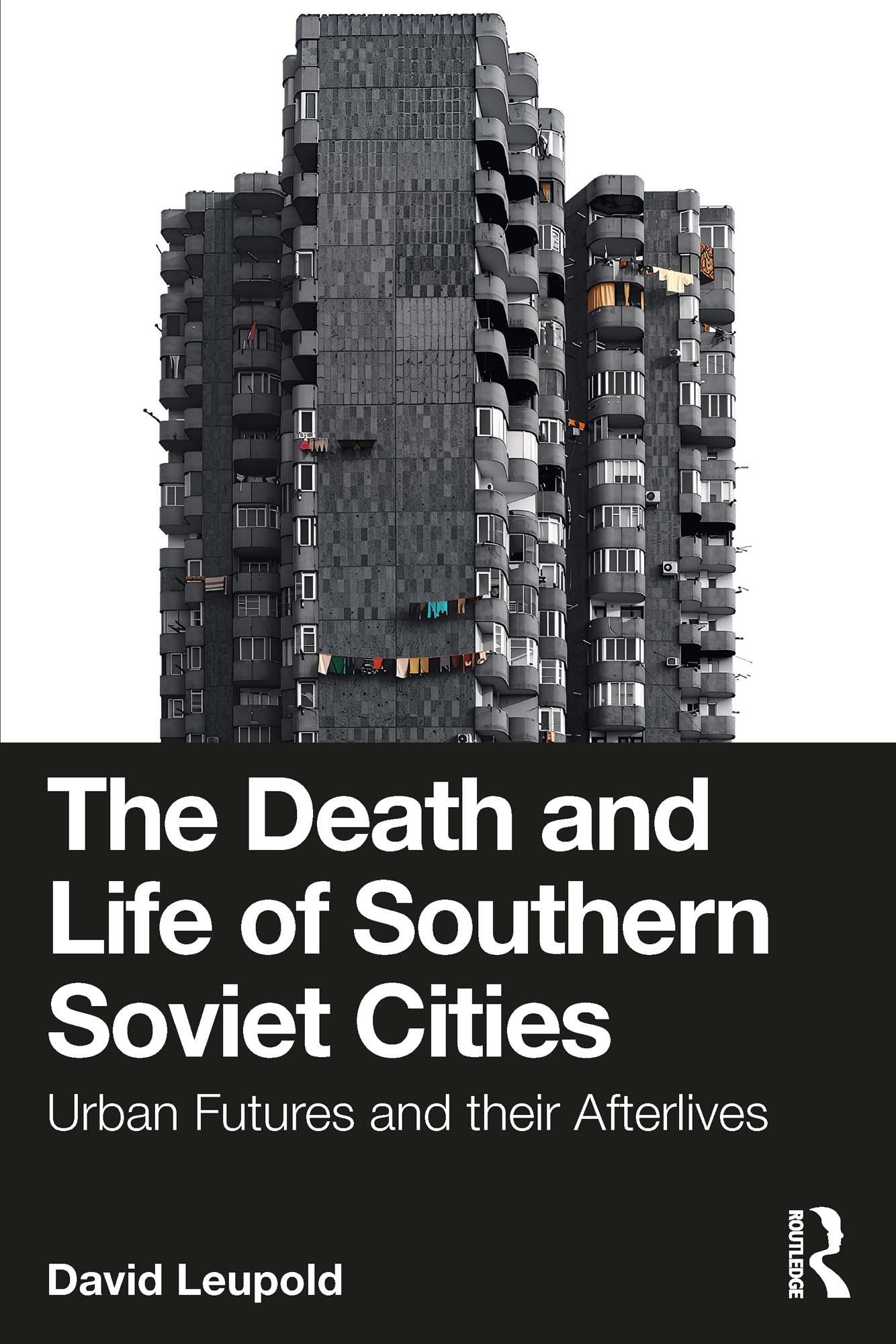
What does it mean, three decades after the demise of the USSR, to inhabit cities built for a future that has never arrived? In pursuit of the question – what is left of the socialist city? – this book aims not only to trace the material and mnemonic remains of the socialist city, but to show how the Soviet discourse of the city at times engendered radical ideas that challenged the narrow confines of state socialism itself.
These ideas are, for instance, the efforts of Esperanto-speaking internationalists from Czechoslovakia to build the internationalist city from below in the Central Asian steppe, the quest of Armenian Futurists to root the architectural style of Soviet Armenia in the country’s Persianate heritage, or a Jewish-Kyrgyz philosopher's vision of turning a science town in the hinterland of Moscow into the first ecopolis of the USSR. In an effort to rethink the life and afterlife of the Soviet city from its geographical South, the book explores the material and immaterial legacies of socialist-era urbanization in Central Asia and the Southern Caucasus. To this end, it embarks on a historical and ethnographic journey to urban sites in Armenia and Kyrgyzstan. In a quest to reconstruct competing visions of urbanity that emerged from within the Soviet South, using varied empirical sources in Armenian, Czech, Kyrgyz, and Russian, the book outlines four urban visions: bottom-up urbanity, rooted urbanity, polycentric urbanity, and ecocentric urbanity. By understanding the social vision of a "socialist city of the future" beyond the political center in its trans-local independence, the book highlights the cultural and linguistic diversity of the Soviet South and its historical embeddedness within the regional dynamics of the Global South.
As such, this book will be an important resource for students, instructors, and researchers in understanding and thinking through socialism, post-socialist transformation, and histories of the USSR. In it, David Leupold brings formidable historical imagination and ethnographic research to enliven the shape, contours, and textures of the "socialist city" and its afterlife beyond the demise of the Soviet Union.
Pay easily by card, Klarna, Apple Pay or Google Pay. Not happy? You always have a 14-day money-back guarantee. Read more in our terms. If you have any questions, email us at hello@memmo.org.
Memmo makes studying easier – wherever you are in the world. We bring your course books and smart study tools together in one place: summaries, quizzes, podcasts and flashcards. Plus Ted, your study buddy who answers anything you wonder. Over 75,000 students already study here – built to help you learn faster and stress less.