
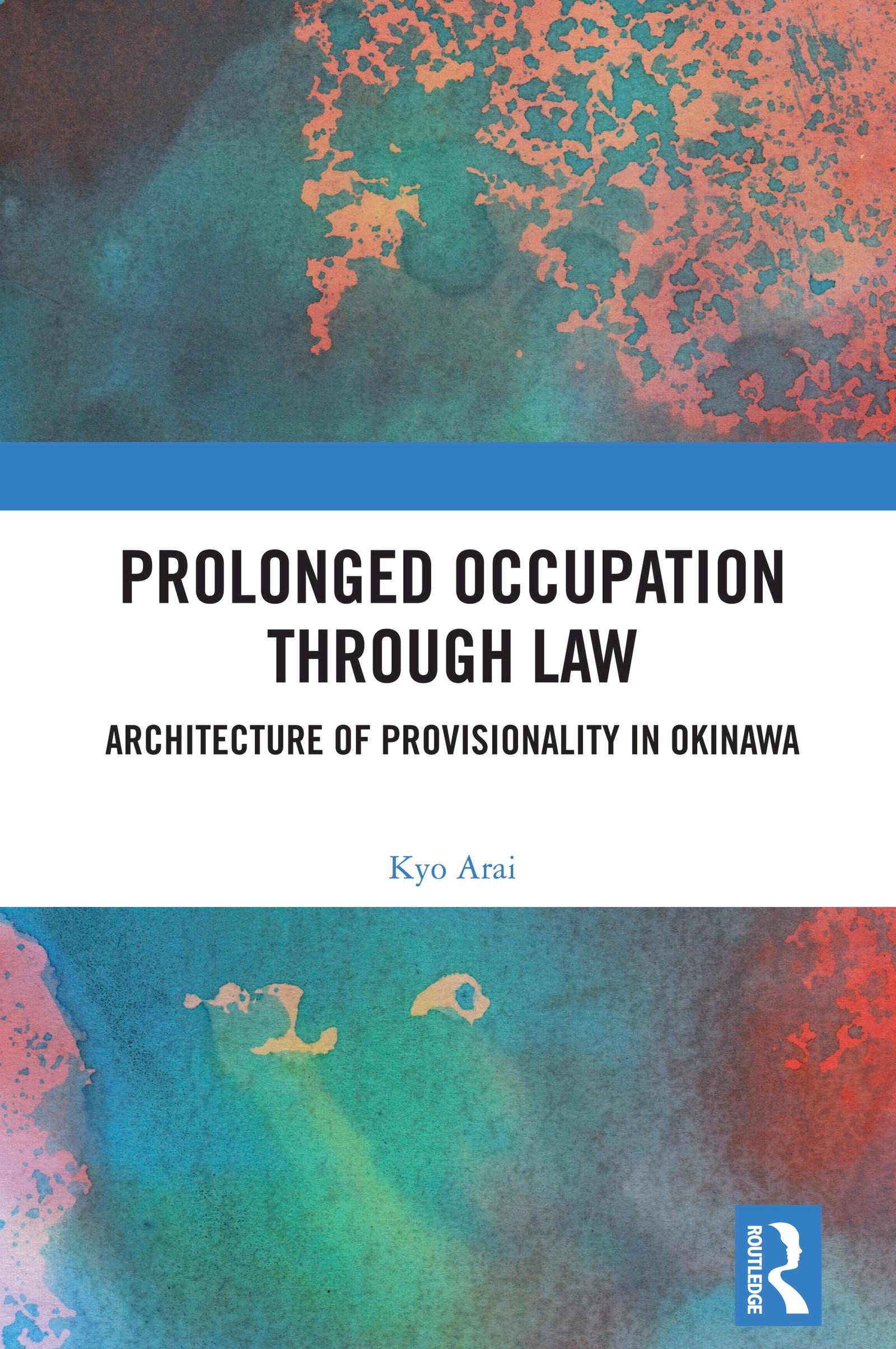
This book examines the body of law relating to occupation and analogous forms of territorial control, including the issues surrounding various types of military occupation and the domination of territory and people abroad. It achieves this through a comprehensive analysis of the legal basis of the U.S. prolonged occupation of Okinawa.
The book begins with a discussion of the legal frameworks under international and U.S. law relating to the occupation and other forms of administration of foreign territory. It then examines the drafting process of various "constitutional" orders issued by the U.S. military for Okinawa during and after World War II. Covering the entire period of the U.S. administration, the book captures the formation of highly contested legal arguments for external governance during the transitional years of 1949-1957, as well as the institutional reforms under the Kennedy administration in the 1960s. The analysis of legal developments contextualizes the Okinawa issue in the current legal discourse on foreign occupation, self-determination, and postcolonialism. The theoretical implications of residual sovereignty and its effect on the relationship between the Japanese government and the people of Okinawa in the modern day are also discussed.
Examining the factors that facilitated the U.S. military rule of Okinawa within the context of international law development, this book will interest scholars of international law, international relations, postcolonial studies, and Asian studies.
Pay easily by card, Klarna, Apple Pay or Google Pay. Not happy? You always have a 14-day money-back guarantee. Read more in our terms. If you have any questions, email us at hello@memmo.org.
Memmo makes studying easier – wherever you are in the world. We bring your course books and smart study tools together in one place: summaries, quizzes, podcasts and flashcards. Plus Ted, your study buddy who answers anything you wonder. Over 50,000 students already study here – built to help you learn faster and stress less.