
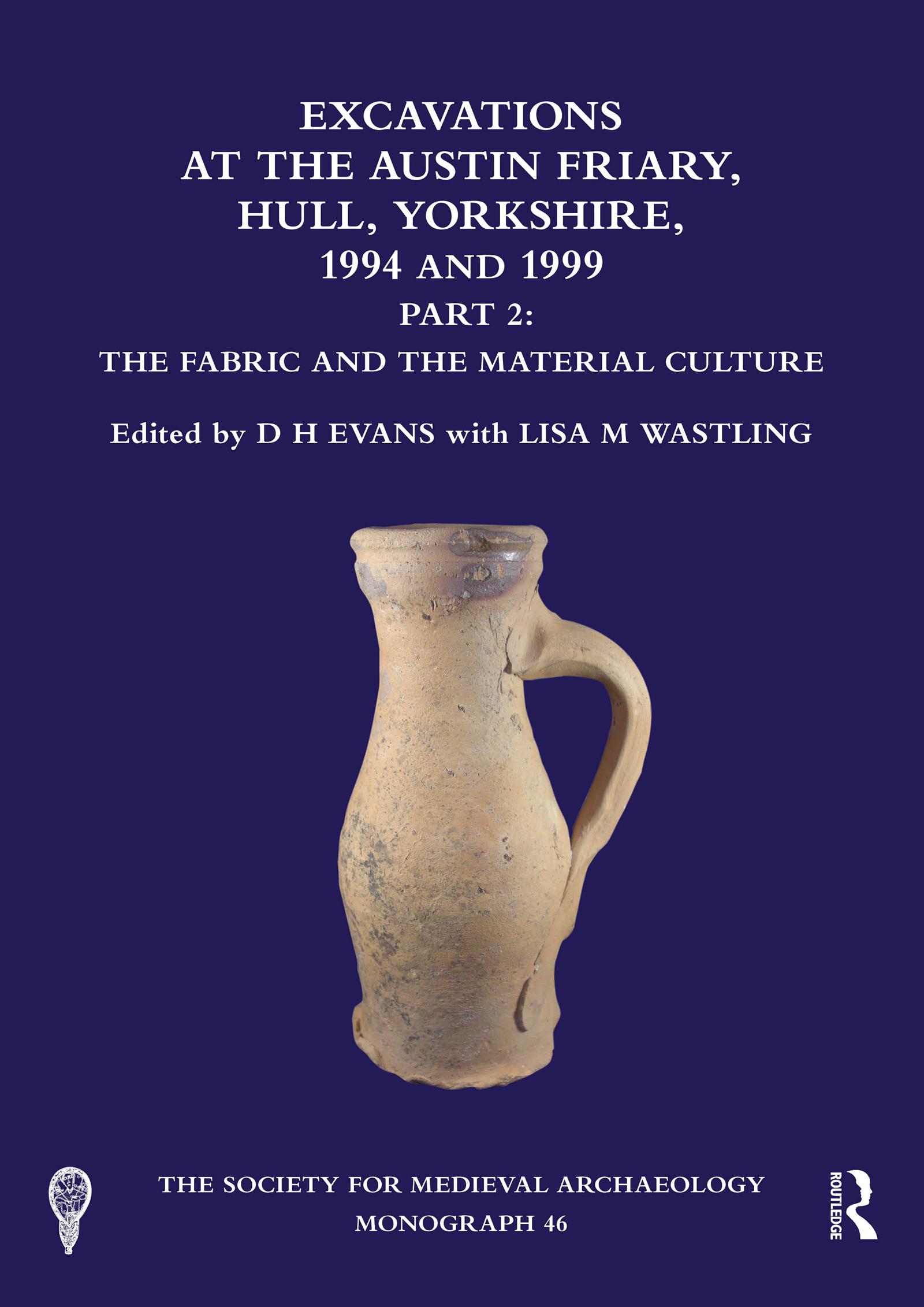
Excavations at the Austin Friary, Hull, Yorkshire, 1994 and 1999, Part 2, details the excavations of the Austin Friary in Hull, a house founded in 1316/17 and surrendered to the Crown in 1539.
This volume concentrates on the material culture recovered during the excavations. The site yielded a nationally significant group of medieval coffins, all but one of which were made of imported Baltic oak – the largest assemblage of such timber from the whole of Britain. There were also significant collections of well preserved textiles, leather, wood and dress-accessories. In addition, some of the burials were accompanied by carefully placed wooden rods, an under-reported burial tradition which can be found on either side of the North Sea. Many of the monastic buildings were reused after the Dissolution in 1539; partly in consequence, a large assemblage of masonry and ceramic building materials was recovered from this site. There were also significant collections of floor tiles (both plain and decorated), and window-glass, whilst other finds include rare finds of musical instrument components. Cumulatively, this volume sheds significant light upon a whole range of aspects of life and death within this northern religious house for a period of over two centuries, as well as offering yet more valuable evidence about Hull’s extensive medieval trading-links, as one of England’s leading ports.
This book is for researchers and archaeologists interested in the archaeology of medieval Britain as well as the role of Christianity in the Middle Ages.
Pay easily by card, Klarna, Apple Pay or Google Pay. Not happy? You always have a 14-day money-back guarantee. Read more in our terms. If you have any questions, email us at hello@memmo.org.
Memmo makes studying easier – wherever you are in the world. We bring your course books and smart study tools together in one place: summaries, quizzes, podcasts and flashcards. Plus Ted, your study buddy who answers anything you wonder. Over 75,000 students already study here – built to help you learn faster and stress less.