
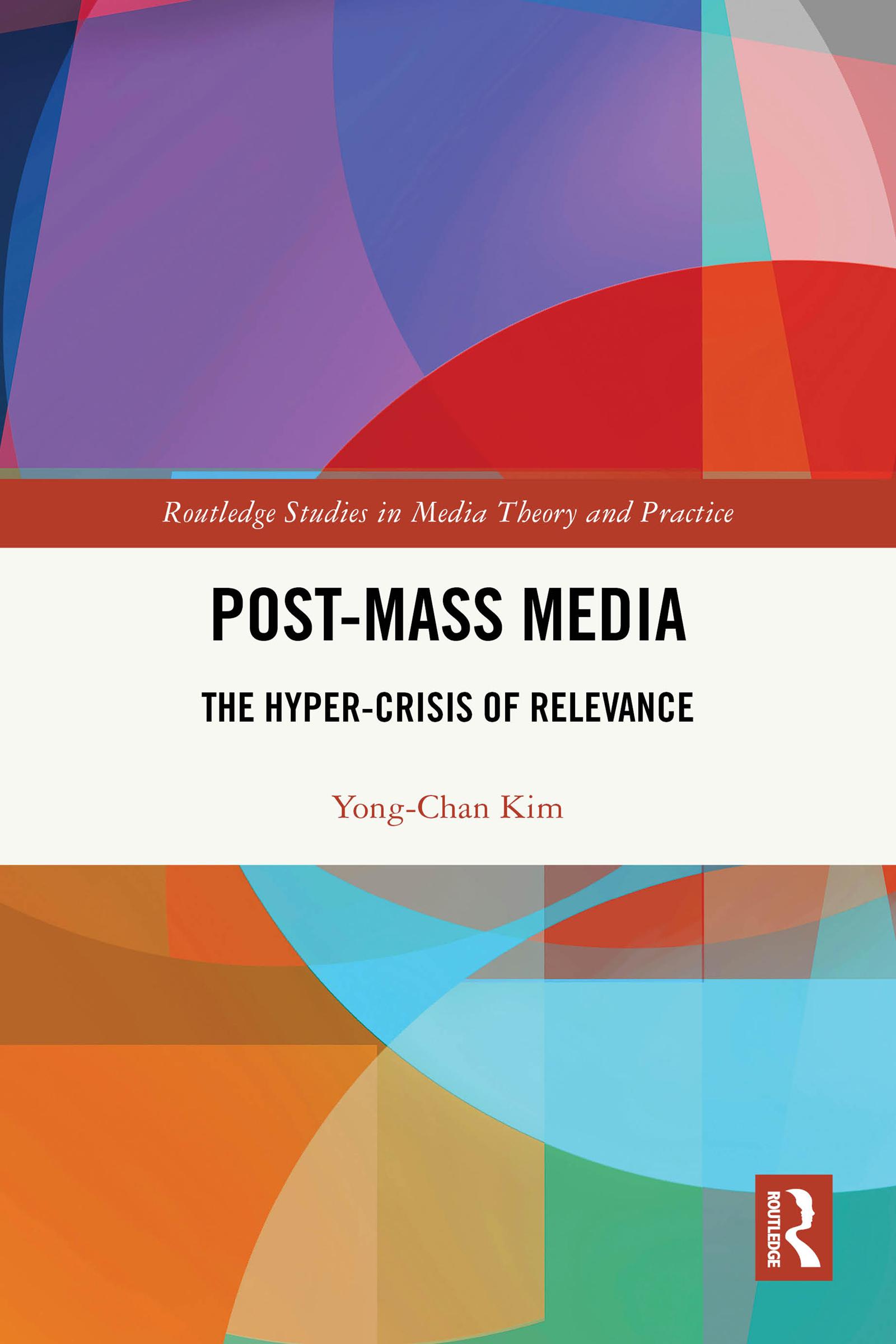
Post-Mass Media redefines media in the 21st century, viewing it as a pervasive environment rather than just tools or platforms.
Systematically examining the media environment and its key issues, this book considers the multidimensional conceptualization of media and differentiation between the mass media era and the post-mass media era. It explores media—tools, content, institutions, people, and spaces—and traces the evolution from the era of centralized mass media to today’s participatory and fragmented media environment, which also reveals new forms of exploitation and manipulation. This shift into the "post-mass media era" has created both opportunities and challenges, particularly around the concept of "relevance" in media. It examines how the mass media era created a "crisis of relevance" by delivering standardized content that was often disconnected from individual lives. In the post-mass media era, this has morphed into a "hyper-crisis of relevance," conceptualizing media as constantly in flux, never fixed, where personal and local stories gain visibility but risk commodification and distortion by global platforms. By reshaping how we conceptualize the role of media, this book empowers readers to critically assess the impact of the media environment on our collective and personal realities.
Ideal for media scholars, cultural theorists, sociologists, students, and general readers interested in the impact of the digital age on identity, society, and culture, Post-Mass Media offers a new framework for understanding media influence. Readers will gain insight into the ethical concerns of the current media environment and strategies for thoughtfully navigating it. This engaging and resourceful work will interest upper-level undergraduates, graduate students, and early-career researchers working in the areas of media and society, media sociology, new media technologies, cultural studies, urban studies, and digital humanities.
Pay easily by card, Klarna, Apple Pay or Google Pay. Not happy? You always have a 14-day money-back guarantee. Read more in our terms. If you have any questions, email us at hello@memmo.org.
Memmo makes studying easier – wherever you are in the world. We bring your course books and smart study tools together in one place: summaries, quizzes, podcasts and flashcards. Plus Ted, your study buddy who answers anything you wonder. Over 50,000 students already study here – built to help you learn faster and stress less.