
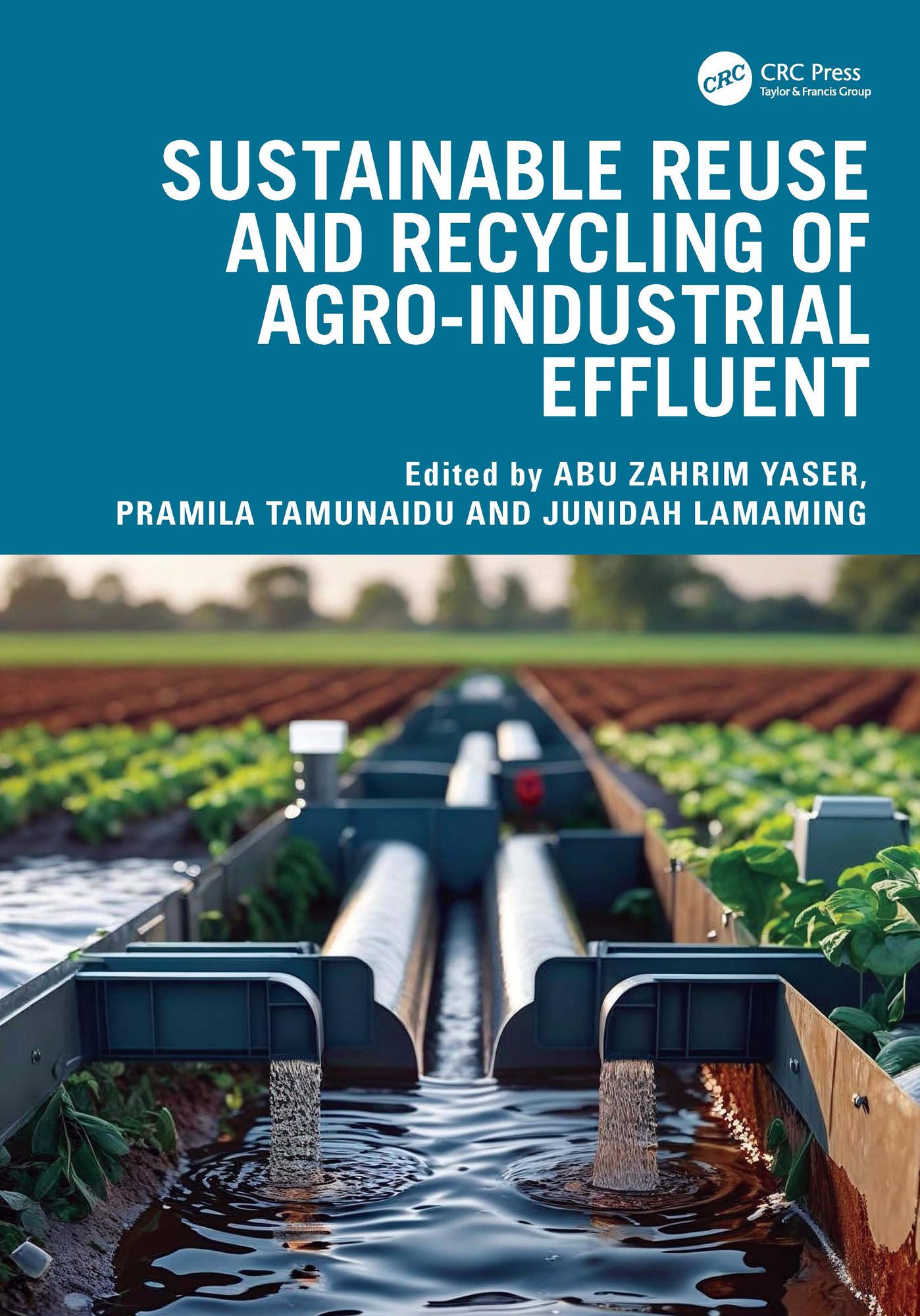
Combating climate change and securing water for future generations requires rethinking waste as opportunity. This book presents a timely and accessible roadmap for transforming agro-industrial effluent from an environmental liability into a suite of value-added, sustainable resources.
At its core, the volume systematically covers the science and technology of effluent valorization: recovering inherent energy for bioenergy, extracting phosphorus for cleaner fertilizer production, and purifying water to standards suitable for irrigation or non-potable reuse. It goes further, detailing the conversion of effluent into biofertilizers, liquid nutrient formulations, and microalgae biomass, and exploring its use as a plant growth stimulant. Each pathway is framed within a circular water economy, emphasizing operational efficiency, alignment with SDG 6,7 and 12, and the integration of environmental, societal, and economic impact assessments. Practical processing methods, resource recovery strategies, and quality upgrading techniques are presented so that reuse is both technically viable and environmentally responsible.
Original and actionable, this book offers an integrated framework that reframes effluent as a multipurpose resource rather than waste. It demonstrates advantages like phosphorus retrieval without relying on sewage sludge, and provides clear guidance for researchers, engineers, technologists, policymakers, and agro-industry stakeholders seeking to implement sustainable effluent management at scale.
Salient Features to stress in promotion include:
This book’s uniqueness lies in its holistic and practical reframing of agro-industrial effluent, from environmental burden to a diversified resource portfolio. It integrates cutting-edge recovery technologies including energy, nutrients, and biomass with water purification, framed explicitly against global sustainability goals (SDG 6, 7 and 12), and evaluates outcomes across environmental, societal, and economic dimensions. Promotion should stress its interdisciplinary utility (researchers, engineers, industry, policy), its real-world applicability with actionable processing pathways, and its novel comparison of resource recovery strategies within a circular economy paradigm.
Pay easily by card, Klarna, Apple Pay or Google Pay. Not happy? You always have a 14-day money-back guarantee. Read more in our terms. If you have any questions, email us at hello@memmo.org.
Memmo makes studying easier – wherever you are in the world. We bring your course books and smart study tools together in one place: summaries, quizzes, podcasts and flashcards. Plus Ted, your study buddy who answers anything you wonder. Over 50,000 students already study here – built to help you learn faster and stress less.