
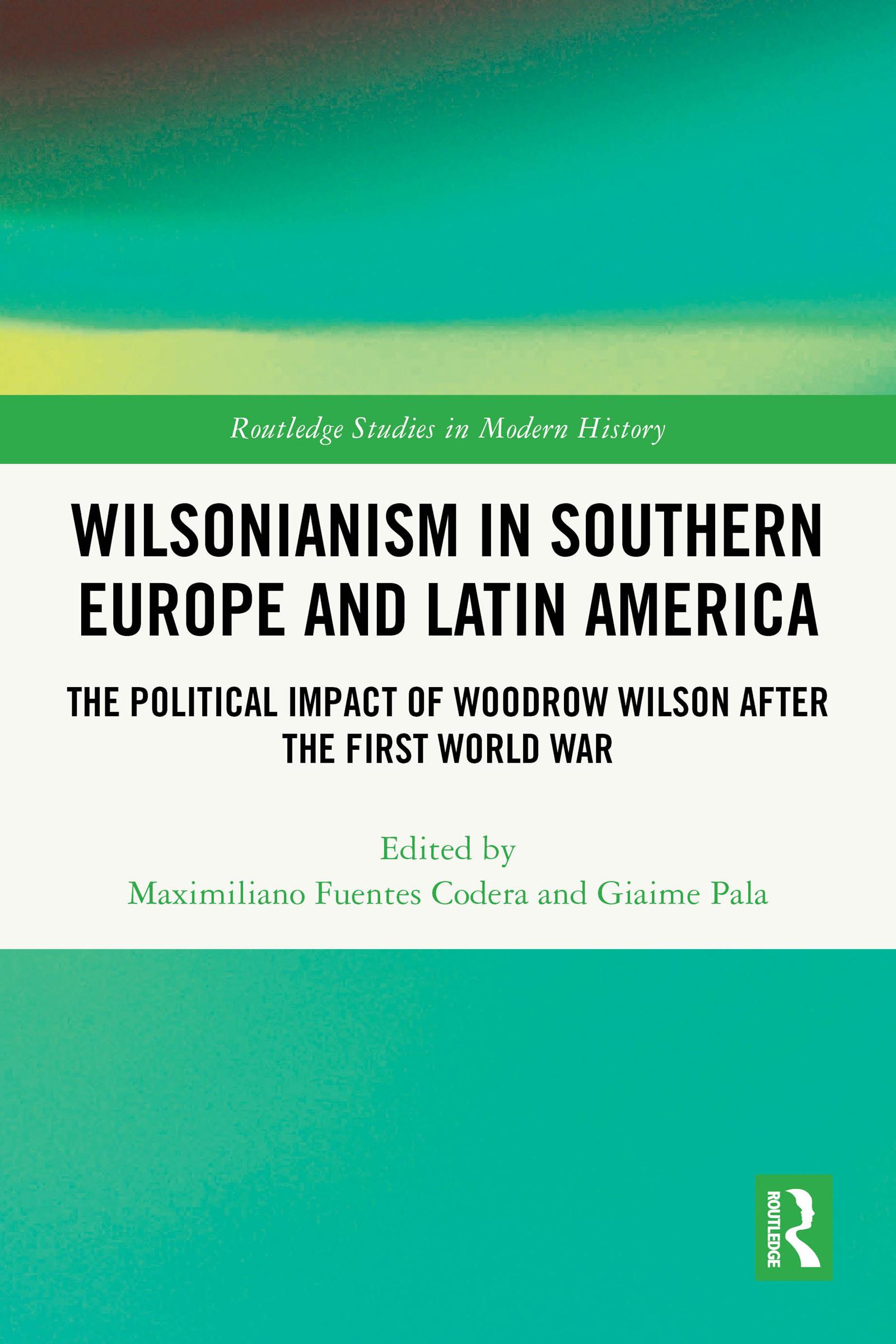
Approaches to the impact of Wilsonianism have traditionally been developed from the fields of international relations, international law and the study of global self-determination movements.
This book offers a complementary and original perspective by examining the political influence of Wilsonian ideals in the broader crisis of liberalism following the First World War. While taking into account Wilson’s role in inspiring self-determination movements, the book primarily analyses the political construction and appropriation of Wilson’s image – as a reformist, pacifist, democratic and liberal leader – by liberal and socialist circles in Europe and Latin America. At the same time, it explores the rejection of Wilsonianism expressed by right-wing political forces and intellectuals, both during the war and in the aftermath of the Treaty of Versailles. Adopting a comparative and transnational approach, the study focuses on “peripheral” contexts that have received limited scholarly attention – such as Spain, Portugal and various countries in Latin America – while also incorporating two key cases, France and Italy, due to their close political and ideological connections with the former.
This book is a valuable resource for students and scholars in the fields of Global History and International Affairs, as well as all those interested in Latin American or Modern European History.
Pay easily by card, Klarna, Apple Pay or Google Pay. Not happy? You always have a 14-day money-back guarantee. Read more in our terms. If you have any questions, email us at hello@memmo.org.
Memmo makes studying easier – wherever you are in the world. We bring your course books and smart study tools together in one place: summaries, quizzes, podcasts and flashcards. Plus Ted, your study buddy who answers anything you wonder. Over 50,000 students already study here – built to help you learn faster and stress less.