
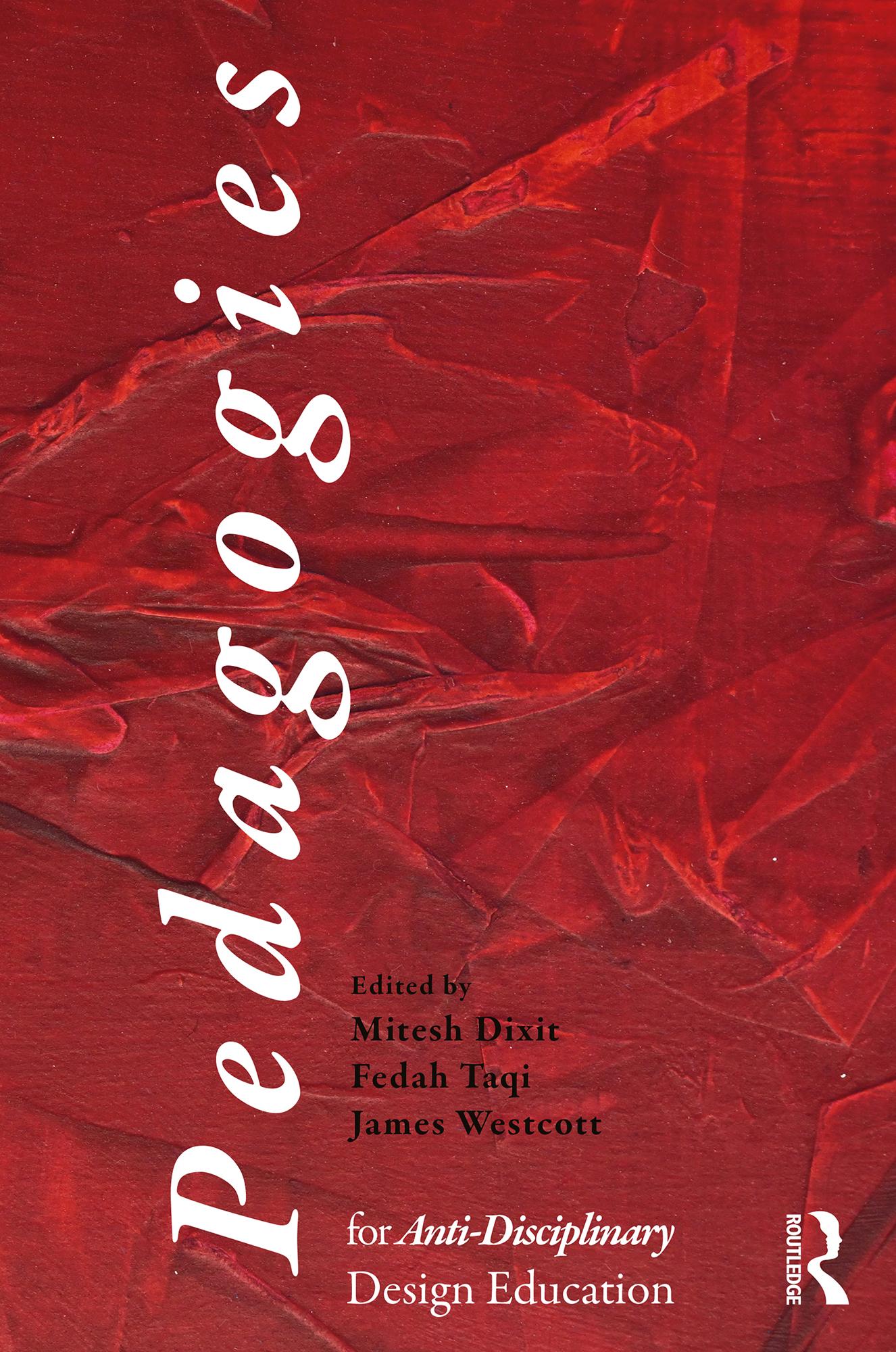
Architectural education today is stretched between institutional inertia, market orientation, and planetary polycrisis. Contemporary urgencies – climate, nature, inequality, food systems – are typically treated superficially, when they demand a reordering of the terms of pedagogy itself. Pedagogies for Anti-Disciplinary Design Education assembles methods from 15 contributors – across 12 universities in 10 countries – who are attempting to encompass the transcalar conflicts that design must take responsibility for.
Why anti-disciplinarity? Architecture is undoubtedly permissive in its range of interests and roles. Still, in design schools today, even subjects that share teaching spaces – architecture, urbanism, landscape, preservation, (nature) conservation, interior design, industrial design, etc. – are structurally prevented from interacting. And architecture education is so demanding and so market-oriented that engaging disciplines beyond design schools – geography, sociology, history, politics, theory – is even harder.
This book argues that a radical rethink is needed. An anti-disciplinary approach can engage the entangled supply chains, energy regimes, debt structures, border policies, histories of dispossession, and more-than-human ecologies in which design operates. Another design education is not only imaginable but already emerging in the experiments documented here, and it can be pursued without denying the constraints within which most of us work.
Pay easily by card, Klarna, Apple Pay or Google Pay. Not happy? You always have a 14-day money-back guarantee. Read more in our terms. If you have any questions, email us at hello@memmo.org.
Memmo makes studying easier – wherever you are in the world. We bring your course books and smart study tools together in one place: summaries, quizzes, podcasts and flashcards. Plus Ted, your study buddy who answers anything you wonder. Over 75,000 students already study here – built to help you learn faster and stress less.