
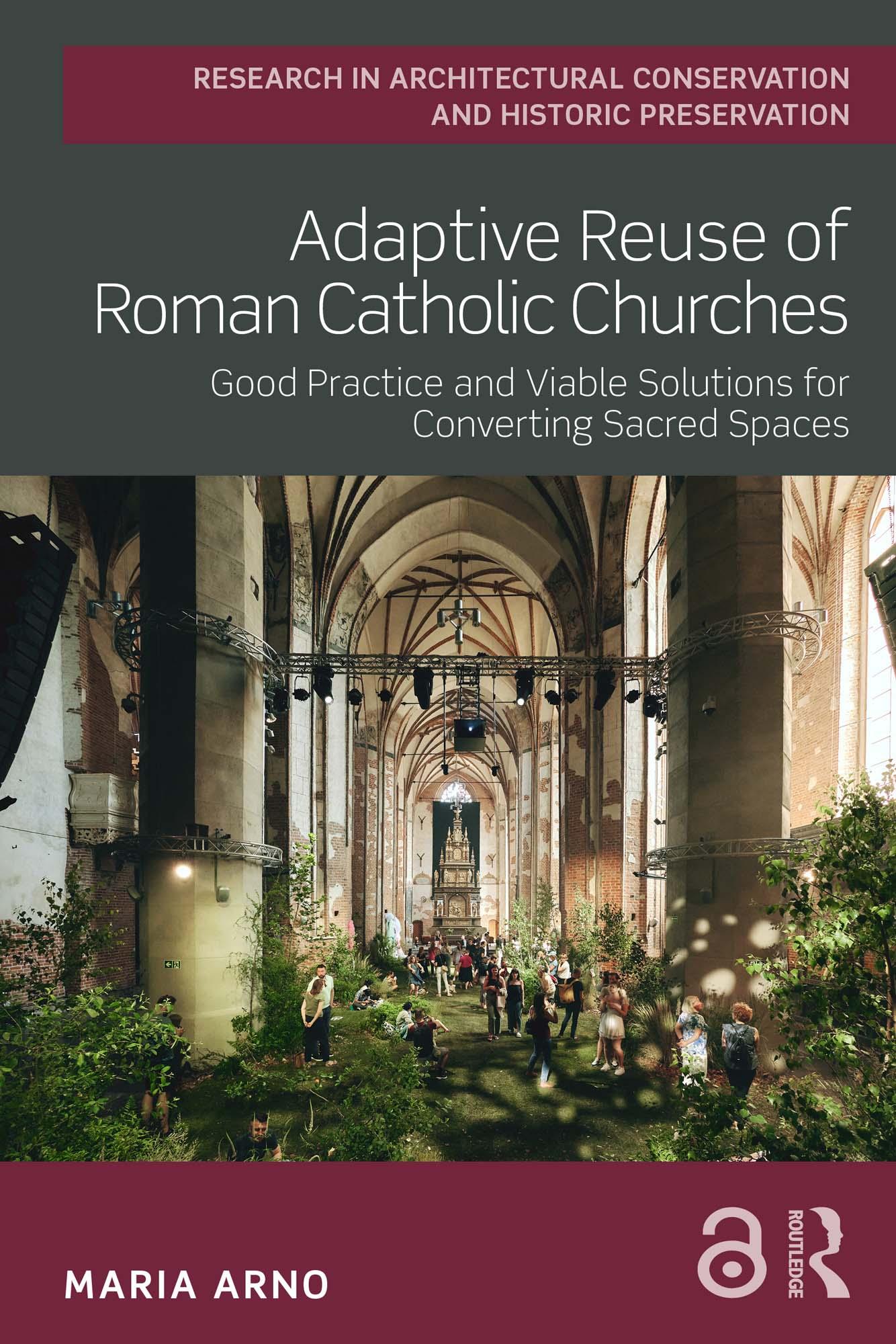
This book examines the adaptive reuse of Roman Catholic churches through twenty-five case studies from Poland, Germany, the Netherlands, and Belgium. It addresses the complex intersection of theology, heritage conservation, and contemporary social needs and explores how sacred spaces can serve new secular purposes while preserving their spiritual, historical, and cultural significance.
Integrating historical, theological, architectural, and policy perspectives, this book traces the historical evolution of church reuse, the impact of secularization, and the ethical responsibilities of architects, alongside the conservation principles that shape sacred heritage management. Theological reflections address ecclesiastical spatial symbolism, canon law, profanation, and episcopal guidelines in the selected countries. Comparative national profiles analyze religious demographics, church infrastructure, and property stewardship. Case studies illustrate diverse reuse models – from liturgical continuity to radical transformation – across cultural, social, commercial, residential, and interfaith contexts. The conclusions synthesize the findings, offering strategies that balance heritage preservation with contemporary functional needs.
This publication is aimed at architects, historians, art theorists, architecture researchers, conservators, priests, and the managers of these buildings, as well as enthusiasts of sacred architecture who care deeply about its future, as this book is intentionally multi-layered and multi-dimensional.
Pay easily by card, Klarna, Apple Pay or Google Pay. Not happy? You always have a 14-day money-back guarantee. Read more in our terms. If you have any questions, email us at hello@memmo.org.
Memmo makes studying easier – wherever you are in the world. We bring your course books and smart study tools together in one place: summaries, quizzes, podcasts and flashcards. Plus Ted, your study buddy who answers anything you wonder. Over 75,000 students already study here – built to help you learn faster and stress less.