
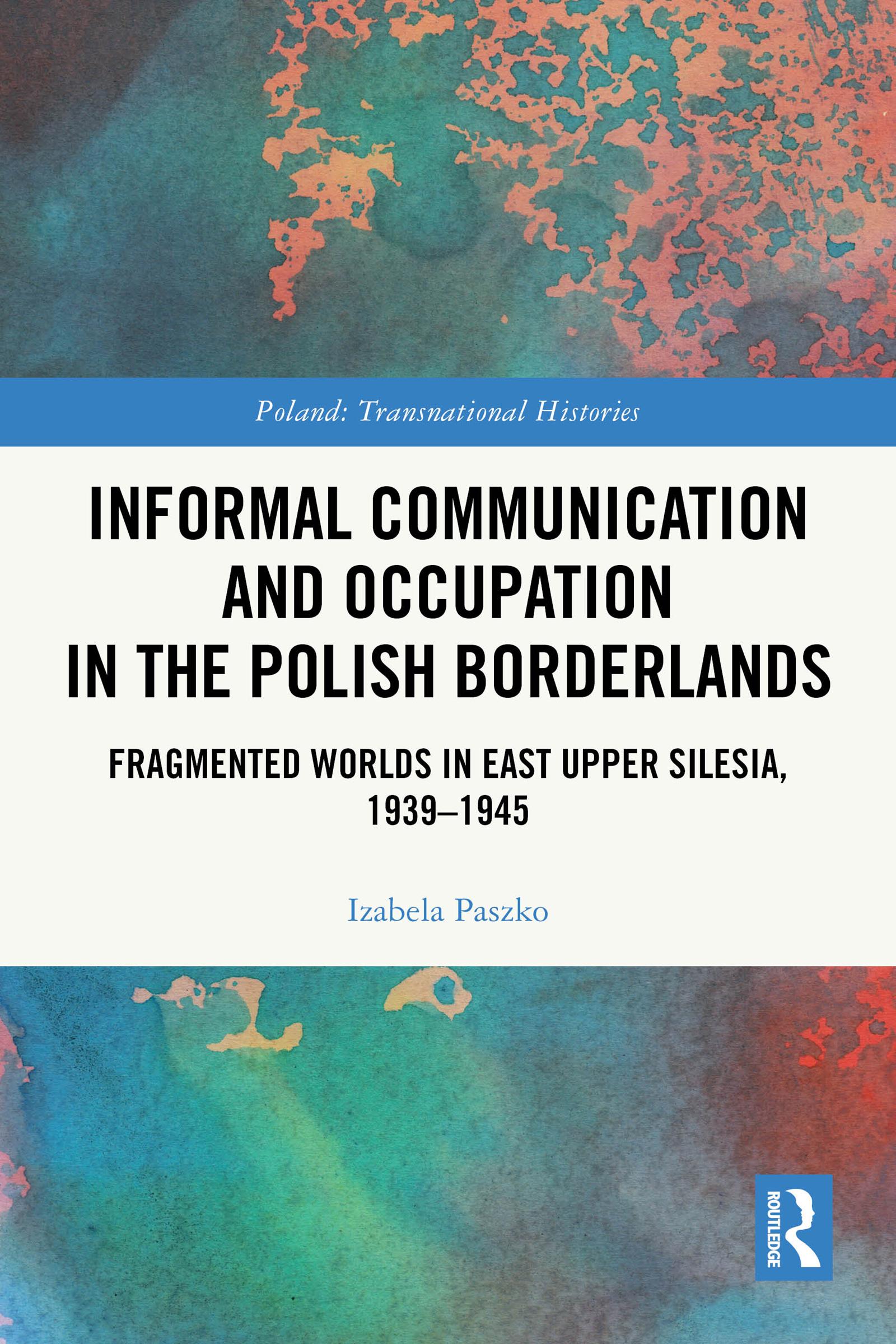
The book explores the neglected role and social dynamics of informal communication – interpersonal channels not controlled ‘from above’ – in the region of Upper Silesia under the German occupation during the Second World War (1939–1945).
Whereas the classic dichotomies, such as private-public and formal-informal, have been widely explored and discussed in the humanities, the main focus of this volume lies in the reconstruction of the information landscape of wartime and its deployment by families, co-workers, neighbours, and other social groups. Through the prism of personal stories, the book analyses functions and forms of informal communication that existed in a contextual and ephemeral way such as gossip, rumours, and workers’ conversations, offering an interdisciplinary perspective on everyday life during this period.
Informal Communication and Occupation in the Polish Borderlands is primarily aimed at scholars of contemporary history, social history, and Eastern European history, while its important lens as a study of fake news and misinformation in modern times will also be engaging to undergraduate classrooms and general readers.
Pay easily by card, Klarna, Apple Pay or Google Pay. Not happy? You always have a 14-day money-back guarantee. Read more in our terms. If you have any questions, email us at hello@memmo.org.
Memmo makes studying easier – wherever you are in the world. We bring your course books and smart study tools together in one place: summaries, quizzes, podcasts and flashcards. Plus Ted, your study buddy who answers anything you wonder. Over 50,000 students already study here – built to help you learn faster and stress less.