
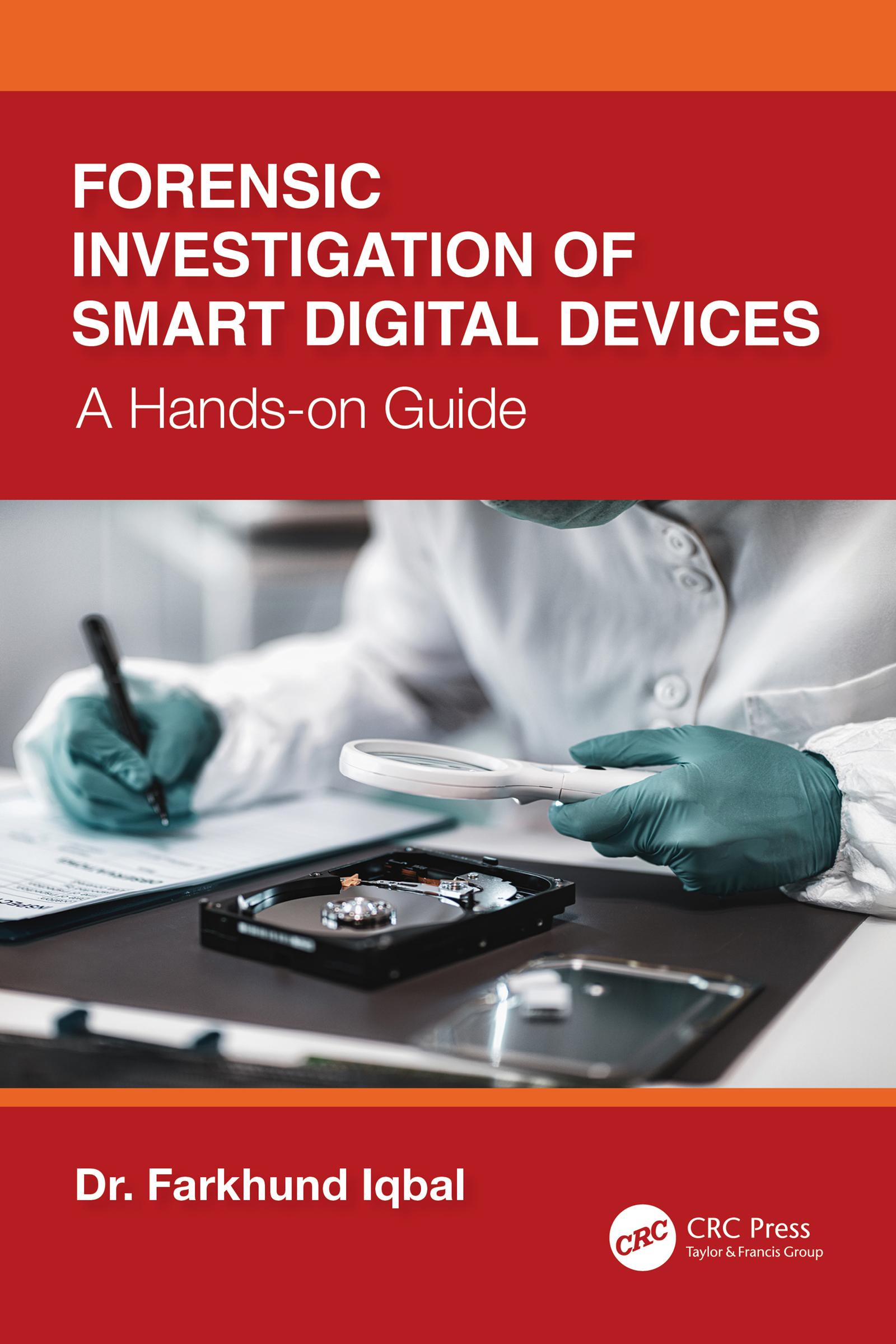
As digital ecosystems advance toward pervasive connectivity, smart devices have become embedded in the operational, social, and economic fabric of modern life. While this integration enhances productivity and accessibility, it generates unprecedented volumes of heterogeneous electronic data and expands the attack surface for cybercrime. The complexity, proprietary architectures, and distributed nature of these technologies simultaneously present profound challenges for contemporary forensic practice. Forensic Investigation of Smart Digital Devices: A Hands-On Guide offers a rigorous and comprehensive examination of these challenges. Across thirteen systematically structured chapters, the book provides an in-depth exploration of forensic methodologies for a wide spectrum of device classes, including IoT infrastructures, smartphones, embedded chips, unmanned aerial vehicles (UAVs), social robots, gaming consoles, smart wearables, mobile applications, and autonomous vehicles. Each chapter translates theory into actionable investigative workflows using validated tools, documented case studies, and reproducible techniques. Addressing both current technologies and emerging frontiers, the book integrates discussions on artificial intelligence (AI), machine learning (ML), computer vision (CV), and advanced computational paradigms, highlighting their transformative role in modern digital forensic analysis. This guide equips forensic investigators, cybersecurity specialists, law enforcement personnel, legal professionals, and academic researchers with the methodological rigor and applied skills required to conduct thorough and reliable forensic investigations. Through practical examples and hands-on exercises, it bridges the gap between theory and practice, offering a valuable resource for strengthening cybersecurity and combating cybercrime in the era of smart connected technologies.
Pay easily by card, Klarna, Apple Pay or Google Pay. Not happy? You always have a 14-day money-back guarantee. Read more in our terms. If you have any questions, email us at hello@memmo.org.
Memmo makes studying easier – wherever you are in the world. We bring your course books and smart study tools together in one place: summaries, quizzes, podcasts and flashcards. Plus Ted, your study buddy who answers anything you wonder. Over 75,000 students already study here – built to help you learn faster and stress less.