
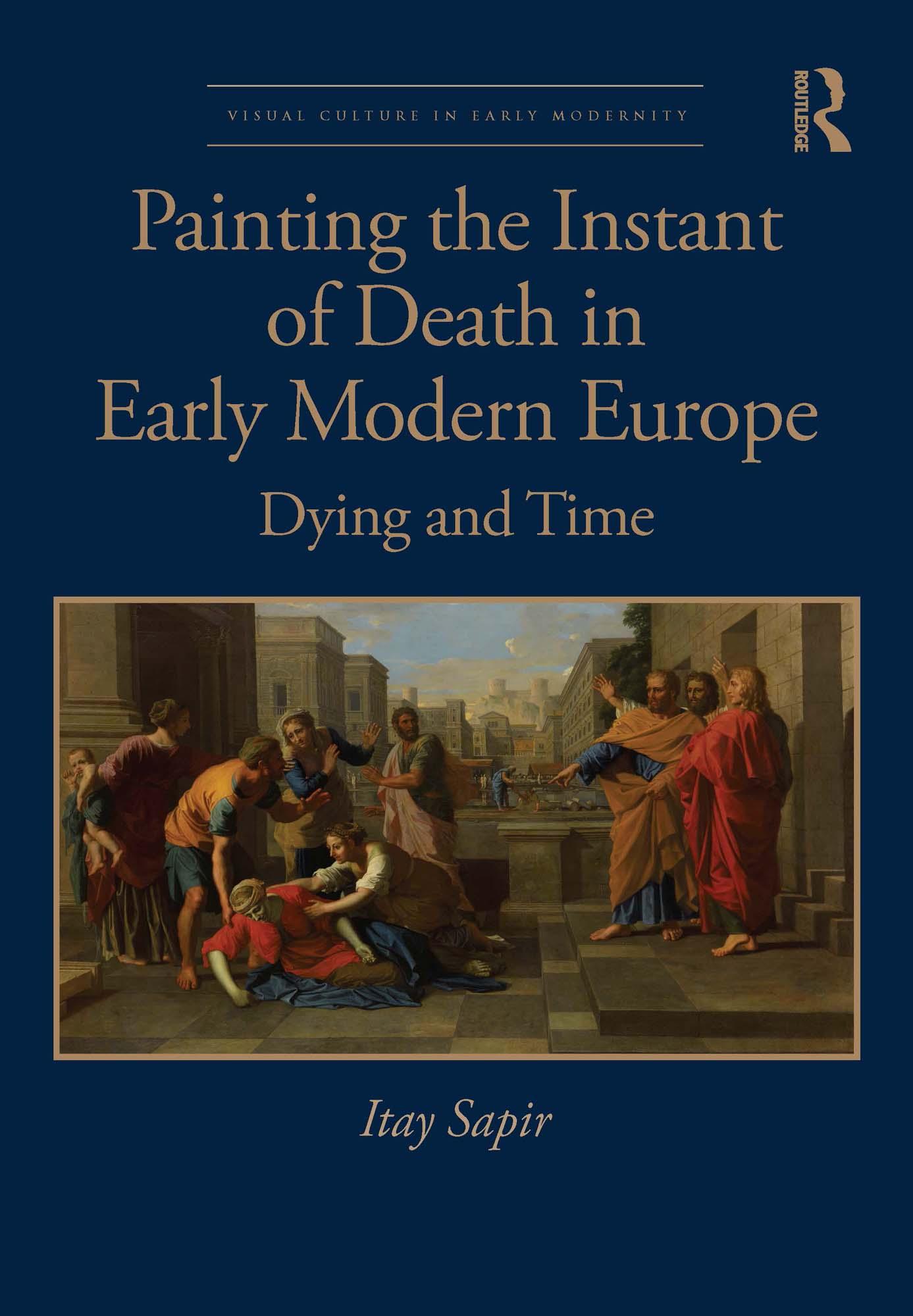
This volume traces the evolution of the pictorial representation – and, more often than not, the visual effacement – of the instant of death in Europe between the Renaissance and the middle of the seventeenth century.
Chapters show how artistic choices tackling the visual depiction of “death events” (i.e. death taking place, as opposed to the long processes of agony on the one hand and mourning on the other) are manifestations of theoretical, philosophical, and anthropological issues as crucial to early modern culture as they are today. This book discusses the very concept of an instant and its aporias; the more specific question (both philosophical and biological) of death, its definitions and its temporality; and the vast art-theoretical issues around painting and its fraught relation with time, liveliness, and the inanimate. Among the artists discussed are Caravaggio, Rubens, Poussin, Ribera, Artemisia Gentileschi, Michelangelo, Rosso Fiorentino, and Piero della Francesca.
This book will be of interest to scholars working in art history, Renaissance and Baroque studies, and death studies.
Pay easily by card, Klarna, Apple Pay or Google Pay. Not happy? You always have a 14-day money-back guarantee. Read more in our terms. If you have any questions, email us at hello@memmo.org.
Memmo makes studying easier – wherever you are in the world. We bring your course books and smart study tools together in one place: summaries, quizzes, podcasts and flashcards. Plus Ted, your study buddy who answers anything you wonder. Over 50,000 students already study here – built to help you learn faster and stress less.