
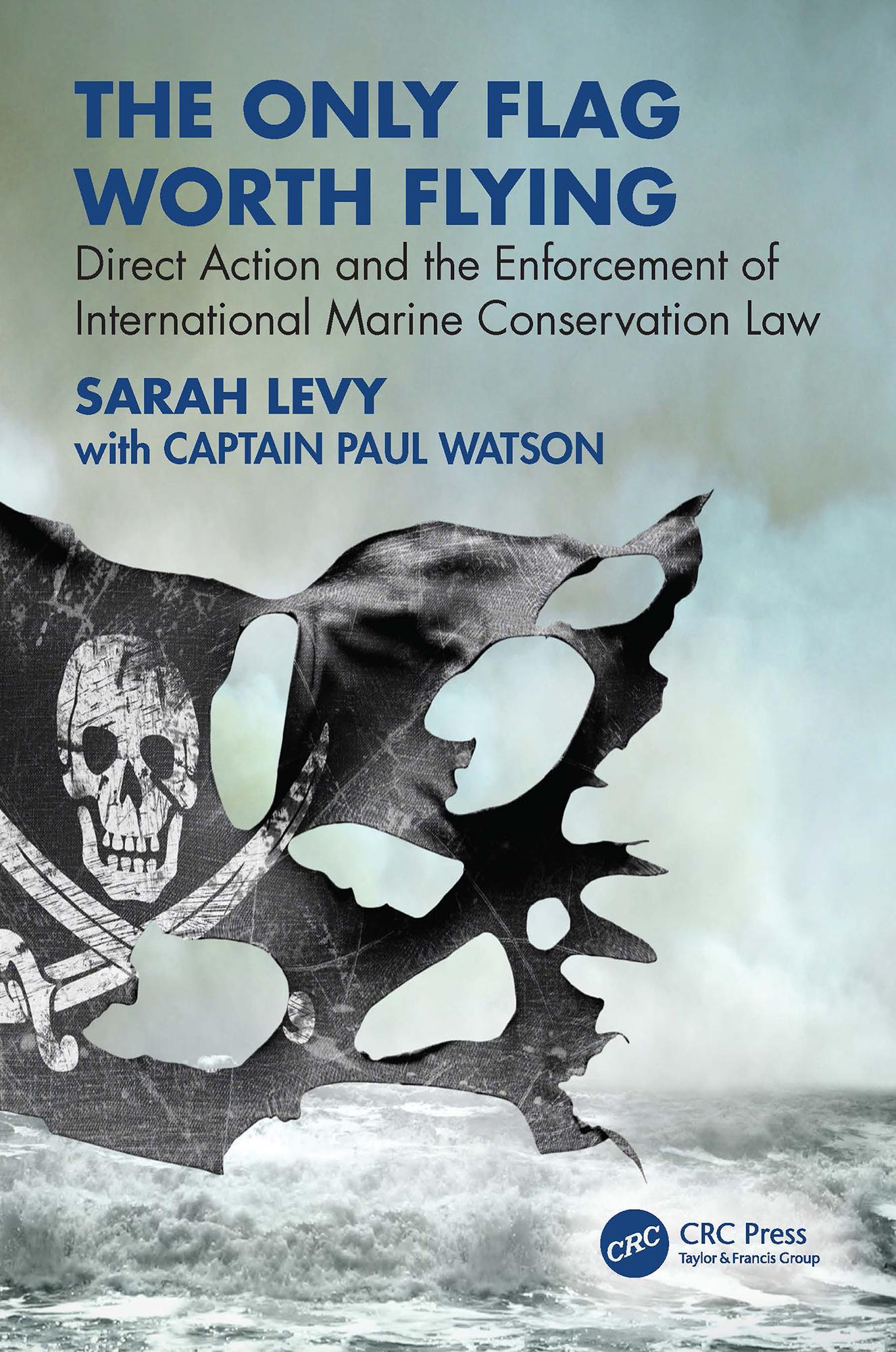
The subject of international environmental law is fraught with debate over its legitimacy and efficacy. If laws without enforcement are merely good advice, then how can the environment be meaningfully protected by international legal institutions? This book examines that question through the lens of marine conservation, focusing on the Sea Shepherd Conservation Society (SSCS) and the Captain Paul Watson Foundation (CPWF) as non-state actors intervening directly to enforce international marine conservation laws.
The book unfolds in three parts, moving from Soundings, which explores the legal and historical foundations of marine conservation law, to Currents, which traces the emergence of direct-action enforcement and its necessity in instances where states lack the means, will, or jurisdiction to act, and finally to Horizons, which looks ahead to the emerging landscape of ocean governance beyond the state. In these later chapters, the book examines the increasing criminalization of environmental activism, the rise of Indigenous-led and decentralised enforcement models, and the plural legal imaginaries reshaping what legitimacy might mean in a post-sovereign world.
Grounded in bio- and ecocentric legal theory, and drawing on legal analysis, political critique, and detailed campaign case studies, the book challenges the assumption that enforcement is the sole domain of the nation-state. Instead, it argues that legitimacy may derive not from formal authority, but from the courage to uphold laws that institutions have abandoned. In doing so, this book reframes direct action as being essential to the law’s integrity: the upholding of a shared responsibility to conserve our oceans. For when legality becomes illusion, resistance may be the most just act of all. In this sea of fallen standards, the pirate flag may be the only one worth flying.
Pay easily by card, Klarna, Apple Pay or Google Pay. Not happy? You always have a 14-day money-back guarantee. Read more in our terms. If you have any questions, email us at hello@memmo.org.
Memmo makes studying easier – wherever you are in the world. We bring your course books and smart study tools together in one place: summaries, quizzes, podcasts and flashcards. Plus Ted, your study buddy who answers anything you wonder. Over 50,000 students already study here – built to help you learn faster and stress less.