
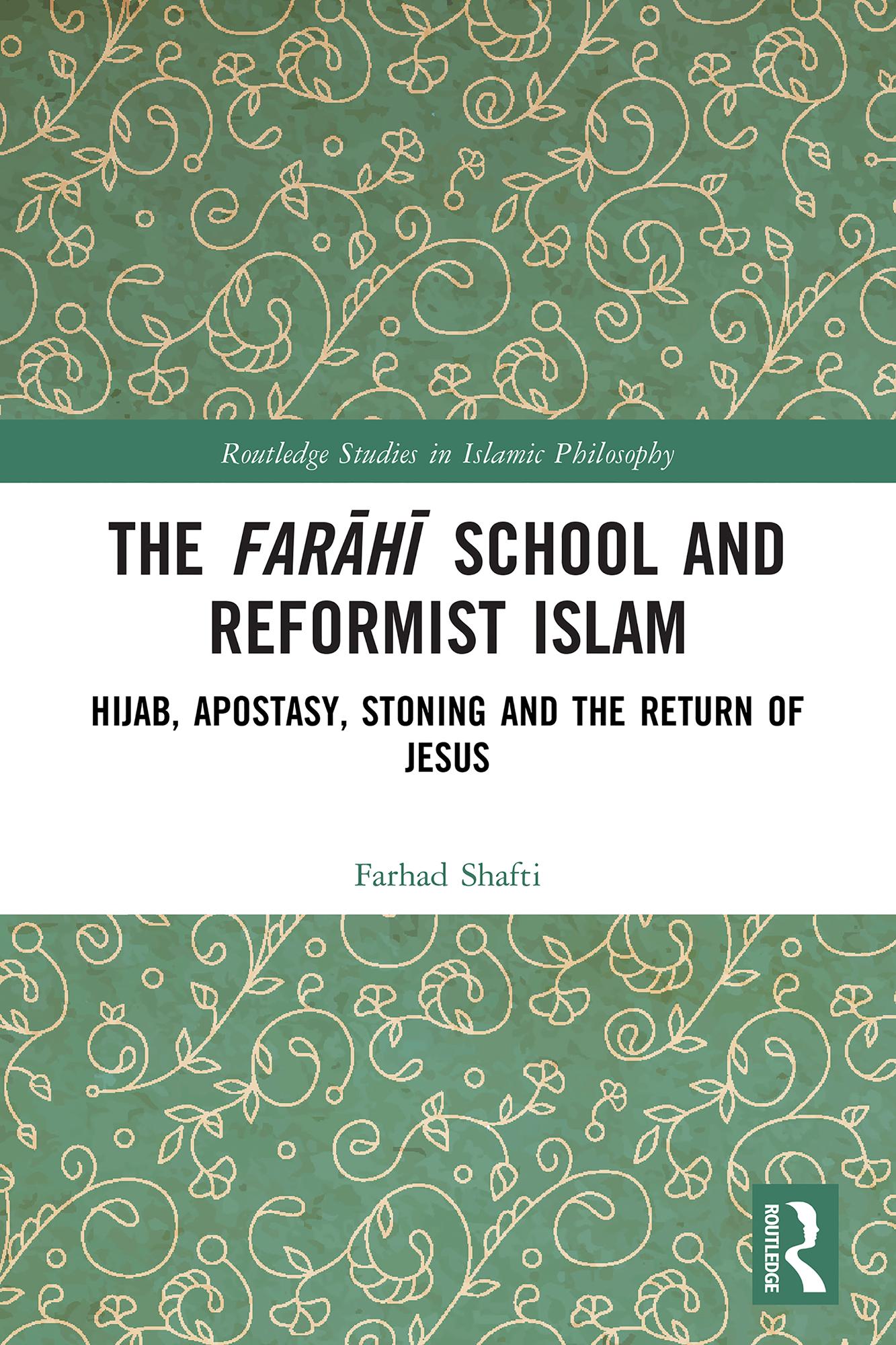
Examining the emergence and development of the Farāhī school of thought and its methodology, this book explores the four case studies of stoning, apostasy, hijab, and the return of Jesus.
It demonstrates the reforming Farāhī approach and divergence from traditional Islamic thought, tracing Farāhī scholarship through the years, from Hamiduddin Farahi to Amin Ahsan Islahi and Javed Ahmad Ghamidi. Through the case studies the author analyses Farāhī approach to the Qur’an, the Sunnah, and religion. For each case study, he looks at contested areas and critically reviews traditional approaches, evaluating various sources, including the Qur’an, Tafsīrs from both Sunni and Shia scholars, Ḥadīths, and where applies Fiqh, before moving on to discussing the Farāhī approach, including interviews with Javed Ahmad Ghamidi, the present academic leader of the approach. Each case study ends with comparative analysis, leading to extracting the methodological features of the Farāhī school of thought at the end of the book. The book closes with a critical discussion of the methodology of the Farāhī school of thought and a summary.
The Farahi School and Reformist Islam is the first academic work to go beyond the Farāhī school’s theory of Qur’anic coherence, aiming to derive its methodological features through original analysis and a case study approach. It will appeal to advanced students and scholars of Islam, particularly those interested in Qur’anic exegesis and Islamic jurisprudence. It will be invaluable for those exploring new or reformist methodologies in deriving rules and concepts from the text, especially the approach of the Farāhī school of thought. It will also be of considerable interest to general readers seeking insight into the background and evolving perspectives on any of the case study subjects addressed in the book.
Pay easily by card, Klarna, Apple Pay or Google Pay. Not happy? You always have a 14-day money-back guarantee. Read more in our terms. If you have any questions, email us at hello@memmo.org.
Memmo makes studying easier – wherever you are in the world. We bring your course books and smart study tools together in one place: summaries, quizzes, podcasts and flashcards. Plus Ted, your study buddy who answers anything you wonder. Over 50,000 students already study here – built to help you learn faster and stress less.