
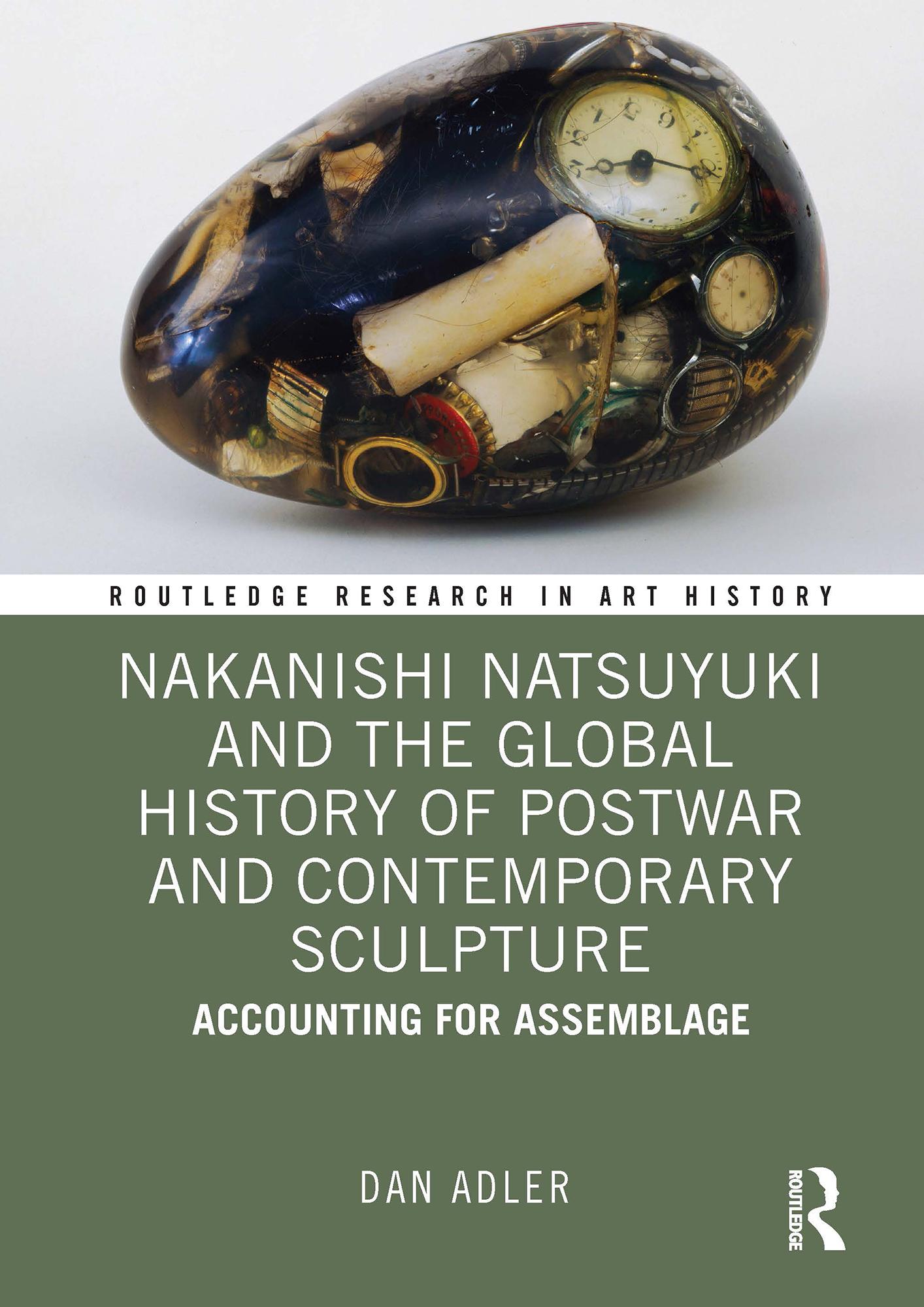
As the first book-length study of Nakanishi Natsuyuki’s sculptural practice, this volume explores his assemblages in dialogue with the postwar history of sculpture as a global phenomenon in the 1960s and beyond.
Nakanishi’s series of Compact Objects (produced from 1962 to 1968) allow for a reconsideration of the role of assemblage within cultural tendencies of the postwar and contemporary periods, both within and without Japan. This role forefronts the concepts of intimacy and interactivity—as well as ritual and process—within the context of sculptural experience. Nakanishi’s critique of consumerism and conformity within these works—along with his experimentation with new plastic technologies—allows for a comparative treatment that includes a variety of movements and tendencies in Japan, Europe, and the US, including Minimalism, Fluxus, Neo-Dada, and Nouveau réalisme, among others. The final portions of the book offer a wider and global context of postwar and contemporary tendencies towards assemblage, including an in-depth study of a multisensory exhibition by Yuko Mohri, held at the Venice Biennale in 2024.
The book will be of interest to scholars working in art history, contemporary art, and Japanese studies.
Pay easily by card, Klarna, Apple Pay or Google Pay. Not happy? You always have a 14-day money-back guarantee. Read more in our terms. If you have any questions, email us at hello@memmo.org.
Memmo makes studying easier – wherever you are in the world. We bring your course books and smart study tools together in one place: summaries, quizzes, podcasts and flashcards. Plus Ted, your study buddy who answers anything you wonder. Over 50,000 students already study here – built to help you learn faster and stress less.