
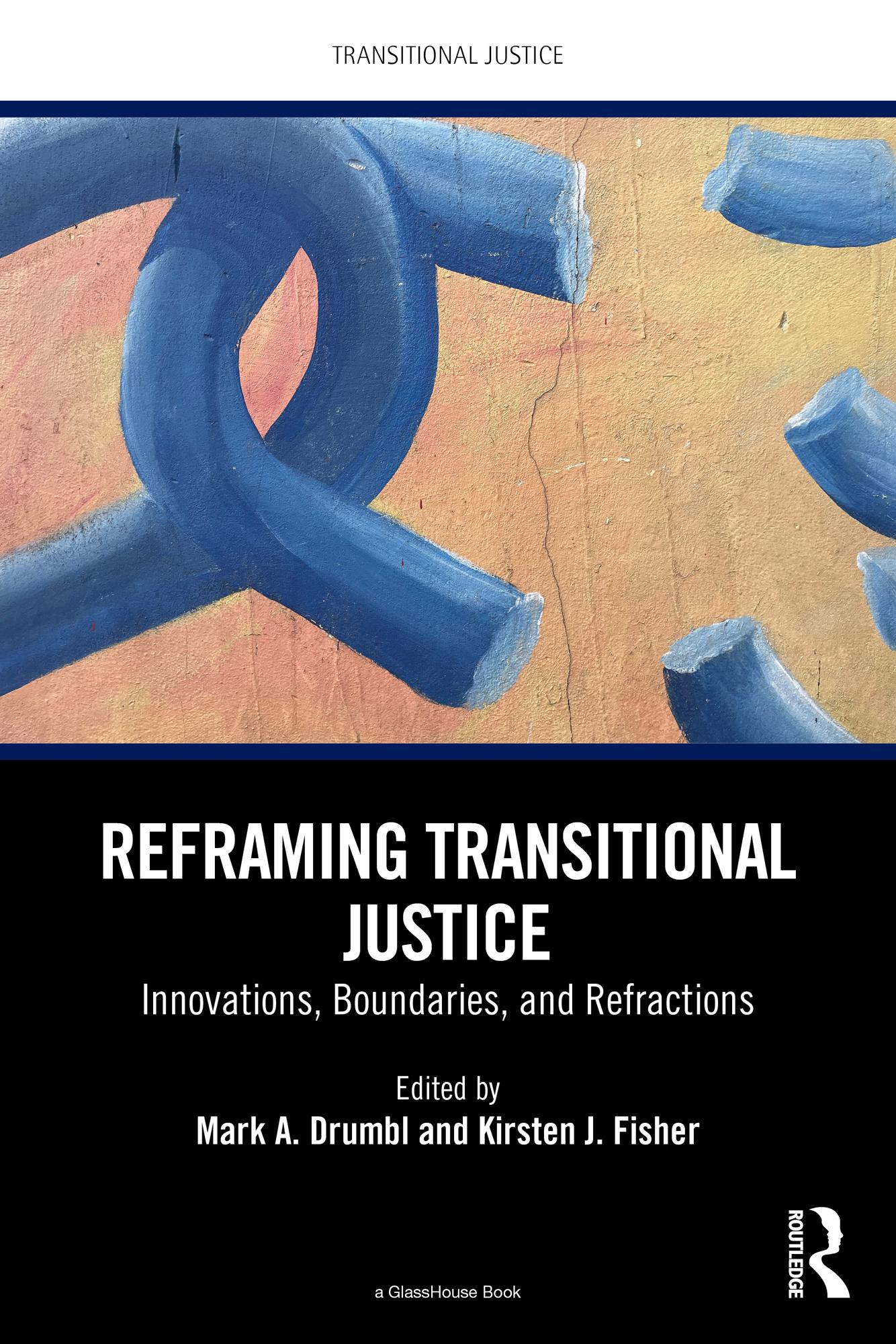
This book challenges the simplicity, predestination, and self-evident nature of contemporary narratives of transitional justice.
Transitional justice is the field of study that examines how states should reckon with massive human rights abuses. The book upends these assumptive narratives on three crucial fronts. The first front is that of innovations. Here, the book questions the ability of transitional justice to deliver tangible successes in an era of rapid and overwhelming technological change and contestation over what constitutes human memory, communicative dialogue, and reliable evidence. The second front involves boundaries. Here the book confronts the professed superpower of transitional justice to do more and more, in an endless concatenation of additives. While there is cause for optimism, this book also suggests that transitional justice remains awkward in how it copes with the existential pressures of environmental, health, and cultural crises. On its third front, refractions, this book identifies how transitional justice addresses racism, misogyny, and democratic backsliding. How the prism of transitional justice interventions refracts these scourges remains inadequate. Throughout, the book asks readers to imagine where the field and practice of transitional justice could go from here—what new innovations are required, what boundaries must be stretched or retrenched, and what perspectives need to be considered due to new ways of seeing current and past atrocities.
Accordingly, this book will be of considerable interest to academics, practitioners working on post-conflict reconstruction, and students at all levels ranging from undergraduate to post-doctoral in the areas of law, politics, cultural property, criminology, human rights, international relations, and technology studies.
Pay easily by card, Klarna, Apple Pay or Google Pay. Not happy? You always have a 14-day money-back guarantee. Read more in our terms. If you have any questions, email us at hello@memmo.org.
Memmo makes studying easier – wherever you are in the world. We bring your course books and smart study tools together in one place: summaries, quizzes, podcasts and flashcards. Plus Ted, your study buddy who answers anything you wonder. Over 50,000 students already study here – built to help you learn faster and stress less.