
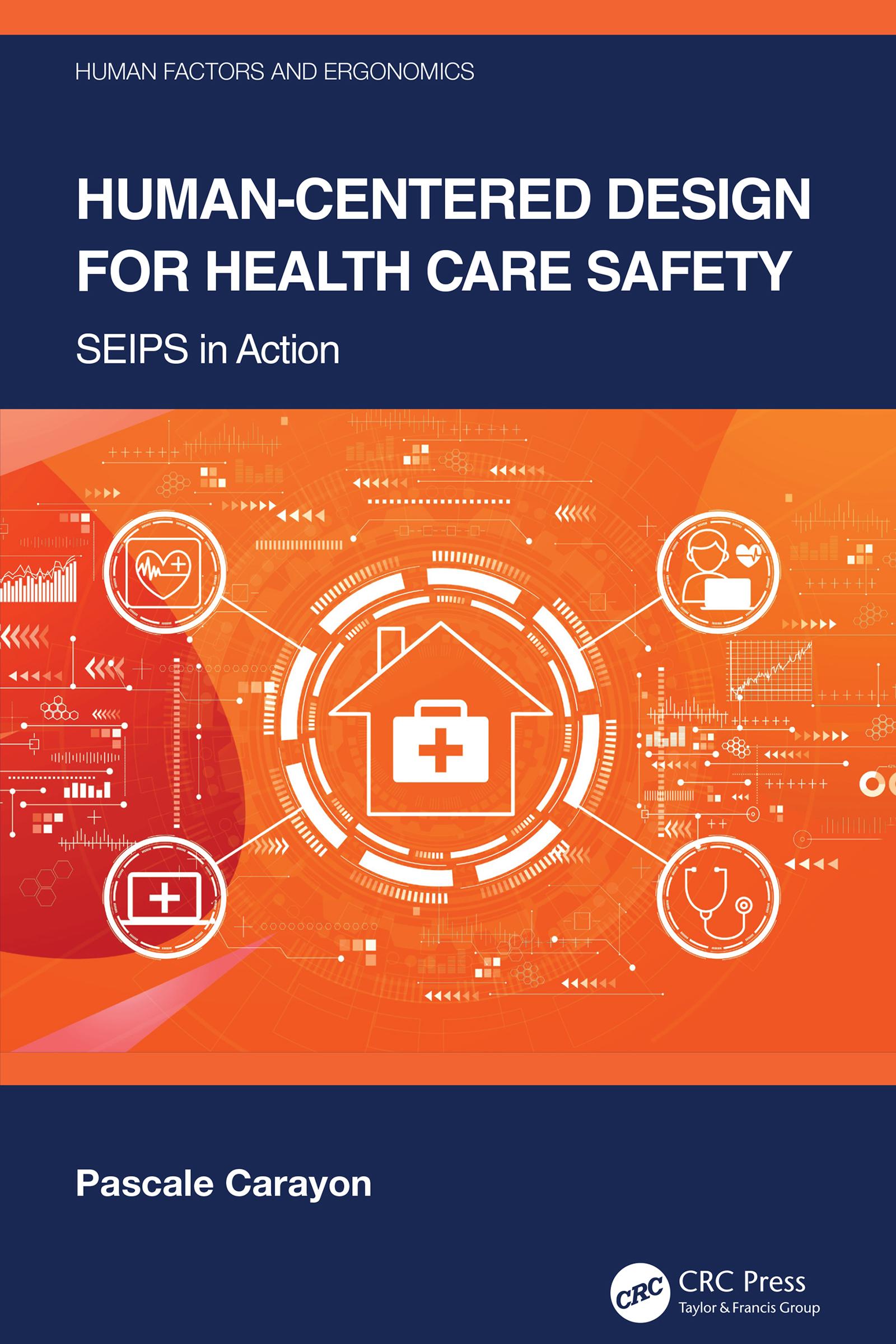
Human-Centered Design for Health Care Safety describes a conceptual framework (SEIPS or Systems Engineering Initiative for Patient Safety) based on the Human Factors and Ergonomics (HFE) discipline and associated human-centered design (HCD) approaches and methods that can help to create innovative solutions for enhancing health care safety. Health care safety remains a major concern around the world. With global crises, such as economic downturns and the COVID-19 pandemic, we have observed deterioration in many aspects of patient safety, as well as major problems for health care workers, including burnout, stress and issues of occupational safety and health. Therefore, we need renewed attention on how to design health care work systems and care processes to improve safety for patients and health care workers.
This book describes key aspects of a widely adopted HFE systems approach to health care safety and methods for HCD in health care. It provides insights into challenges for future research in health care safety. The benefits of SEIPS are promoted throughout the text and reveal how they can lead to improvement in the design of technologies, environments and the rest of the work system; thereby, supporting, instead of hindering, the activities of all care team members, including patients and care partners. Case studies reveal examples of SEIPS in action and various domains of health care safety. The book provides practical tips on how SEIPS is implemented in practice. The readers will benefit from this book as it describes the foundation for SEIPS and HCD and multiple applications across varied settings and domains of health care safety. They will receive a toolkit for enacting solutions in their work environment.
This exciting and topical title will appeal to students and professionals in the fields of health care, medicine, nursing, pharmacy, other health professions and pharmaceuticals. It will also appeal to industrial and systems engineers, biomedical engineers, HFE professionals and designers.
Pay easily by card, Klarna, Apple Pay or Google Pay. Not happy? You always have a 14-day money-back guarantee. Read more in our terms. If you have any questions, email us at hello@memmo.org.
Memmo makes studying easier – wherever you are in the world. We bring your course books and smart study tools together in one place: summaries, quizzes, podcasts and flashcards. Plus Ted, your study buddy who answers anything you wonder. Over 50,000 students already study here – built to help you learn faster and stress less.