
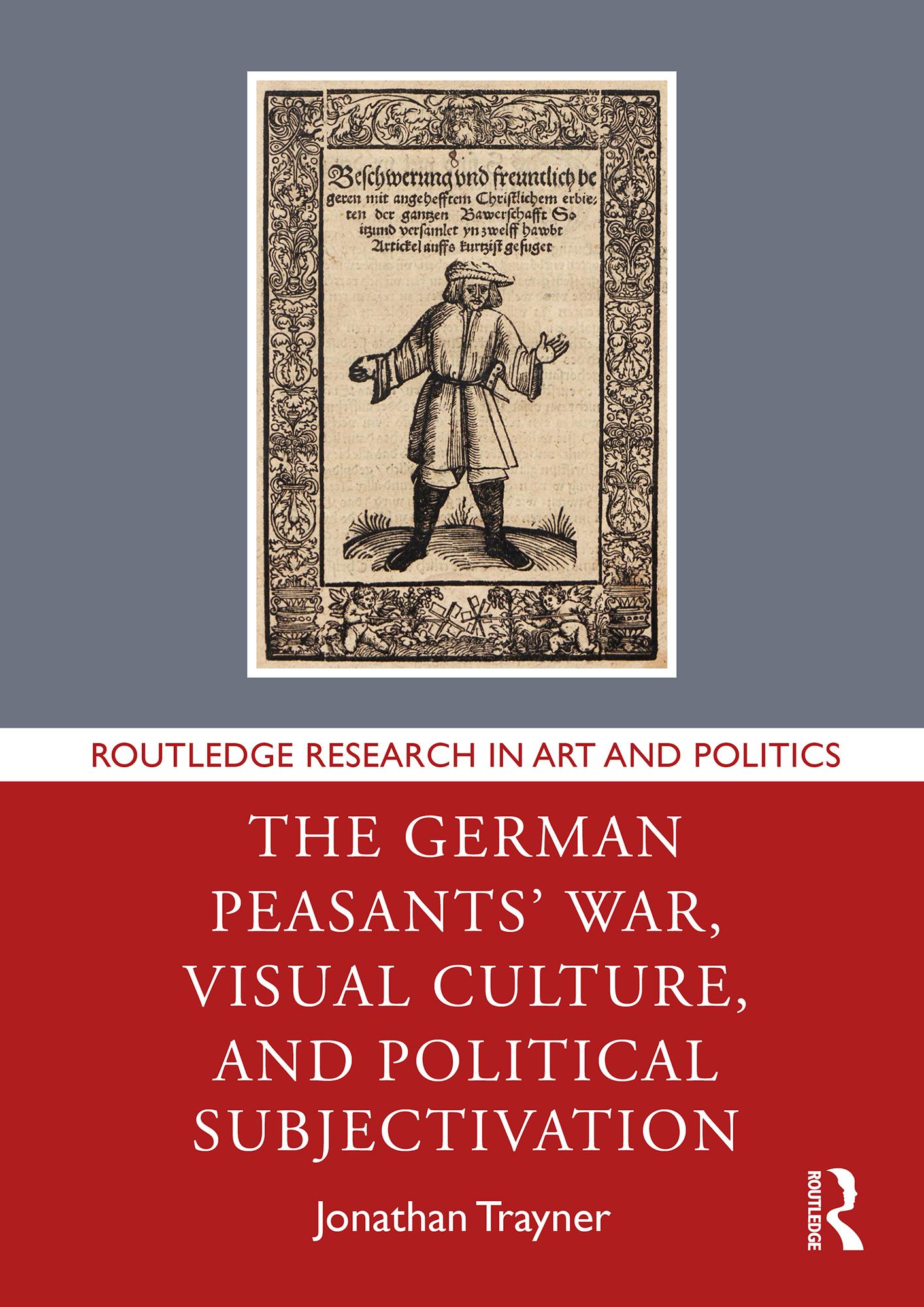
This study examines the visual productions of the German Peasants’ War – pamphlets, banners, and clothing – to argue for the disruptive and radical visual legacy in which hierarchies and modes of subjection were overturned.
Drawing on the author’s experience as a print maker and artist, the book offers a close and sympathetic analysis of the visual culture produced in this moment of war and revolt. Far from only being a matter of historical interest, these disruptive modes of visual production also resonate with contemporary debates about dissensus, populism, and political identity, especially in the work of Jacques Rancière. The refusal of these peasants (and mercenaries and some clergy) to remain in their place ruptured the visual field of power. It was also the repression of this popular eruption that was to shape conventional visual culture and politics as a reaction.
The book will be of interest to scholars working in art history, visual culture, medieval and early modern studies, and political history.
Pay easily by card, Klarna, Apple Pay or Google Pay. Not happy? You always have a 14-day money-back guarantee. Read more in our terms. If you have any questions, email us at hello@memmo.org.
Memmo makes studying easier – wherever you are in the world. We bring your course books and smart study tools together in one place: summaries, quizzes, podcasts and flashcards. Plus Ted, your study buddy who answers anything you wonder. Over 50,000 students already study here – built to help you learn faster and stress less.