
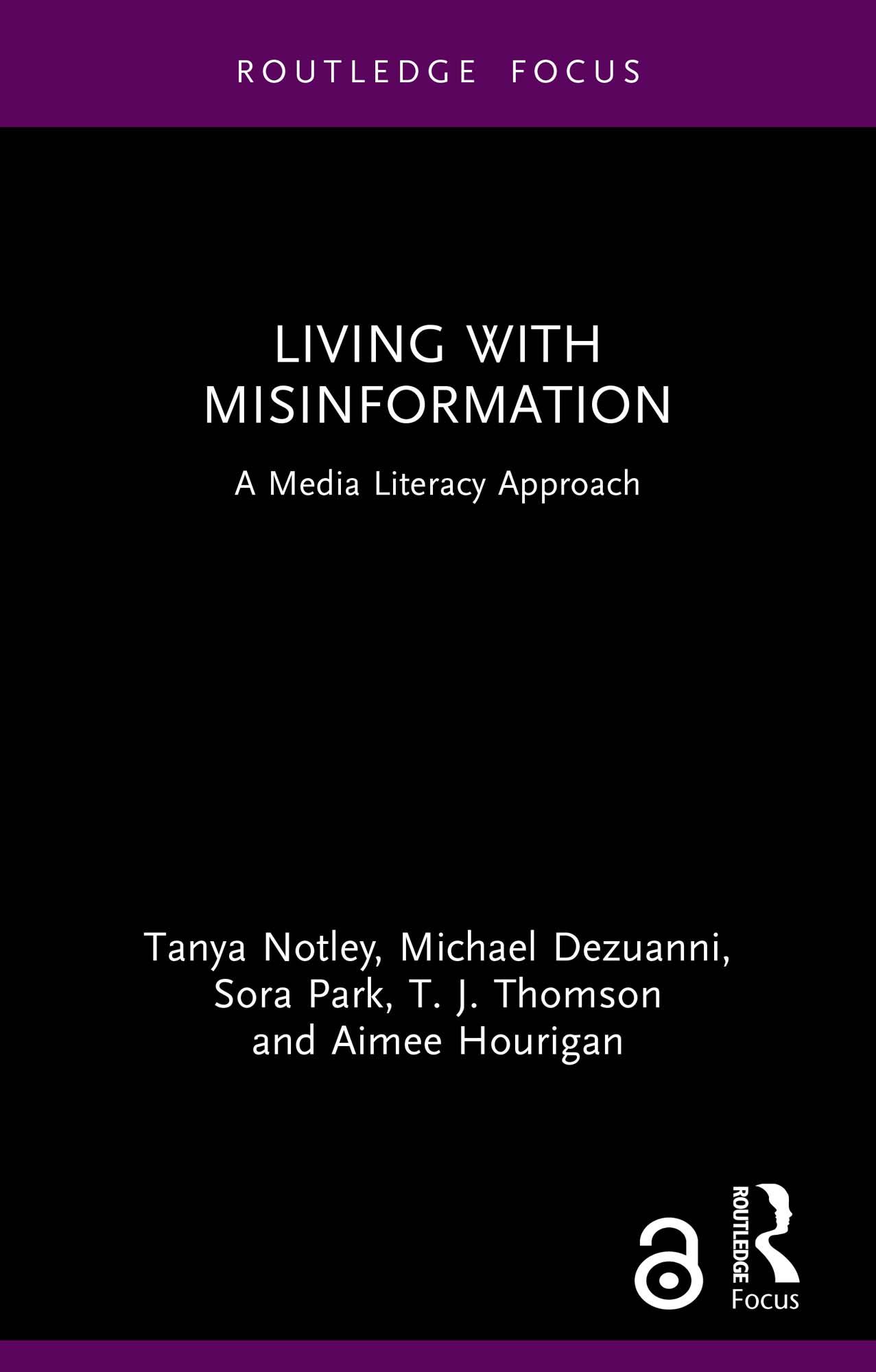
This book investigates how media literacy can be used to help people understand, identify and respond to online misinformation.
Drawing on a three-year research study that examined the everyday media experiences and abilities of more than 4,400 adults, this book presents an in-depth look at how individuals experience and interpret misinformation across a range of topics. It argues that we need to learn to “live with” misinformation and outlines the skills, knowledge and critical thinking required for people to make informed decisions about their media use. This book uniquely integrates contemporary challenges such as generative AI and long-standing concerns about information integrity, presenting both the problem and actionable educational responses.
Living with Misinformation: A Media Literacy Approach is essential reading for scholars and students in media, education, and communication studies as well as educators, librarians, journalists, parents and community workers seeking to foster media literacy in varied populations. Its global relevance is reinforced by comparative insights from international studies, making it a valuable resource for anyone seeking to address the many challenges associated with misinformation.
The Open Access version of this book, available at http://www.taylorfrancis.com, has been made available under a Creative Commons [Attribution- NonCommercial-ShareAlike (CC BY-NC-SA)] 4.0 license.
Pay easily by card, Klarna, Apple Pay or Google Pay. Not happy? You always have a 14-day money-back guarantee. Read more in our terms. If you have any questions, email us at hello@memmo.org.
Memmo makes studying easier – wherever you are in the world. We bring your course books and smart study tools together in one place: summaries, quizzes, podcasts and flashcards. Plus Ted, your study buddy who answers anything you wonder. Over 50,000 students already study here – built to help you learn faster and stress less.