
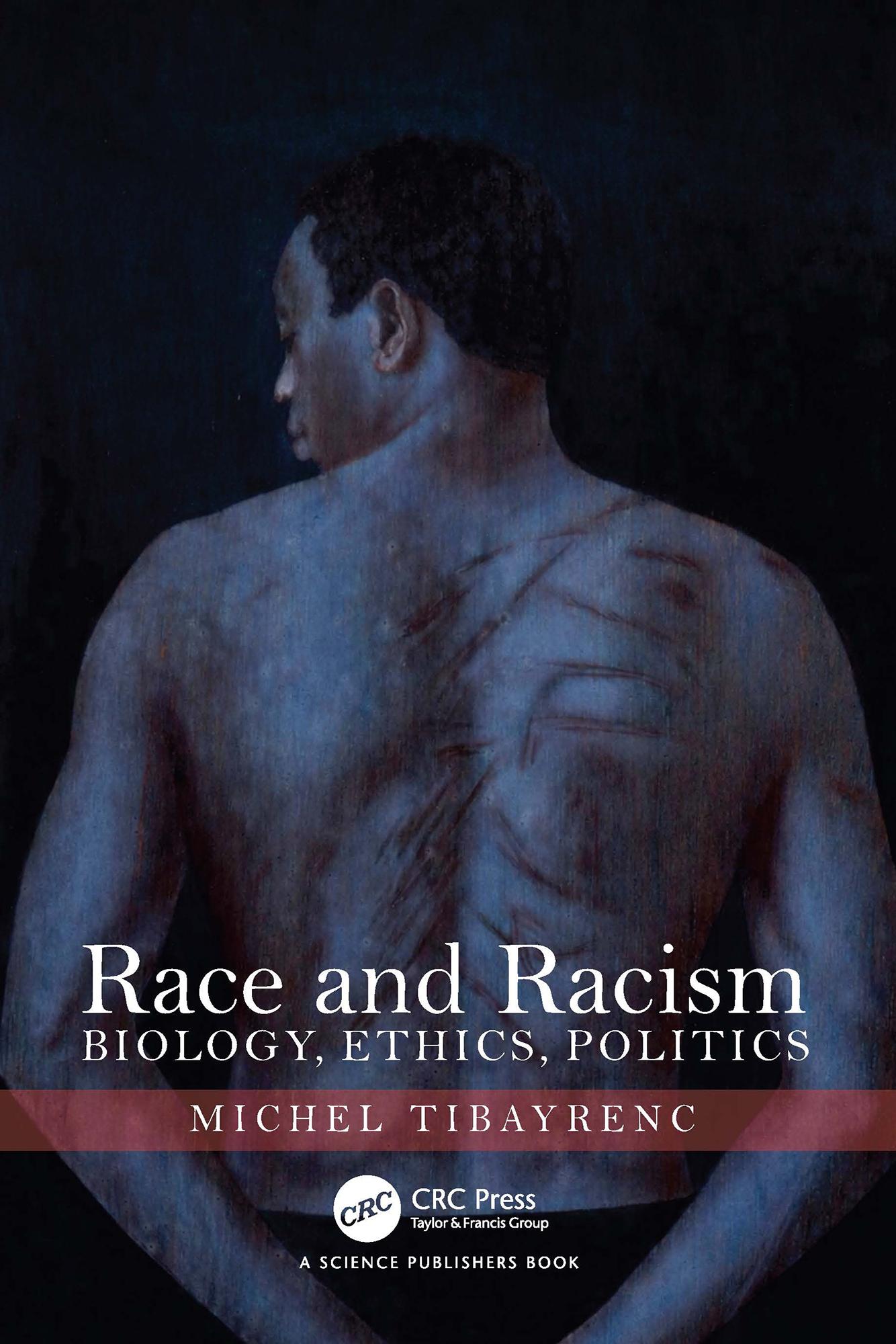
Following the last war, after the revelation of Nazi crimes and the Holocaust, a powerful school of thought, championed by “a small but vocal group of researchers” (who have become increasingly numerous and vocal), attempted to definitively discredit racism by arguing that the concept of race had no biological basis and therefore that racism was nonsensical. This has been called “an absolute paradigmatic shift”. However, many scientists today continue to use human continental populations as units of analysis (“proxies”) in numerous studies, particularly in the biomedical field, resorting (not always) to unsatisfactory euphemisms (“ethnic groups,” “ancestry groups,” “geographic populations”) to avoid the term of “race”. A recent trend (David Reich, Harvard University, Pierre-André Taguieff, Centre National de la Recherche Scientifique, France) is to consider that the dismissal of the concept of biological race was premature and could be challenged by current genomic data (“race realists”).
The present book offers a comprehensive overview of the latest advances in biology (genetics, genomics, evolution, epigenetics, paleogenomics) in the study of the biological variability of past and present human populations. I propose that the question of the existence or non-existence of human races is poorly framed, as it is to a large extent a matter of definitions. I emphasize that it is dangerous to base antiracism on scientific data that is inherently provisional and fluctuating. I advocate a mutual respect (“reciprocal sanctuarization”) between science, on the one hand, and ethics and politics, on the other. Ethics and politics should not interfere with the scientific process, which is based on the rational analysis of objective data. It is dangerous to assume that a scientific theory is necessarily false simply because it appears scandalous from the perspective of the prevailing morality, which is notoriously variable depending on time and place. Such an a priori condemnation based on morality, rather than on scientific arguments, was the fate of heliocentrism (Nicolaus Copernicus), the theory of evolution (Charles Darwin), the hypothesis of the antiquity of humankind (Jacques Boucher de Perthes), and the concept of childhood sexuality (Sigmund Freud). Conversely, while scientific data must be open to free discussion, societal choices ultimately rest on ethical and political considerations, regardless of scientific findings, and in accordance with the values of the society in question. Antiracism, in our society, is one of these key values. Rather than a scientific statement, it is a moral stance and a political choice, which decision-makers must enforce with the full force of the law. “Racism is not an opinion, it is a crime”. The principle of mutual respect (“reciprocal sanctuarization”) that I propose can constitute a sound basis for such a renewed antiracism, far more so than a “scientific antiracism” that imprudently relies on scientific data, which is inherently unpredictable and provisional.
Pay easily by card, Klarna, Apple Pay or Google Pay. Not happy? You always have a 14-day money-back guarantee. Read more in our terms. If you have any questions, email us at hello@memmo.org.
Memmo makes studying easier – wherever you are in the world. We bring your course books and smart study tools together in one place: summaries, quizzes, podcasts and flashcards. Plus Ted, your study buddy who answers anything you wonder. Over 50,000 students already study here – built to help you learn faster and stress less.