
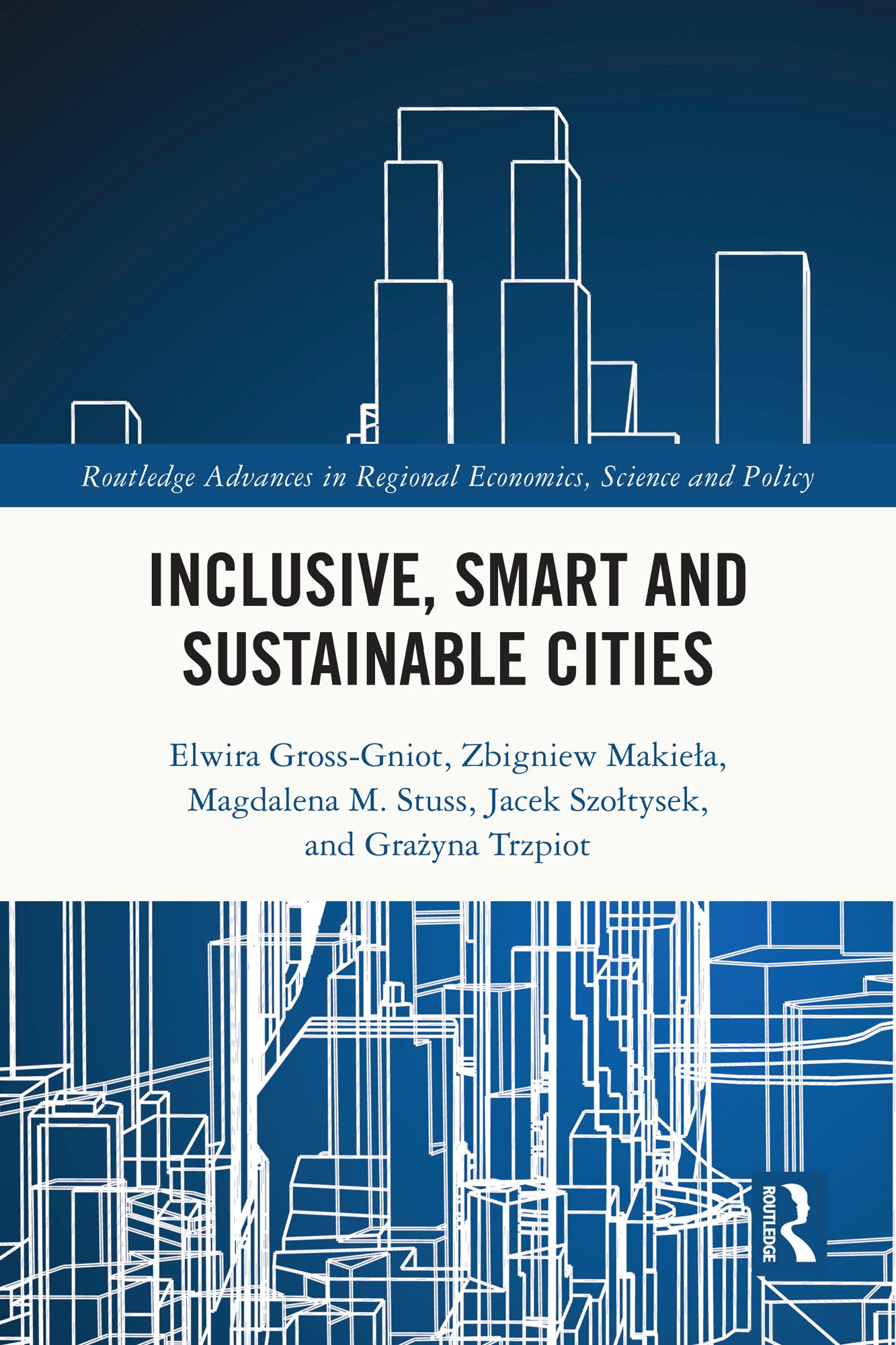
This book addresses critical issues for contemporary cities building their future, presenting a cohesive narrative rooted in the diverse experiences of its authors and reflecting the systemic nature of urban environments. The authors attribute the success of programming and implementing the development of future cities to the deliberate creation of stakeholder competencies, primarily through the use of smart city tools. It is assumed that, over time, these competencies will evolve both qualitatively and diversely, with their co-creation remaining a dynamic process due to shifts among stakeholders driven by migration, natural population growth or decline, and changes in stakeholder structures.
While urban communities differ significantly in various locations, conditioned culturally, politically, economically, etc., the book argues that the mechanisms of smart cities can be unified due to available technological tools and methods of filtering big data for the needs of cognitive and decision-making processes. In this area, international experiences of both cities and technology companies indicate the universality of solving problems of city functioning and the great ability to disseminate knowledge in this area. The identified trends and applied conceptual approaches can serve as a benchmark for searching for smart city competences that serve the constant increase in the inclusiveness of cities. The book will appeal to academics, researchers and advanced students, as well as policymakers and practitioners.
Pay easily by card, Klarna, Apple Pay or Google Pay. Not happy? You always have a 14-day money-back guarantee. Read more in our terms. If you have any questions, email us at hello@memmo.org.
Memmo makes studying easier – wherever you are in the world. We bring your course books and smart study tools together in one place: summaries, quizzes, podcasts and flashcards. Plus Ted, your study buddy who answers anything you wonder. Over 75,000 students already study here – built to help you learn faster and stress less.