
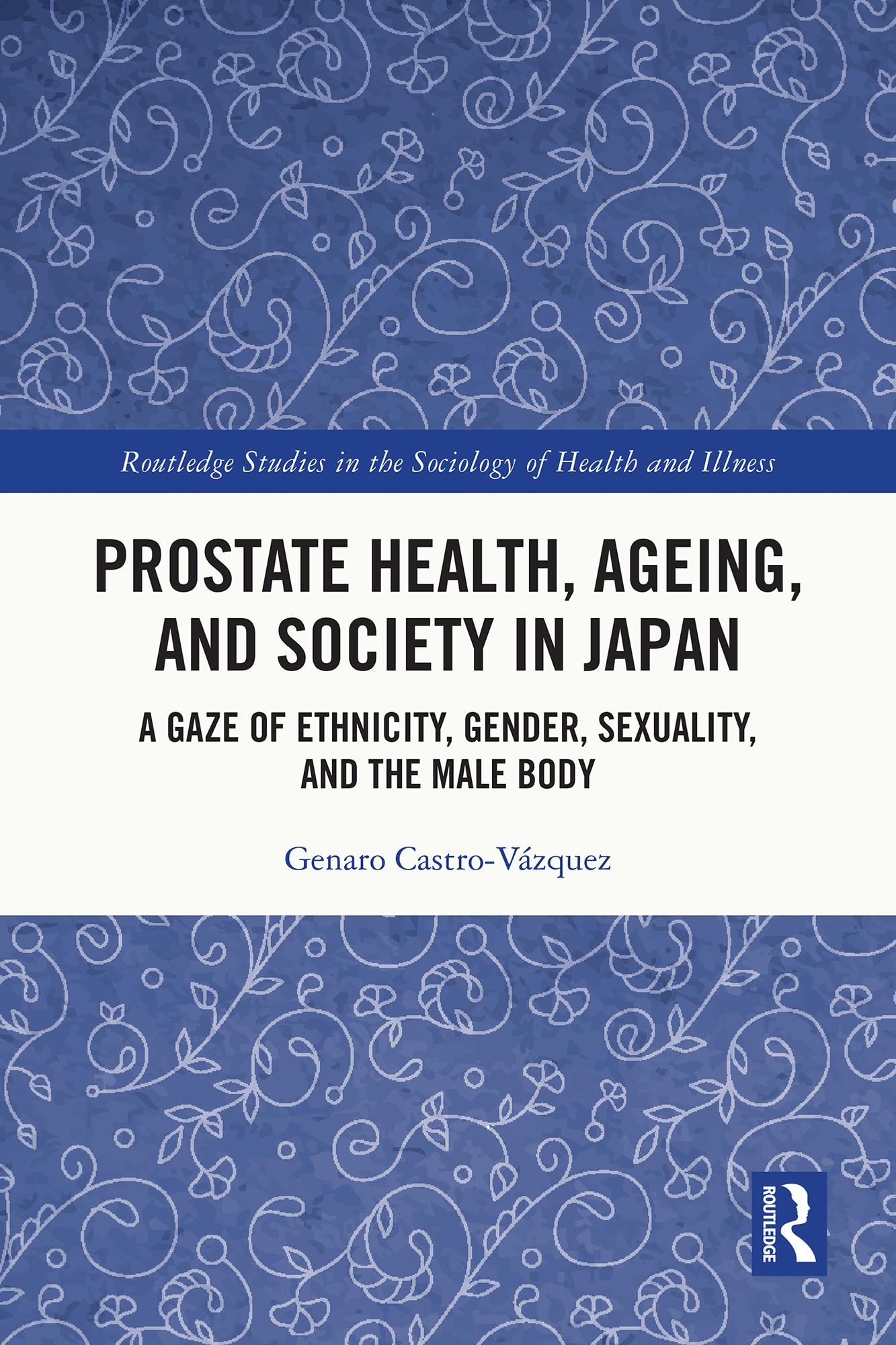
This ethnographic investigation of prostate health in the super-aged, Japanese society analyses prostate cancer and benign prostate hyperplasia. Castro-Vázquez examines how biomedical perspectives link prostate health to ethnicity and lifestyle choices, where a clinical issue renders a social matter, and early detection and prevention become an individual responsibility.
Grounded in symbolic interactionism, the book presents the viewpoints of Japanese urologists, and men who navigate prostate conditions from an eclectic and multidimensional perspective. It explores the impact of ‘Westernised’ eating habits, ethnicity, gender and sexuality on prostate health, while critically analysing health economics, through medical, pharmaceutical, and insurance industries that commodify men’s health. The research introduces the concept of ‘prostate-self’ to fathom how Japanese men journey prostate health, highlighting how their embodied experiences connect. It contributes significant insights to global debates on benign prostate hyperplasia and prostate cancer prevention, detection, and treatment.
An essential resource for scholars, researchers and students in medical sociology, gender and sexuality studies, medical anthropology, Japanese studies as well as those interested in gender, sexuality, sociology of health, and the body and society.
Pay easily by card, Klarna, Apple Pay or Google Pay. Not happy? You always have a 14-day money-back guarantee. Read more in our terms. If you have any questions, email us at hello@memmo.org.
Memmo makes studying easier – wherever you are in the world. We bring your course books and smart study tools together in one place: summaries, quizzes, podcasts and flashcards. Plus Ted, your study buddy who answers anything you wonder. Over 50,000 students already study here – built to help you learn faster and stress less.