
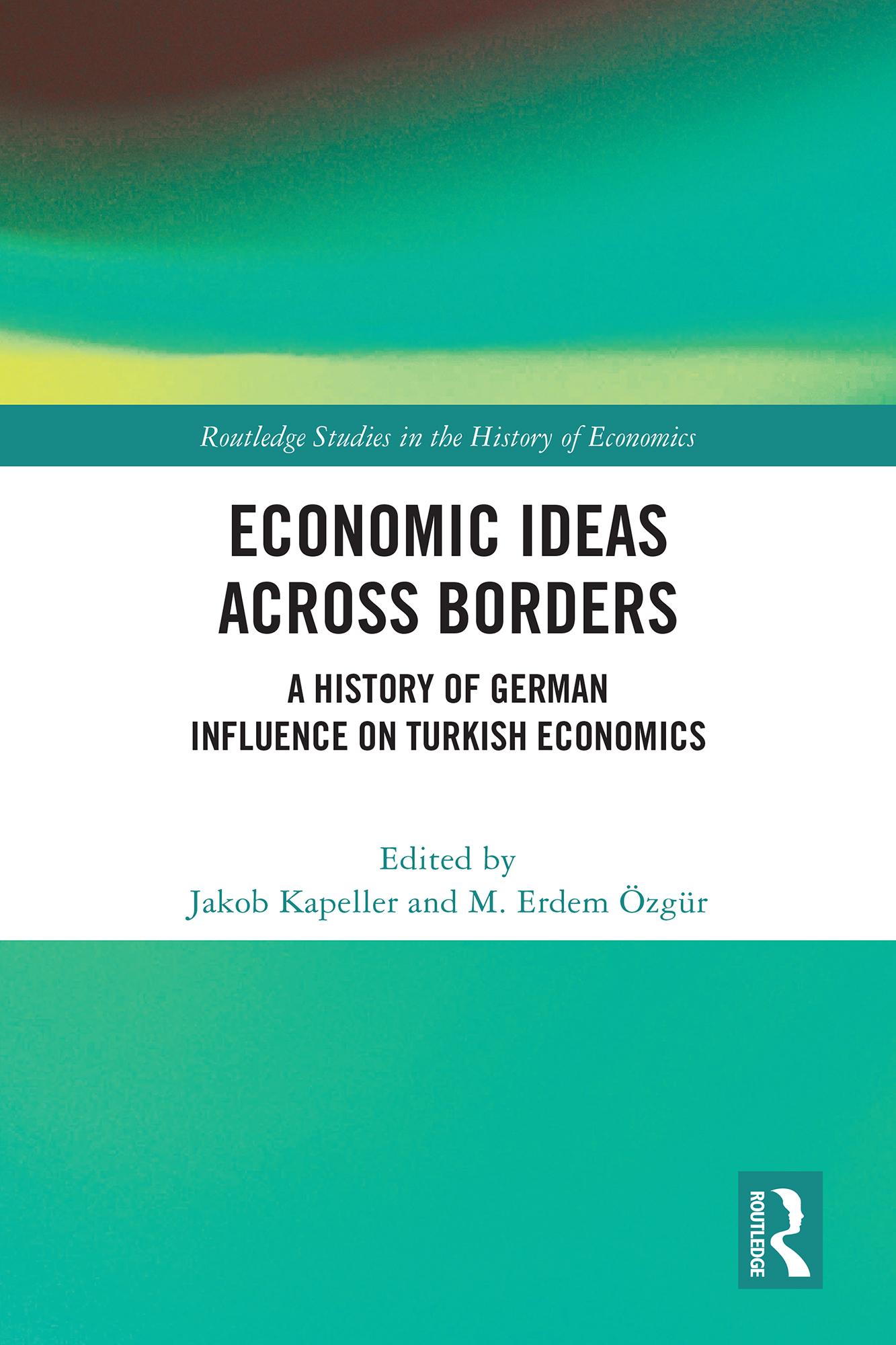
Exploring the cross-cultural exchange of ideas between German and Turkish scholars, policymakers, and institutions, this book sheds light on how German theories were interpreted and applied in Turkey during the nineteenth and twentieth centuries.
Situating the flow of ideas within broader patterns of economic globalization, the contributors to this edited volume explore historical, economic, and ideological developments in Turkey and Germany. Within economic thought, there is a particular focus on the influence of the German Historical School in Turkish economic thought; the contributions of German refugee scholars in the 1930s, through their publications, courses they offered, and their relations with the other members of academia; and Marxian Asiatic Mode of Production debates of the 1960s. In terms of economic policy, the book also discusses agrarian populism in the 1930s, German soft power in interwar Turkey, the first Gastarbeiter Agreement and its effects, German investments in Turkey after the World War II, and the role of sports in shaping relations between Germany and Turkey.
The book will be of great interest to readers in the history of economic thought, intellectual history, economic history, and the histories of Germany and Turkey more broadly.
Pay easily by card, Klarna, Apple Pay or Google Pay. Not happy? You always have a 14-day money-back guarantee. Read more in our terms. If you have any questions, email us at hello@memmo.org.
Memmo makes studying easier – wherever you are in the world. We bring your course books and smart study tools together in one place: summaries, quizzes, podcasts and flashcards. Plus Ted, your study buddy who answers anything you wonder. Over 50,000 students already study here – built to help you learn faster and stress less.