
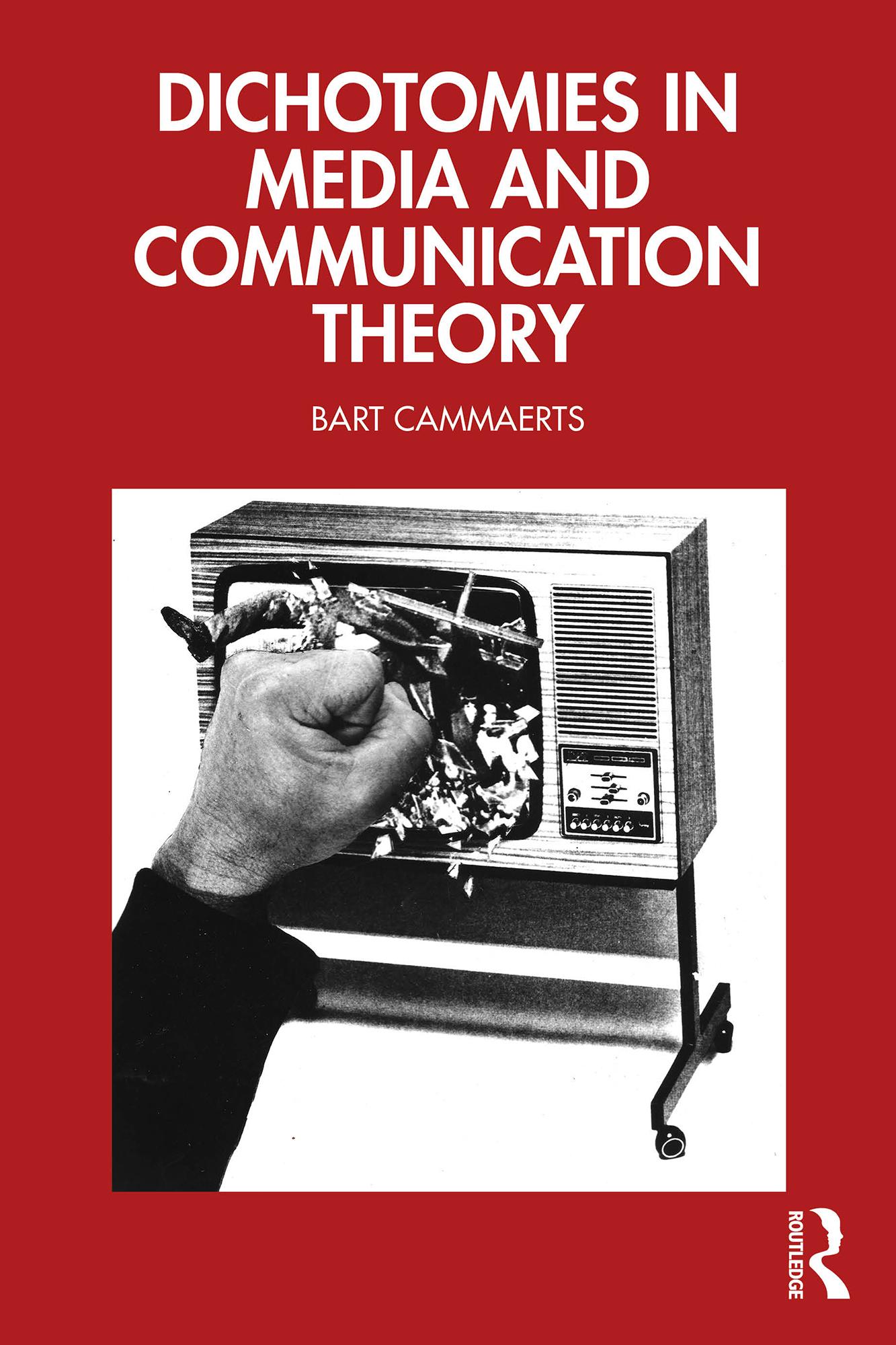
This innovative textbook explores media and communication theory, and its intersections with social and political theory, through the prism of eight core dichotomies – communication/media, private/public, production/reception, material/symbolic, mainstream/alternative, abundance/scarcity, control/freedom, and virtual/real – revealing their complex interrelationships and significance in understanding contemporary media and communication landscapes.
Students will gain a nuanced understanding of media and communication theories by examining both sides of each dichotomy and their dynamic interplay. The book historicizes each concept pair, illustrates them with past and present examples, and demonstrates how competing paradigms often complement rather than contradict each other. This approach helps readers grasp theoretical complexity, recognize the democratic importance of media and communication, and develop critical thinking skills through engaging case studies and discussion questions in each chapter.
This textbook is designed for undergraduate and postgraduate students taking media and communication theory courses. Instructors teaching critical media and communication theory will find the dichotomy-based approach particularly valuable for helping students navigate complex theoretical debates and understand the field's intellectual development. It will also be useful supplementary reading for specific topics within broader media studies programs.
Pay easily by card, Klarna, Apple Pay or Google Pay. Not happy? You always have a 14-day money-back guarantee. Read more in our terms. If you have any questions, email us at hello@memmo.org.
Memmo makes studying easier – wherever you are in the world. We bring your course books and smart study tools together in one place: summaries, quizzes, podcasts and flashcards. Plus Ted, your study buddy who answers anything you wonder. Over 50,000 students already study here – built to help you learn faster and stress less.