
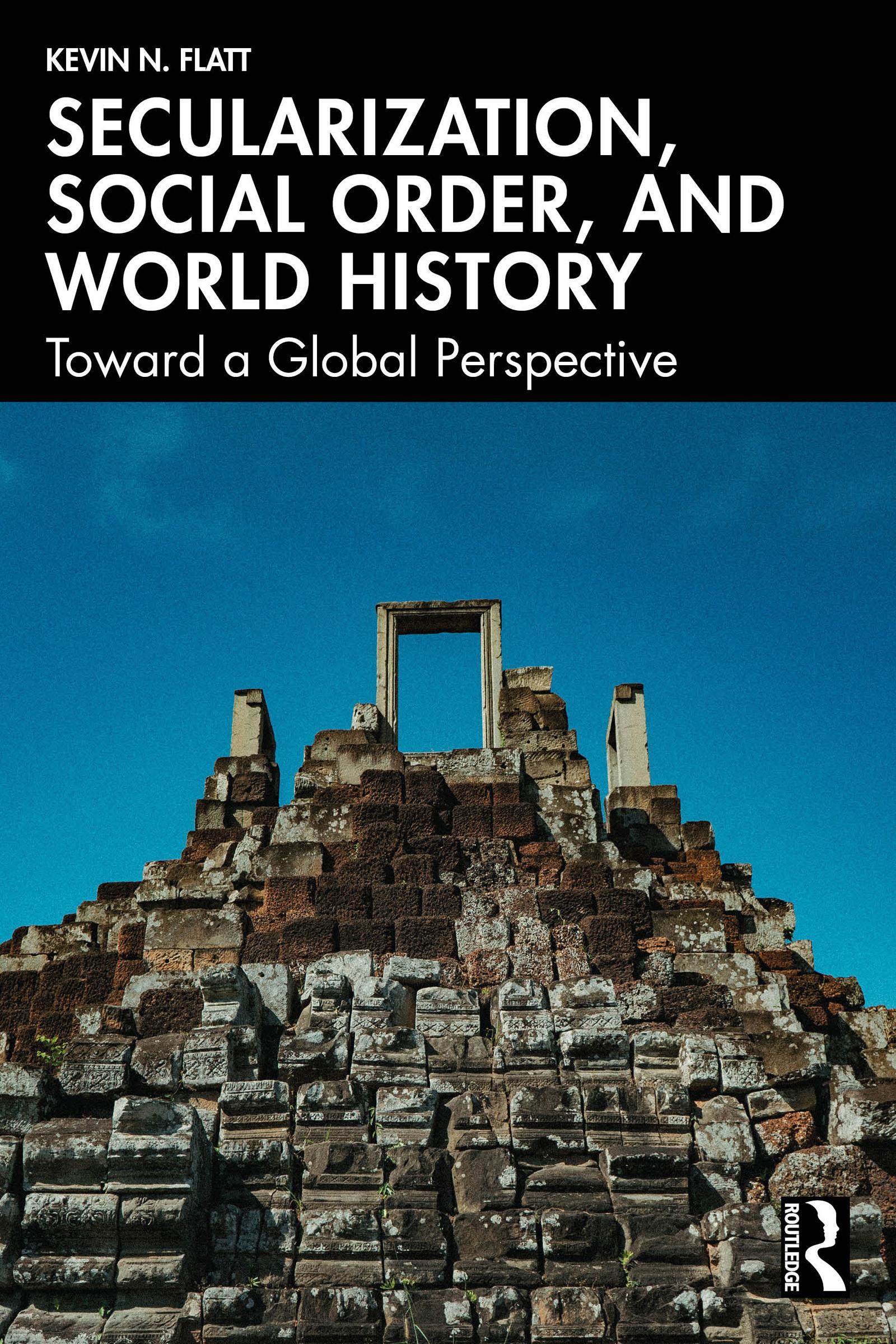
Secularization, Social Order, and World History provides a new perspective on the nature of secularization. Scholars have shown that the concepts of “religion” and the “secular” that are assumed in traditional accounts of secularization are not universal human categories, but specifically modern and Western ideas. What if we told the story of secularization not from the perspective that secularization itself produced, but from a standpoint outside the modern West?
This book draws on premodern traditions from China, India, the Islamic world, and beyond to develop an alternative conceptual framework of “sacred-social order.” Sacred-social orders aim to align all of human life—from marriage to government to the calendar—with suprahuman purposes and authorities. From the perspective of sacred-social order, the secularization of Western societies was not simply “the decline of religion,” but a revolutionary break with sacred order across all social domains and the attempt to construct a new secular order on purely human foundations. As the secular order has been exported around the world, it has provoked movements for the restoration of sacred-social order that are often misunderstood as mere religious revivals or a clash of civilizations.
Bridging sociology, history, religious studies, and philosophy, this work offers an innovative, global account of secularization and its discontents.
Pay easily by card, Klarna, Apple Pay or Google Pay. Not happy? You always have a 14-day money-back guarantee. Read more in our terms. If you have any questions, email us at hello@memmo.org.
Memmo makes studying easier – wherever you are in the world. We bring your course books and smart study tools together in one place: summaries, quizzes, podcasts and flashcards. Plus Ted, your study buddy who answers anything you wonder. Over 50,000 students already study here – built to help you learn faster and stress less.