
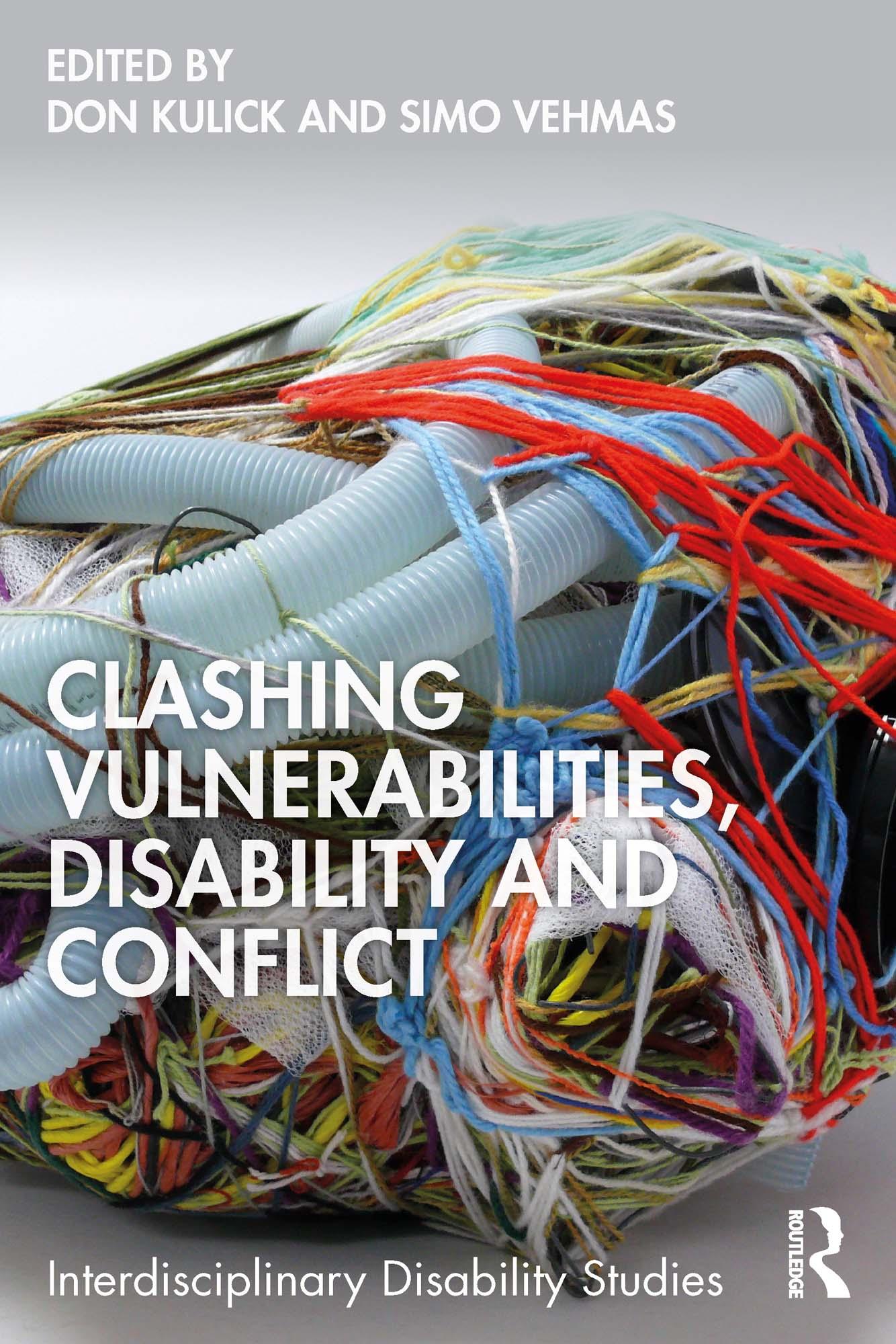
This book is about how we might think about vulnerability—what it is and how it operates—by looking at cases where different kinds of vulnerabilities clash.
Disability is often portrayed as a vulnerability in itself, and disabled people are often labelled a prototypical “vulnerable group”. This book disassembles that label by highlighting how vulnerabilities involving people with disabilities emerge and how they often conflict with other vulnerabilities: the vulnerabilities of disabled students vs. the vulnerabilities of under-educated and harassed teachers, for example. Or the struggles for legitimacy that pit neuro-divergent groups against people with chronic illnesses, one casting doubt on the validity of the other. Or the different uses of curb cuts for people in wheelchairs and people with visual impairments—uses which sometimes clash. Clashes like these illustrate the role that conflict plays in defining “vulnerability” and they lead us to think about how we might try to adjudicate between different claims of what can count as a vulnerability.
Providing new insight into power and non-power, ideology, socioeconomic structures, and the vicissitudes of disability as both a subject position and a lived experience, this book will be of interest to scholars and students of disability studies, anthropology and sociology, policy, and philosophy.
Pay easily by card, Klarna, Apple Pay or Google Pay. Not happy? You always have a 14-day money-back guarantee. Read more in our terms. If you have any questions, email us at hello@memmo.org.
Memmo makes studying easier – wherever you are in the world. We bring your course books and smart study tools together in one place: summaries, quizzes, podcasts and flashcards. Plus Ted, your study buddy who answers anything you wonder. Over 50,000 students already study here – built to help you learn faster and stress less.