
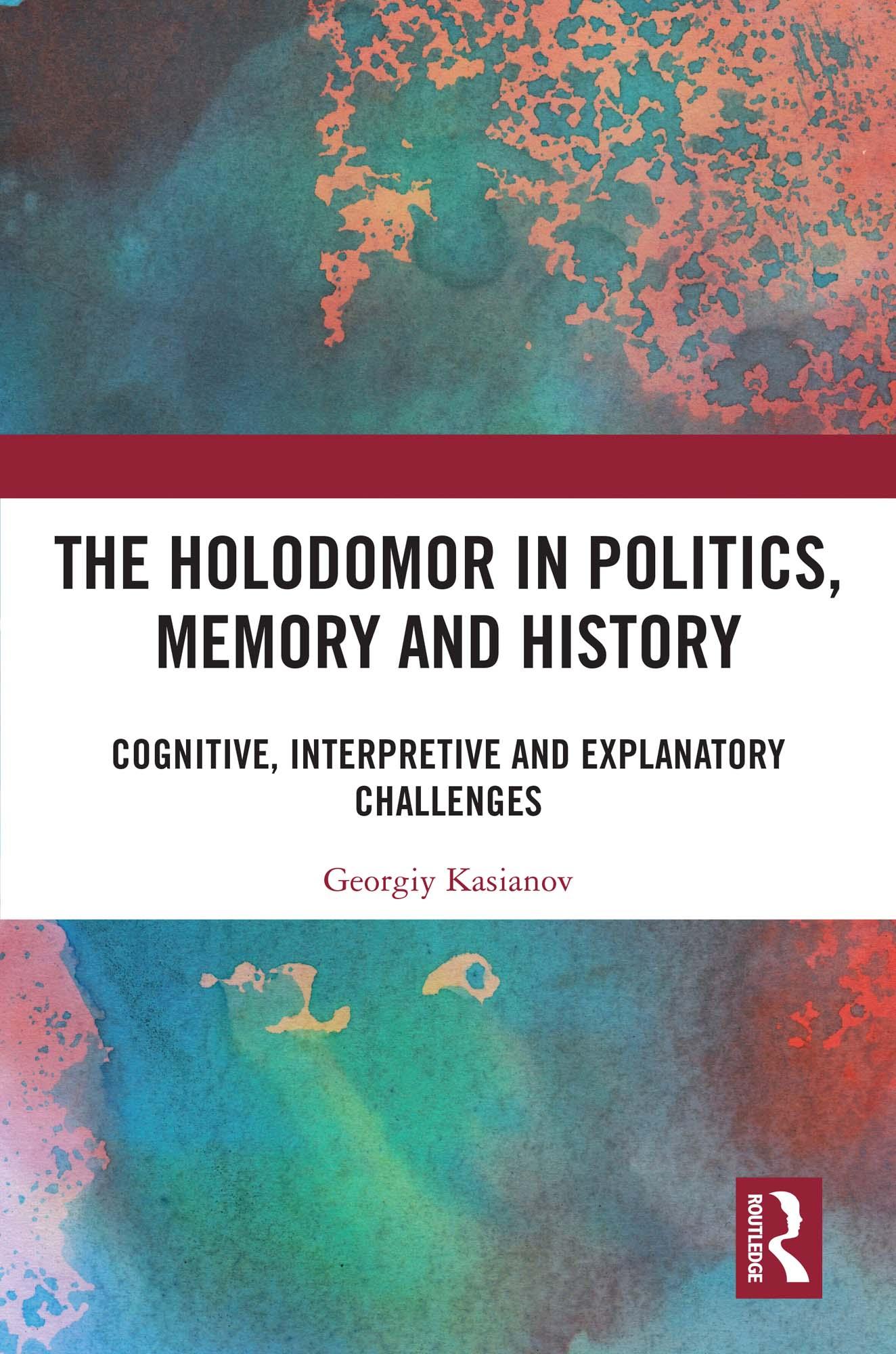
This volume presents the first comprehensive scholarly analysis of the collective memory of the Holodomor—the Ukrainian Great Famine of 1932-1933—examining its construction, evolution, and contestation across nearly a century. Moving beyond historical accounts of the event itself, this book interrogates how memories of this catastrophe have been shaped, mobilized, and interpreted within multiple discursive frameworks.
Drawing on interdisciplinary methodological approaches from memory studies and political science, the author provides a rigorous examination of how the Holodomor has been constructed as social (cultural) memory by actors who challenged Soviet policies of enforced amnesia. This book illuminates the complex interrelationship between memory agents, political institutions, and commemorative practices while critically assessing the securitization of memory and its implications for academic discourse.
This theoretically nuanced contribution to memory studies and Eastern European historiography will be indispensable for researchers and postgraduate students engaged with genocide studies, collective memory, post-Soviet politics, and the intersection of historical narrative and national identity formation.
Pay easily by card, Klarna, Apple Pay or Google Pay. Not happy? You always have a 14-day money-back guarantee. Read more in our terms. If you have any questions, email us at hello@memmo.org.
Memmo makes studying easier – wherever you are in the world. We bring your course books and smart study tools together in one place: summaries, quizzes, podcasts and flashcards. Plus Ted, your study buddy who answers anything you wonder. Over 50,000 students already study here – built to help you learn faster and stress less.