
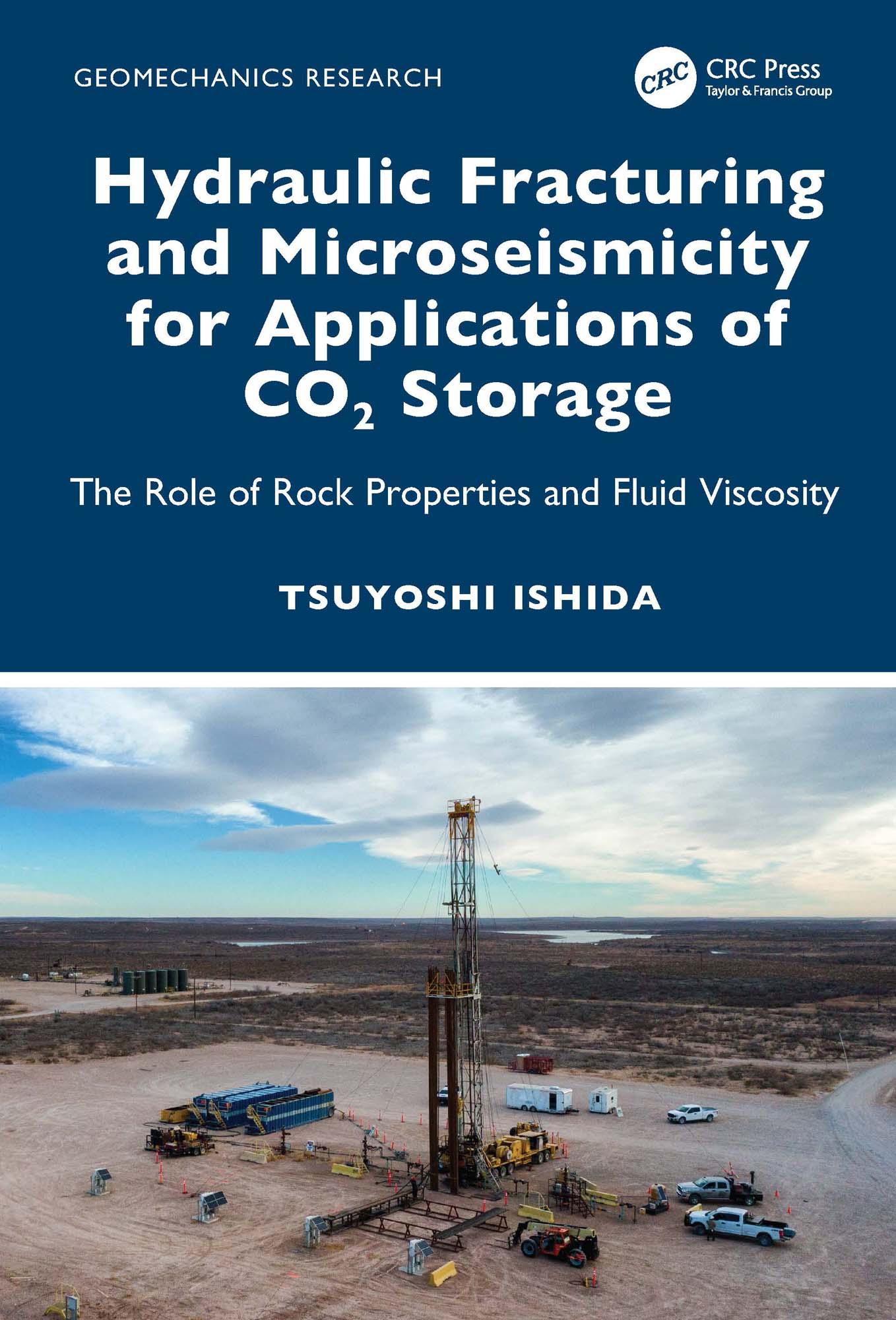
Hydraulic fracturing (HF) has become essential for extracting oil and gas from unconventional reservoirs and heat energy from hot dry rock masses. However, a paradox remains in the fracturing mode of HF: stress conditions predicted by elasticity theory suggest tensile fracturing, while shear fracturing is dominant in HF-related microseismicity (MS). This book resolves this paradox by reviewing the results of various laboratory and small-scale field experiments conducted by the author over nearly 40 years.
It explores the use of carbon dioxide (CO2) in HF as a method for geologic sequestration and demonstrates that CO2 can induce three-dimensional, sinuous cracks with numerous secondary branches, creating ideal pathways for heat, oil, and gas recovery. The author provides a detailed explanation of the fracturing mechanisms based on rock and fluid properties, particularly the use of supercritical (SC) CO2 as a fracturing fluid. Readers will benefit from a deeper understanding of HF processes and their applications for resource extraction and environmental management.
Hydraulic Fracturing and Microseismicity for Applications of CO2 Storage will serve as a reference for researchers, engineers, and students who are involved or interested in the areas of geomechanics, geophysical exploration, seismology, and geology for petroleum and geothermal engineering, as well as for academics and professionals working in the fields of general rock mechanics, geophysics, and civil engineering.
Pay easily by card, Klarna, Apple Pay or Google Pay. Not happy? You always have a 14-day money-back guarantee. Read more in our terms. If you have any questions, email us at hello@memmo.org.
Memmo makes studying easier – wherever you are in the world. We bring your course books and smart study tools together in one place: summaries, quizzes, podcasts and flashcards. Plus Ted, your study buddy who answers anything you wonder. Over 50,000 students already study here – built to help you learn faster and stress less.