
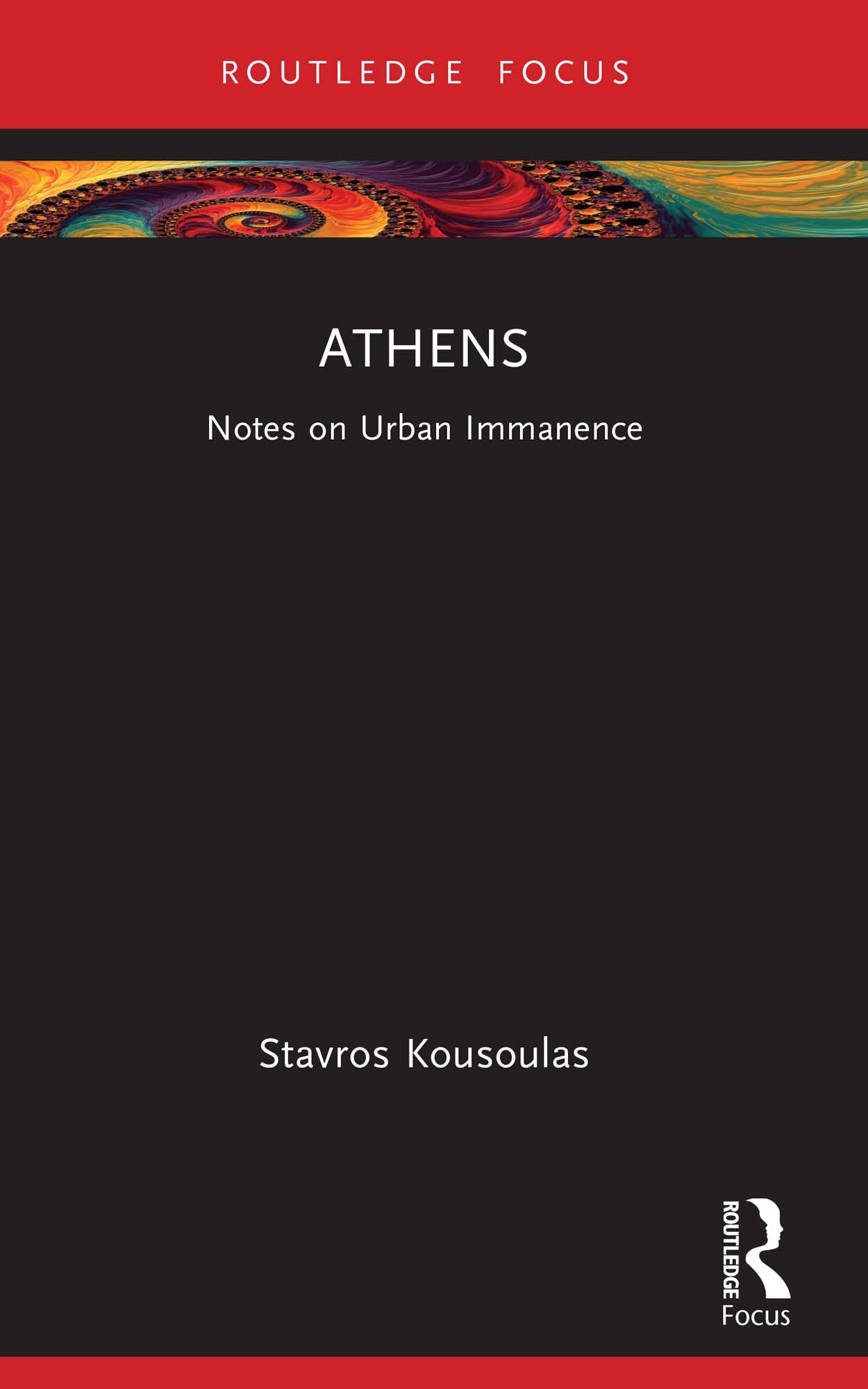
Focusing on the city of Athens, this book examines architecture as something that produces culture and ideology — rather than the opposite. Therefore, this book aims to complement architectural and urban theories that are based only on historical overviews or typological assumptions; to do so, it boldly opens architectural discourse to philosophy, affect theory, and social and cognitive sciences.
By examining Athens after its denomination as Greek capital in 1834, the moments, actors, and transformations that assist the individuation of the Athenian urban ecologies are problematised. Opting for theoretical speculations, the readers will witness architecture as a collective equipment that produces modes of life that can either enhance or diminish our collective potentials. As such, the ambition of this book is to provide the theoretical and methodological groundings for thorough extrapolations on how new collectivities can be produced.
Readers of this book will be exposed to a transdisciplinary approach that identifies and addresses shared problems and concerns regarding the production of contemporary urban environments. This book will also explore theoretical innovations that can inform and trigger new ways of speculative thinking and offers a non-reductionist account of the development of Athens from the perspective of multiple architectural technicities. This book will be of interest to researchers and students of architecture, architectural theory, architectural history, and philosophy.
Pay easily by card, Klarna, Apple Pay or Google Pay. Not happy? You always have a 14-day money-back guarantee. Read more in our terms. If you have any questions, email us at hello@memmo.org.
Memmo makes studying easier – wherever you are in the world. We bring your course books and smart study tools together in one place: summaries, quizzes, podcasts and flashcards. Plus Ted, your study buddy who answers anything you wonder. Over 75,000 students already study here – built to help you learn faster and stress less.