
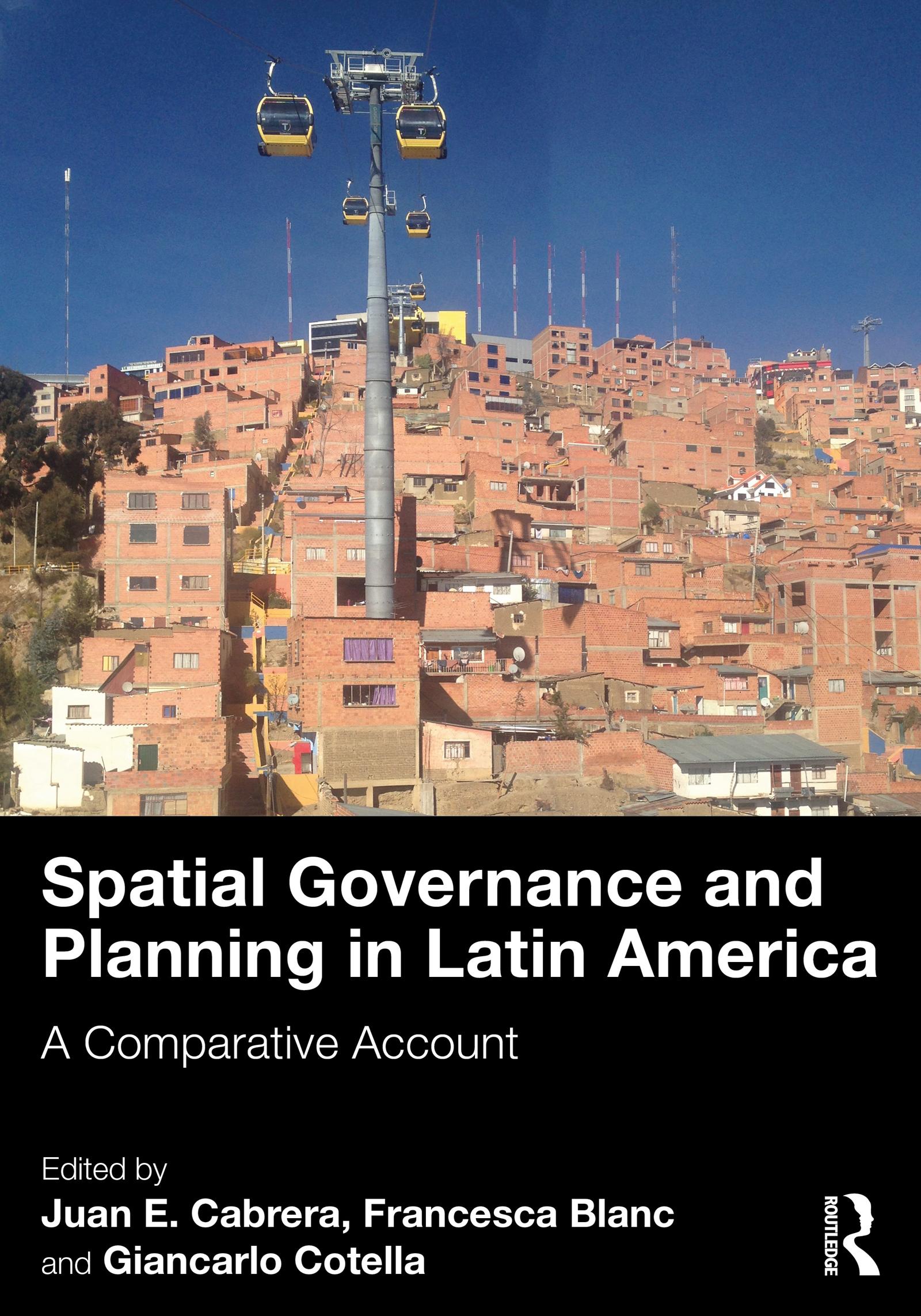
This book is the first to provide an in-depth discussion of spatial governance and planning systems (SGPSs) in Latin America, with analysis and comparison across 10 different countries: Argentina, Bolivia, Brazil, Chile, Colombia, Cuba, Ecuador, Mexico, Peru, and Uruguay. The primary function of SPGSs is to empower the public sector to exert control over spatial development. Originally understood mainly through a legal paradigm, it is now acknowledged that a range of informal institutions also play a role, responding to societal and community needs that the state or market is unable to address. This collection teases out these contrasting influences, highlighting the role of indigenous culture in certain contexts, and the increase of participatory processes in others. The book features not only individual country case studies, but also chapters discussing the broader themes, as well as how the Latin American context compares to the European one. A timely contribution to this evolving topic, the book will appeal to students and scholars in the fields of planning, urban and regional studies, public policy, and human geography.
Pay easily by card, Klarna, Apple Pay or Google Pay. Not happy? You always have a 14-day money-back guarantee. Read more in our terms. If you have any questions, email us at hello@memmo.org.
Memmo makes studying easier – wherever you are in the world. We bring your course books and smart study tools together in one place: summaries, quizzes, podcasts and flashcards. Plus Ted, your study buddy who answers anything you wonder. Over 75,000 students already study here – built to help you learn faster and stress less.