
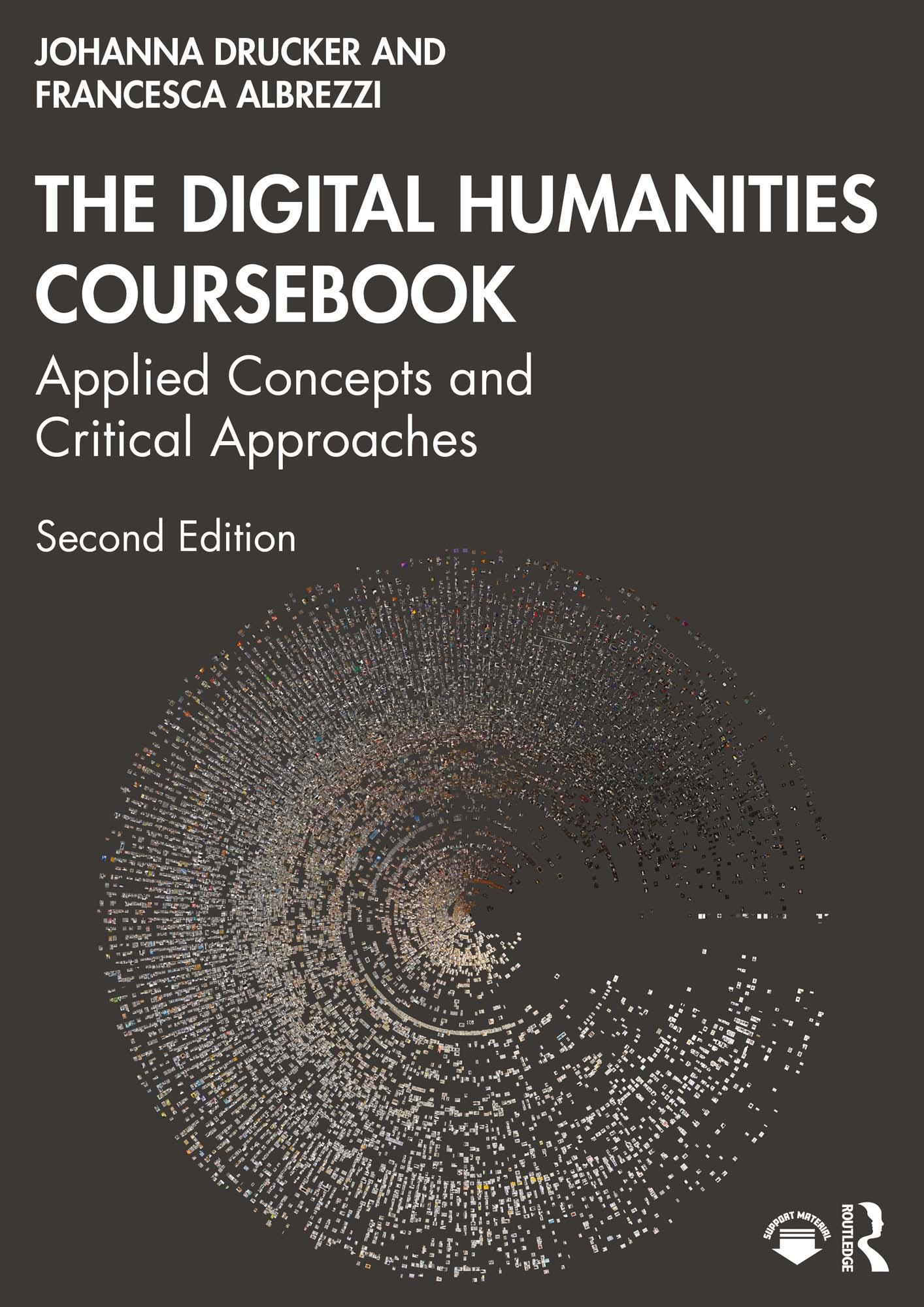
This second edition of The Digital Humanities Coursebook provides critical frameworks for the application of digital humanities tools and platforms, which have become an integral part of work across a wide range of disciplines. This fully updated edition adds several new topics, including XR (extended reality) and AI (artificial intelligence), as well as a companion website developed in parallel with the chapters and providing extended ''how-to'' examples to enable students and teachers to follow step-by-step demonstrations of tools or platforms.
Written in an accessible and engaging manner, this book is focused on the principles and fundamental concepts for application and each chapter contains case study examples of projects, tools and platforms that demonstrate these principles in action. This book clearly details how to integrate the acquisition of expertise in data, metadata, classification, interface, visualization, network analysis, topic modeling, data mining, mapping, and web presentation with issues in intellectual property, sustainability, privacy, and the ethical use of information. By combining practical information and critical issues, the book demonstrates that no application of digital humanities can be separated from ethical and critical concerns.
This book is structured to complement courses on digital humanities and provides a series of modules, each of which is organized around a set of concerns and topics, thought experiments and questions, as well as discussions of the ways in which tools and platforms work. Each chapter contains an introduction to the topic, examples of current (and sometimes classic) work being done in the field, a set of exercises to explore the hands-on experience, references, and recommended readings. The Digital Humanities Coursebook will therefore be an indispensable guide for anyone teaching or studying a course in the areas of digital humanities, library and information science, English, or computer science.
Pay easily by card, Klarna, Apple Pay or Google Pay. Not happy? You always have a 14-day money-back guarantee. Read more in our terms. If you have any questions, email us at hello@memmo.org.
Memmo makes studying easier – wherever you are in the world. We bring your course books and smart study tools together in one place: summaries, quizzes, podcasts and flashcards. Plus Ted, your study buddy who answers anything you wonder. Over 50,000 students already study here – built to help you learn faster and stress less.