
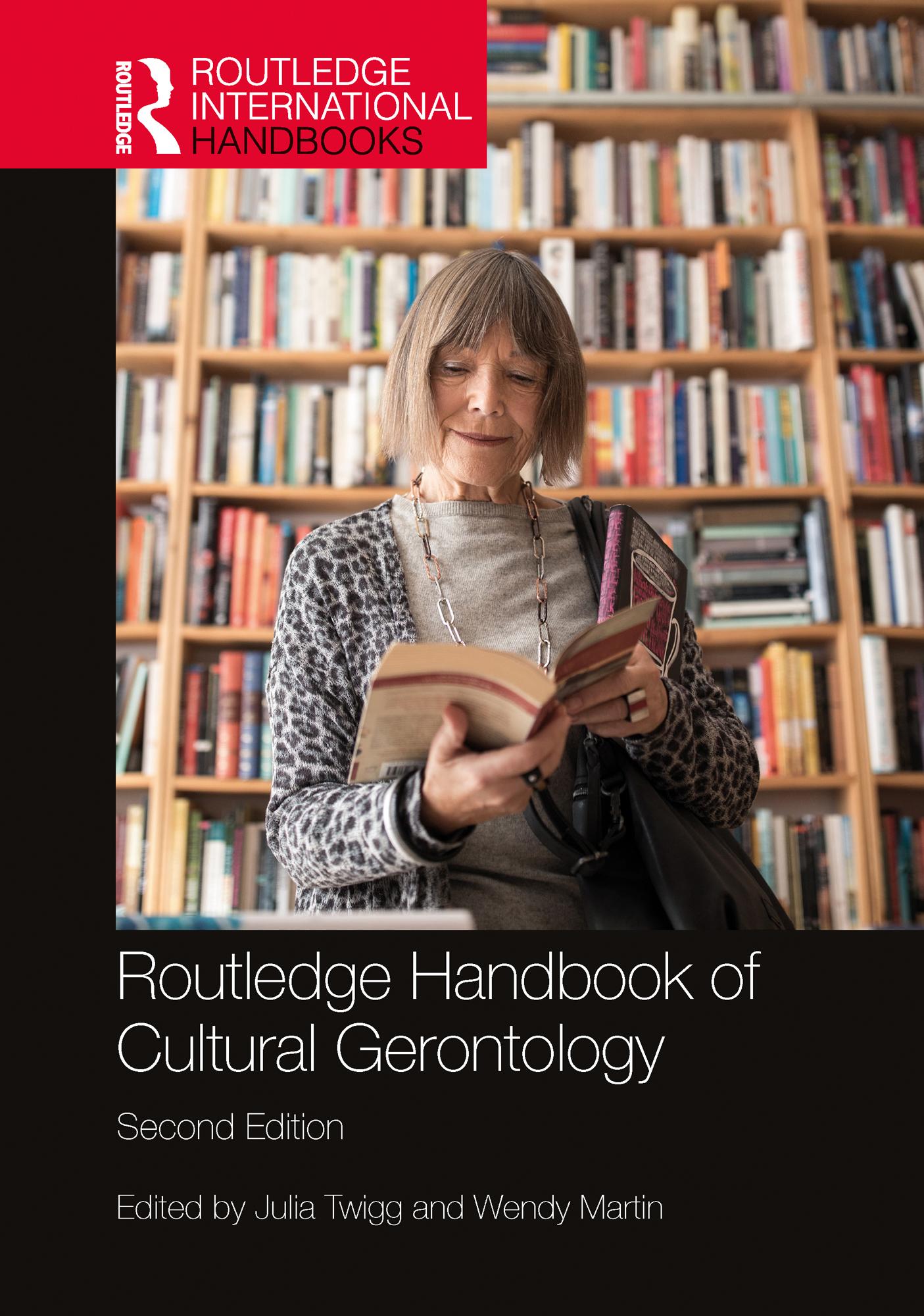
The second edition of this landmark handbook provides an authoritative overview of the emergence and development of cultural gerontology. It reveals the vibrancy and diversity of theory, methodology and research methods, and reflects on changes in the field since the first edition and examines future directions.
Over the last two decades, cultural gerontology has emerged as one of the most lively and insightful areas of academic analysis. Whilst the Cultural Turn may have come quite late to ageing studies, cultural perspectives have increasingly influenced the field. Drawing from work across the humanities and social sciences, it has changed the ways in which we study later years, challenging old stereotypes, bringing to bear new theories, new methodologies, as well as new forms of political and intellectual engagement.
The aim of this second edition of the handbook has been to bring together both new and original authors to provide a critical analysis of key perspectives and debates, and consider avenues for future agendas, within their own fields of cultural gerontology. There are new topics and themes, new theoretical and methodological perspectives, as well as chapters that have been extensively revised and updated. The handbook offers lively, interdisciplinary and vibrant accounts of later life around five interconnected areas: the politics and theorising of ageing; materiality and embodiment; cultures of care; identities, relationships and consumption; and arts and technologies.
The Routledge Handbook of Cultural Gerontology captures the field’s past, present and future in widening the social gerontological imaginary and brings new and creative methodologies to bear on the understanding of all dimensions of the lives of people in mid to later life. It is essential reading for students and scholars concerned with ageing and gerontology.
Pay easily by card, Klarna, Apple Pay or Google Pay. Not happy? You always have a 14-day money-back guarantee. Read more in our terms. If you have any questions, email us at hello@memmo.org.
Memmo makes studying easier – wherever you are in the world. We bring your course books and smart study tools together in one place: summaries, quizzes, podcasts and flashcards. Plus Ted, your study buddy who answers anything you wonder. Over 50,000 students already study here – built to help you learn faster and stress less.