
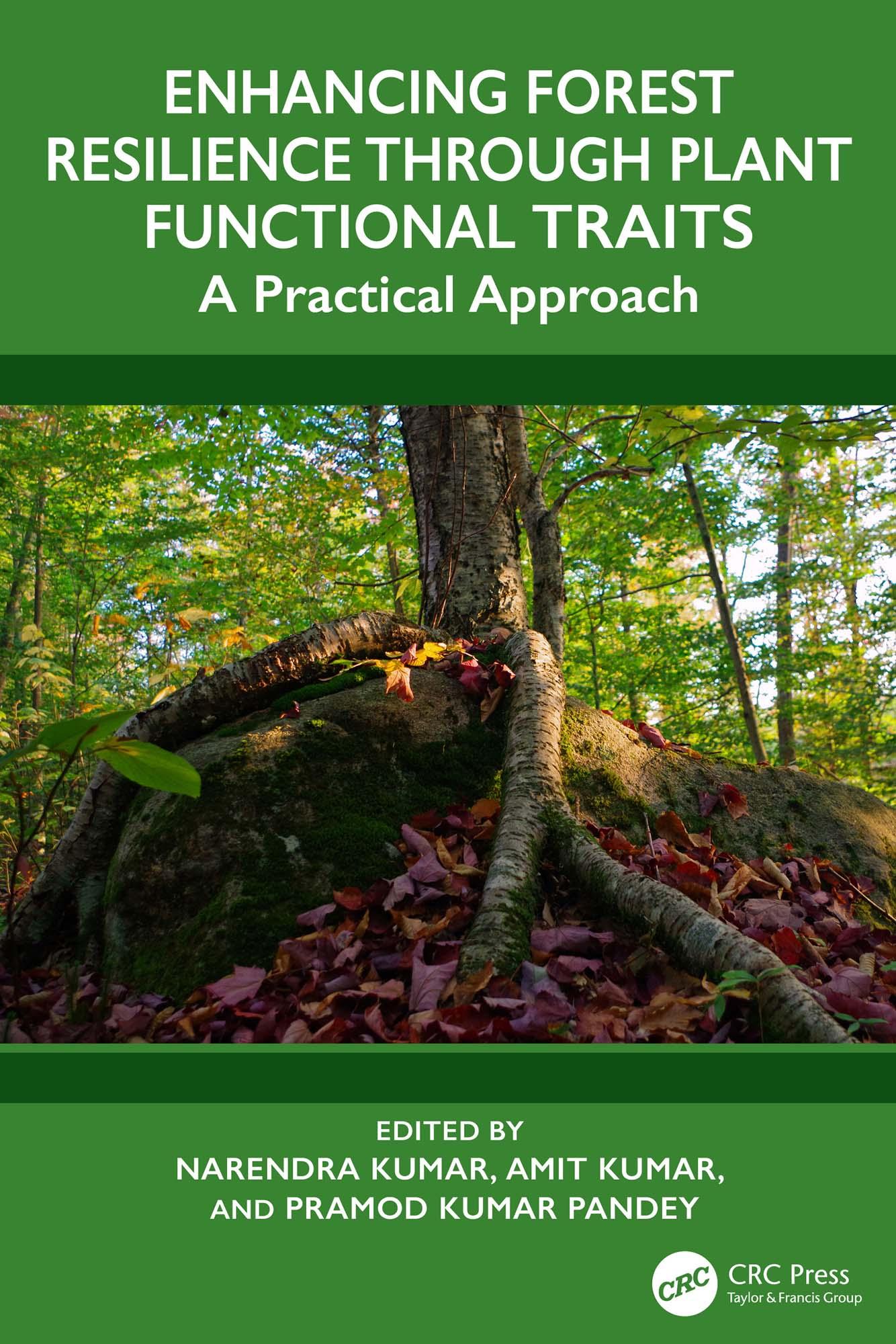
This book explores the relationship between plant functional traits and the resilience of forest ecosystems. Understanding how these traits influence forest ecosystems has significant implications for conservation, forestry, and ecosystem management. This book explores the intersection of ecology, botany, and forestry, providing a comprehensive guide to using plant functional traits as a tool to advance sustainable forest development as sustainable forest management becomes increasingly important in the face of global environmental challenges.This book also discusses the role that plant functional traits play in ecosystem dynamics and how they support forest resilience. It emphasizes how crucial these characteristics are for dealing with environmental stresses like drought and climate change, as well as how they affect soil interactions, carbon sequestration, and nutrient cycling. By integrating contemporary developments in trait-based research and analytical instruments, this book provides useful tactics for improving forest resilience via sustainable management techniques.
Key Features:
· A comprehensive overview of the latest advancements in plant functional traits and their role in forest resilience.
· Detailed explanations of the anatomical, physiological, and genetic aspects of plant functional traits, emphasizing their importance in tree growth and adaptation.
· Insights into how functional traits influence nutrient cycling, carbon sequestration, soil interactions, and responses to environmental stressors like drought and climate change.
· Discussion of modern tools and methodologies in trait-based research, along with future directions for integrating functional traits into forest management strategies.
· Practical applications of functional traits in conservation, biodiversity management, and sustainable forest management to enhance ecosystem resilience.
This book serves as a valuable reference for researchers and academicians studying species composition within forest ecosystems and exploring ways to enhance forest resilience in the context of climate change. It is also suitable as a textbook for graduate, postgraduate, and Ph.D. students in fields such as agriculture, botany, plant physiology, forestry, biotechnology, environmental science, and agroforestry.
Pay easily by card, Klarna, Apple Pay or Google Pay. Not happy? You always have a 14-day money-back guarantee. Read more in our terms. If you have any questions, email us at hello@memmo.org.
Memmo makes studying easier – wherever you are in the world. We bring your course books and smart study tools together in one place: summaries, quizzes, podcasts and flashcards. Plus Ted, your study buddy who answers anything you wonder. Over 50,000 students already study here – built to help you learn faster and stress less.