
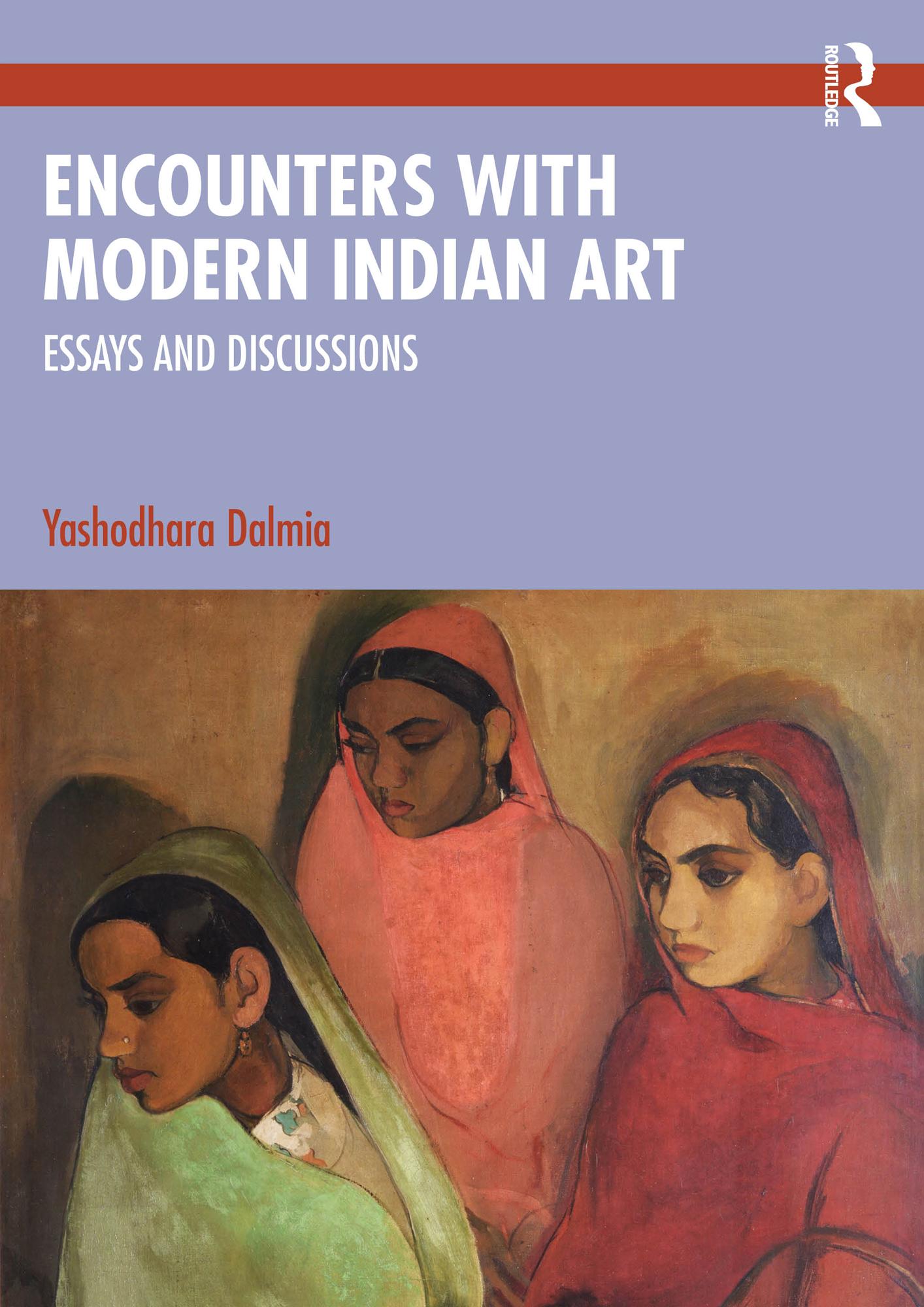
This book explores modern art in India, tracing its evolution from the setting-up of the Progressive Artists Group in the 1940s to the contemporary movements today. It discusses some of the fundamental issues around Indian art, such as the extent of its rootedness in the country, the amalgamation of Western art methods and Indian aesthetics in the art and its increasing infusion with popular modes.
In a series of essays, the book looks at works from the late Mughal period, when artists began to move towards modernism, to the visionary approaches of artists like Rabindranath Tagore, Nandalal Bose, Ramkinkar Baij and Benodebehari Mukherjee in Santiniketan. It also explores innovative works of the Indo-Hungarian artist Amrita Sher-Gil and contributions of progressive artists such as Francis Newton Souza, Sayed Haider Raza and M.F. Husain to the new and experimental forms being practised in the present, highlighting the transformative role of modern Indian art through the twentieth century as the works of each successive generation reflect the socio-cultural contexts.
With rich illustrations, the book will be of interest to students and educators of art, art history, intellectual and cultural history, as well as to connoisseurs of art.
Pay easily by card, Klarna, Apple Pay or Google Pay. Not happy? You always have a 14-day money-back guarantee. Read more in our terms. If you have any questions, email us at hello@memmo.org.
Memmo makes studying easier – wherever you are in the world. We bring your course books and smart study tools together in one place: summaries, quizzes, podcasts and flashcards. Plus Ted, your study buddy who answers anything you wonder. Over 50,000 students already study here – built to help you learn faster and stress less.