
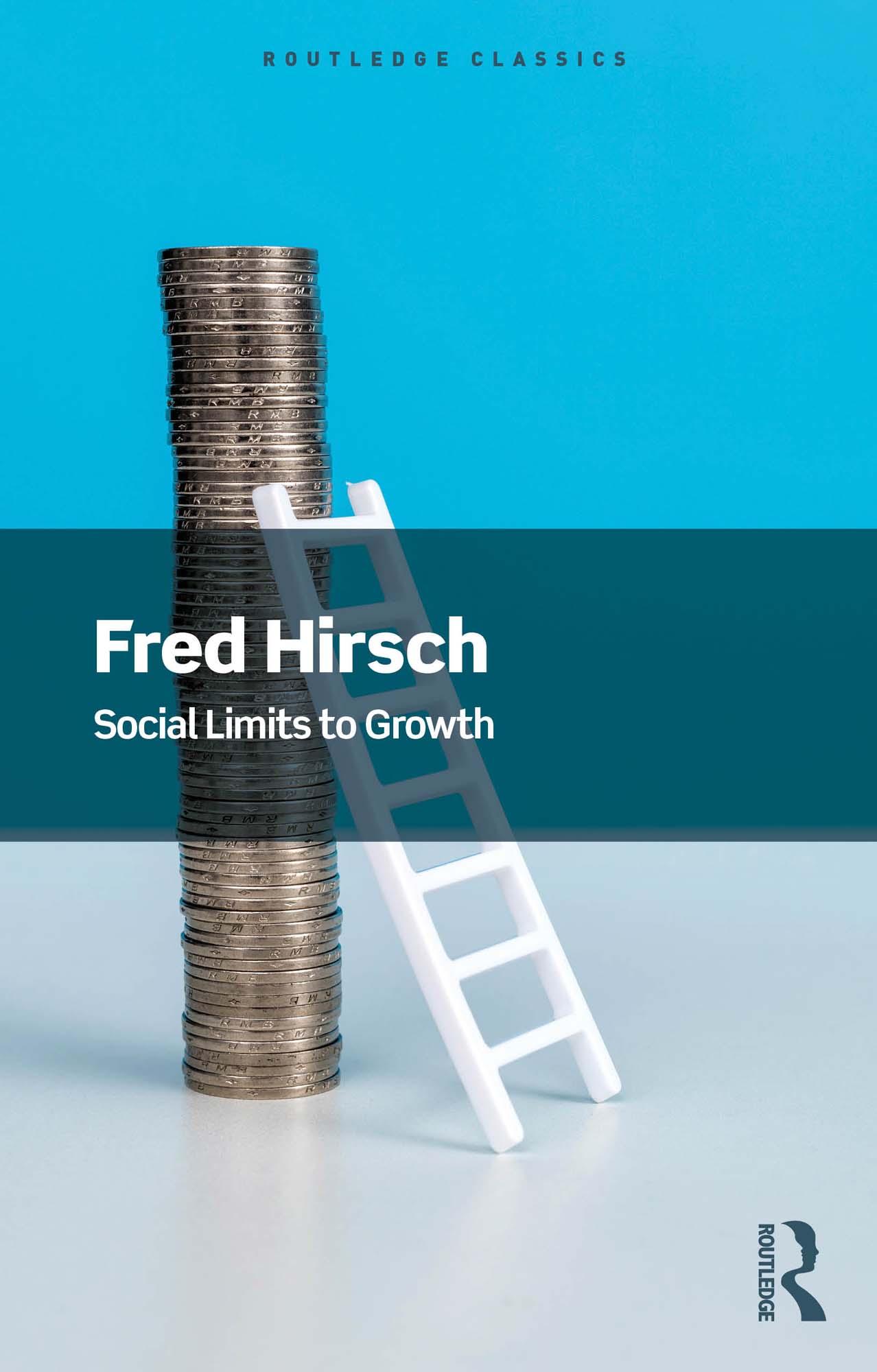
Fred Hirsch's Social Limits Growth is one of the sleeper hits of economics. Its brilliant and acute insights, informed by Hirsch’s experience as a journalist at The Economist before turning to academia, have become ever more relevant as liberal capitalism confronts challenges from austerity to the global race for scarce resources.
Hirsch makes the case for what he calls "positional goods", which derive their value from being scarce in ways that can’t be relieved by technological advancement, such as a Rembrandt painting, a priceless antique or even an elite, private education. Crucially, Hirsch says, their value lies in the social position their ownership allows one to occupy. He contrasts them with material goods, such as flushing toilets, opportunities to travel, and high-quality food. There is no such positional status afforded by their ownership because, despite a relatively high cost at their introduction, soon everyone has them. Once such material goods cease being luxuries, people begin to want other things, which Hirsch memorably and prophetically describes as "the needs of the mind and psyche". But these only serve to entangle us in an inescapable war between consumers, as each of us strive to be better than average, reflecting the very limits described by the title of Hirsch's book.
A devastating account of the way consumerism, conspicuous consumption and the expectation to be better off than the last generation undermine the delicate social capital that has previously bound individuals and communities together, Social Limits to Growth is a book whose message is more urgent now than on its first publication nearly fifty years ago.
This Routledge Classics edition includes a new Foreword by Daniel Halliday.
Pay easily by card, Klarna, Apple Pay or Google Pay. Not happy? You always have a 14-day money-back guarantee. Read more in our terms. If you have any questions, email us at hello@memmo.org.
Memmo makes studying easier – wherever you are in the world. We bring your course books and smart study tools together in one place: summaries, quizzes, podcasts and flashcards. Plus Ted, your study buddy who answers anything you wonder. Over 50,000 students already study here – built to help you learn faster and stress less.