
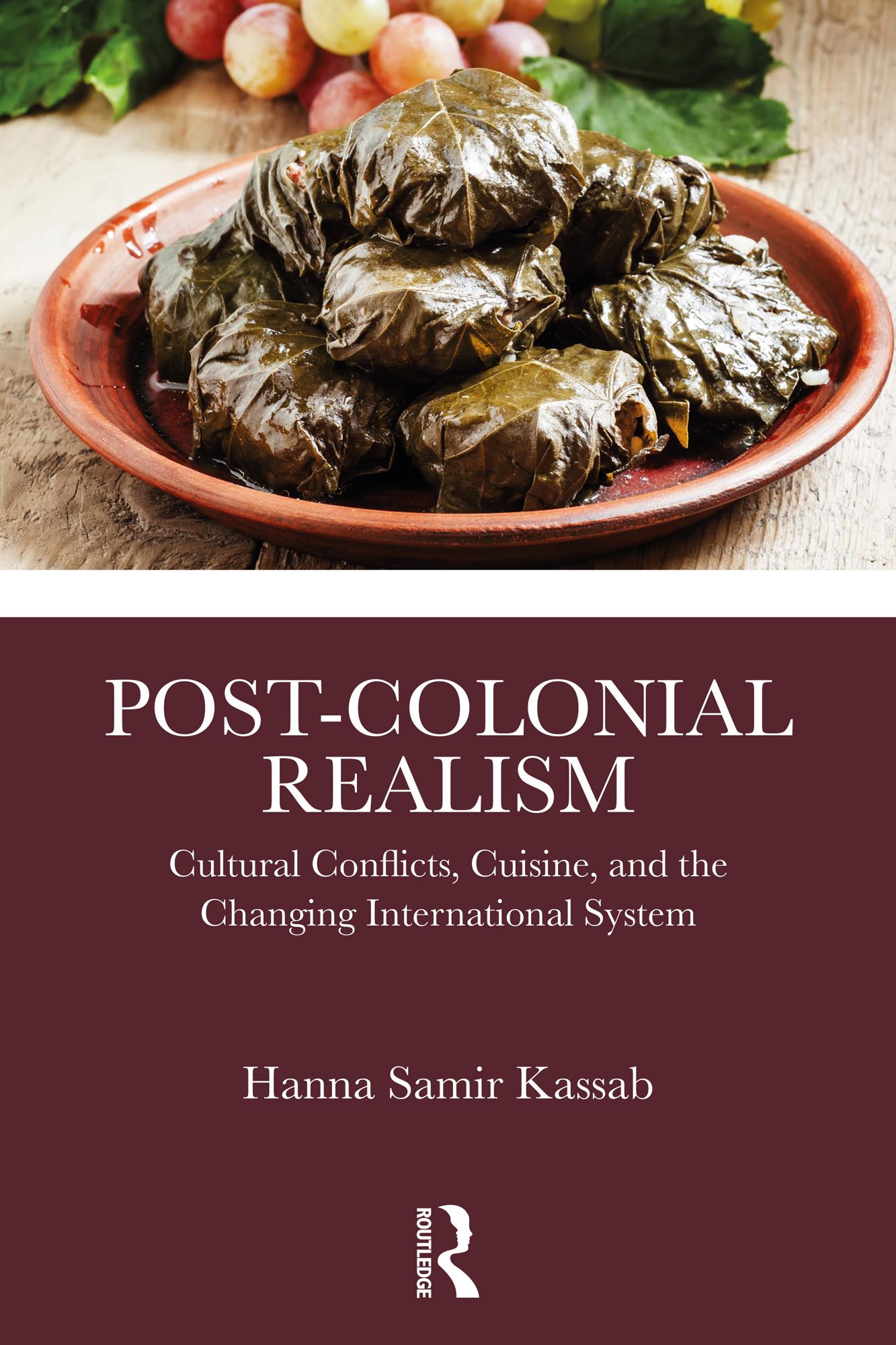
In Post-Colonial Realism, Hanna Samir Kassab develops a theoretical framework to explain, understand, and predict international conflict, placing culture at the center of international political analysis.
Kassab contends that nationalism, a belief system, forms an intervening variable that shapes the foreign policy behavior of states. Studying food is central to understanding nationalist belief systems that shape international politics. By combining theories of nationalism with post-colonialist understandings of cultural revitalization, Kassab conceptualizes state motivation to understand how cultural symbols shape nationalist identities, to see the fault lines of civilization through food, and to appreciate the centrality of identity issues. Using ethnography to understand food ownership as part of nationalist conflict, Kassab examines neighboring states (Greece, North Macedonia, Turkey and Armenia) alongside India. In each country study chapter, he compares at least two nationalisms and views of cuisine ownership. He later maps out potential future flashpoints as the international system becomes increasingly competitive due to the changing structure of the international system: unipolarity to multipolarity.
Post-Colonial Realism offers a more robust and flexible theory of international relations, concentrating not on abstractions but on individuals and their collective beliefs.
Pay easily by card, Klarna, Apple Pay or Google Pay. Not happy? You always have a 14-day money-back guarantee. Read more in our terms. If you have any questions, email us at hello@memmo.org.
Memmo makes studying easier – wherever you are in the world. We bring your course books and smart study tools together in one place: summaries, quizzes, podcasts and flashcards. Plus Ted, your study buddy who answers anything you wonder. Over 50,000 students already study here – built to help you learn faster and stress less.