
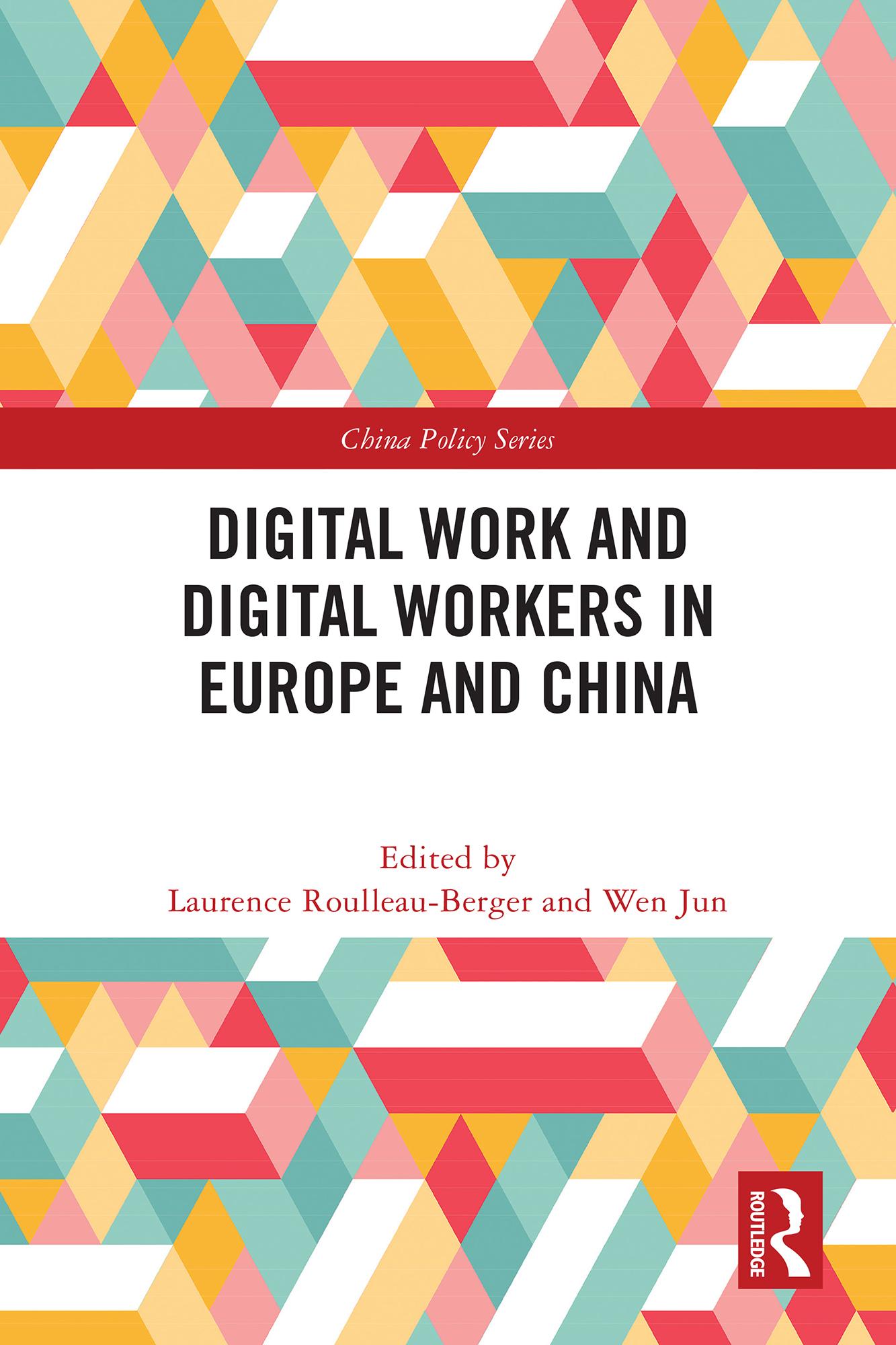
This book is a study of digital workers across diverse contexts in China and Europe, giving valuable insight into their origins, abilities, and working conditions.
As the growth of digital work changes the nature of work and employment and the consequences of this for individual workers, this book considers the shift of much economic activity to online activity, examines increasing economic globalization that involves a new global division of labor, with novel forms of global capitalism, and emphasizes the fact that increasingly work for many people is now digital work. It highlights the consequences of this shift, which include the casualization of work, new subaltern labor, and the precarity of employment contracts – whether as self-employment or digital wage – and the relations between digital work, globalization, and emotional capitalism. It discusses how new forms of labor exploitation and how individual and collective mobilizations are emerging, how specific groups such as migrants are especially vulnerable, and how these new forms of capitalism and of working are leading to a rearrangement of the geographical structure of the world economy, with notable consequences for Asia and other non-Western regions.
Broadening the global understanding of the evolving nature of work in the digital age, this book will be of interest to students and scholars of the sociology of work and economic sociology, as well as digital sociology.
Pay easily by card, Klarna, Apple Pay or Google Pay. Not happy? You always have a 14-day money-back guarantee. Read more in our terms. If you have any questions, email us at hello@memmo.org.
Memmo makes studying easier – wherever you are in the world. We bring your course books and smart study tools together in one place: summaries, quizzes, podcasts and flashcards. Plus Ted, your study buddy who answers anything you wonder. Over 50,000 students already study here – built to help you learn faster and stress less.