
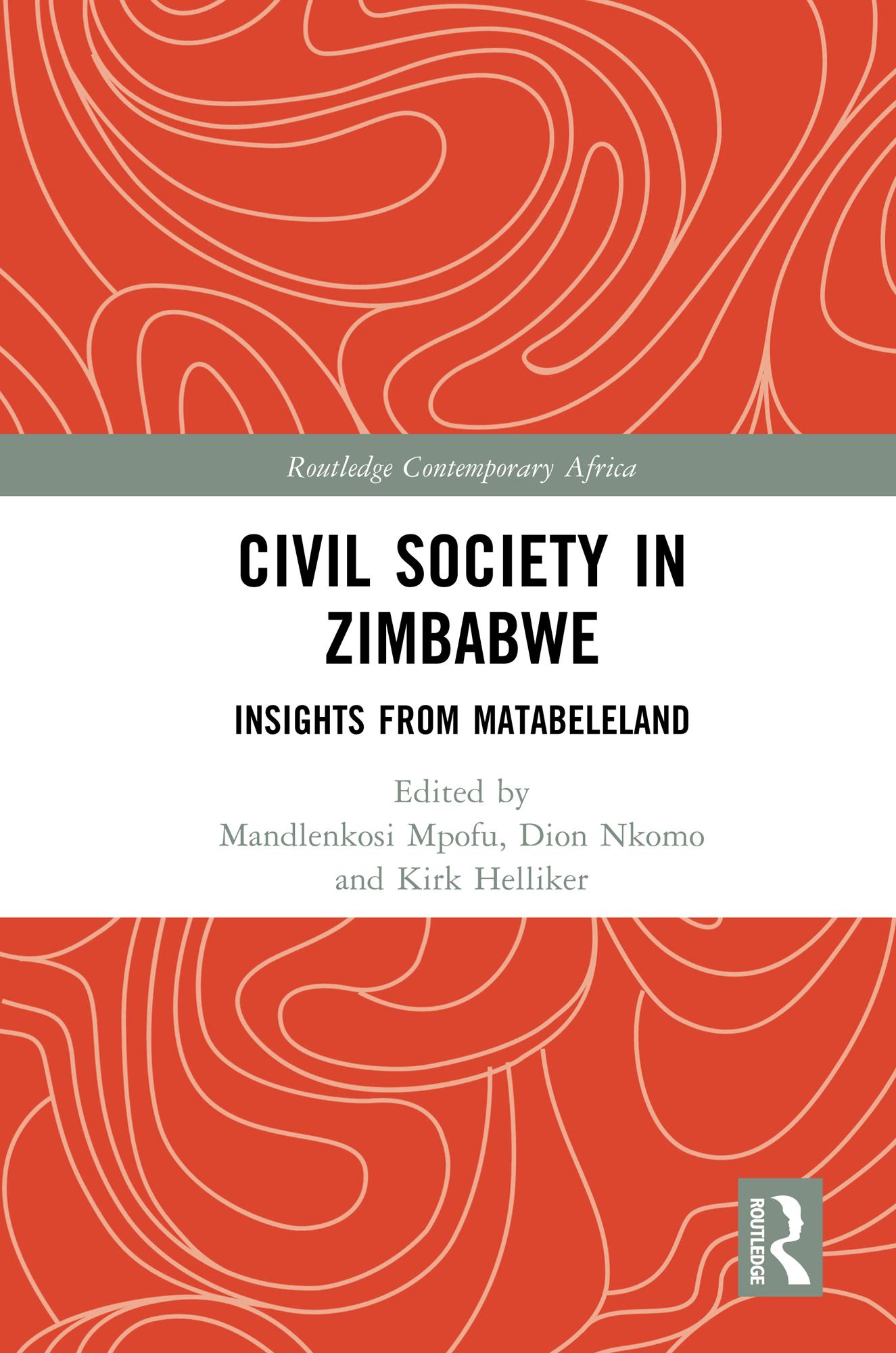
This book considers the historical and spatial dimensions of civil society in Zimbabwe’s Matabeleland region, an area suffering from severe development and democratic deficits over many decades.
Transcending an organisational conception of civil society and a simplistic state-civil society dualist understanding, it recognises the dynamic character of civil society as a social space, inclusive of less formalised associational forms of collective life, as well as the colonial character and legacies of civil society both analytically and empirically. This book facilitates a nuanced understanding of the specificities of the social, political, and economic evolution of Matabeleland in colonial and post-colonial Zimbabwe, and the region’s troubled relations with the central state. Historically, it traces civil society in Matabeleland from the region’s resistance against the colonial-settler state to contemporary struggles for justice given the unresolved Gukurahundi legacy. Civil society is depicted as constituted by a set of complex and shifting struggles for justice, not simply between Matabeleland and the central state, but also internally within Matabeleland along multiple fault lines including class and culture. The relevance of understanding civil society in Matabeleland, for Zimbabwe and Africa more widely, is brought to the fore.
The book will be of interest and value to scholars of civil society, politics and democratisation across the African continent.
Pay easily by card, Klarna, Apple Pay or Google Pay. Not happy? You always have a 14-day money-back guarantee. Read more in our terms. If you have any questions, email us at hello@memmo.org.
Memmo makes studying easier – wherever you are in the world. We bring your course books and smart study tools together in one place: summaries, quizzes, podcasts and flashcards. Plus Ted, your study buddy who answers anything you wonder. Over 50,000 students already study here – built to help you learn faster and stress less.